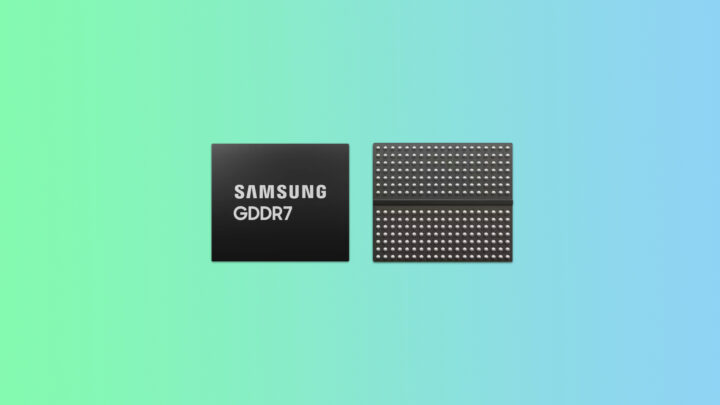
In 2022, Samsung laid out its plans for a new GDDR7 memory, which would be designed to significantly boost the performance of AI chips, gaming consoles, workstations, and other devices requiring high processing power. The company had announced in July of the previous year that they were on the cusp of beginning production on these advanced DRAM chips.
As of recent reports, Samsung is poised to present the world’s swiftest GDDR7 DRAM come February. This groundbreaking Graphics Double Data Rate (GDDR) memory is set to empower AI technologies with its remarkable bandwidth, heralding it as an integral element for future high-performance AI semiconductor solutions.
Samsung’s Latest DRAM to Elevate AI Chip Capabilities
Little has been disclosed thus far about the intricate details of this new memory; however, Samsung is anticipated to share more information at the IEEE International Solid-State Circuit Conference, which will take place in San Francisco the following month.
Earlier, it was divulged that Samsung’s GDDR7 DRAM will brandish a groundbreaking bandwidth of 1.5TBps, denoting a 40% enhancement over its GDDR6 predecessor. Leveraging PAM3 (Pulse Amplitude Modulation) and NRZ (Non-Return to Zero) signaling, the forthcoming chips promise to achieve a data rate reaching up to 37Gbps for each pin. Moreover, these chips boast a 20% improvement in energy efficiency when matched with the GDDR6 DRAM, signaling a notable advancement in power conservation. Samsung further mentions a low-voltage iteration of the memory, tailored for integration within laptops and similar devices.
In regards to thermals, Samsung has advanced its heat management techniques by incorporating a novel Epoxy Molding Compound in the chip’s packaging. This innovation is said to enhance thermal conductivity and slash thermal resistance by approximately 70%, ensuring better stability for devices under intense operational demands.
Although the reveal of the chip is imminent, the actual deployment of Samsung’s new GDDR7 DRAM into GPUs and other market commodities like NVIDIA’s forthcoming RTX 50 series flagship GPUs might witness a slight delay post-announcement.