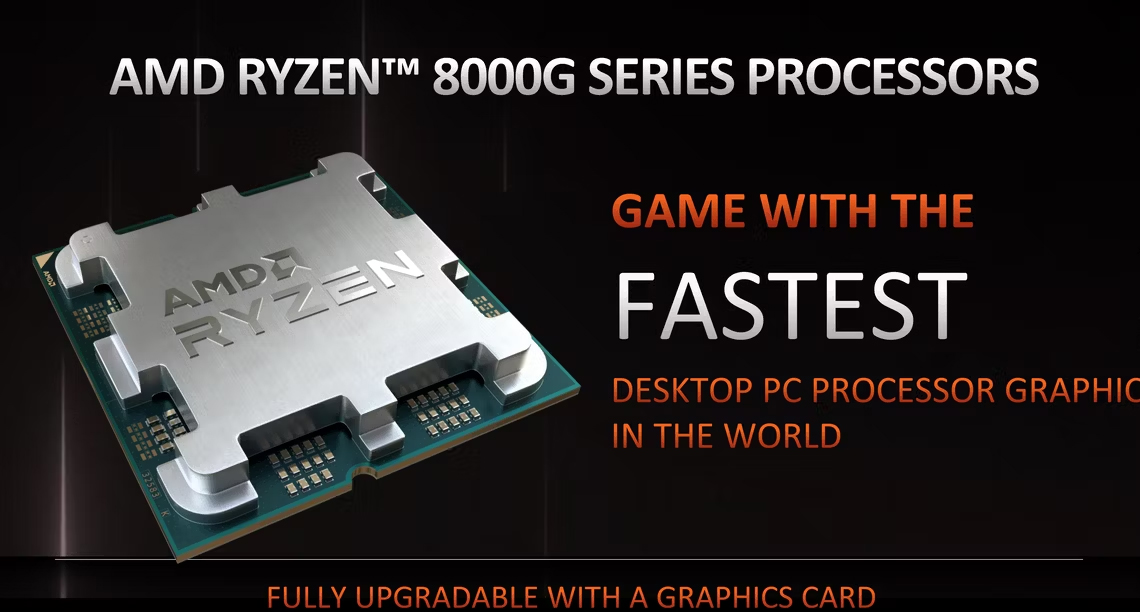
AMD has recently revealed vital information regarding the clock speeds of Zen4c cores housed within their Ryzen 8000G series processors. Previously, AMD had kept the details under wraps during the official launch presentation, but the tech giant has now updated the information on its official website. This eagerly anticipated detail is now available ahead of the processors’ launch date, scheduled for January 31.
The latest Ryzen 8000G lineup marks a significant shift for AMD, as they transition from Zen3 to the new Zen4-based APUs. A notable feature of this series is the introduction of the new AM5 socket designed for the APUs, which facilitates support for DDR5 memory, enhancing the performance capabilities of these processors.
Amongst the various offerings within the Ryzen 8000G range, two APUs are particularly interesting, as they incorporate both Zen4 and Zen4c core clusters. The Zen4c cores are smaller in size, feature a lesser cache, and are not meant for the high frequencies that their larger Zen4 counterparts can achieve. This dual-core approach offers a balance of power and efficiency within the APUs.
According to the updated specification pages on AMD’s official site, the Ryzen 5 8500G’s Zen4c cores operate with a base clock of 3.2 GHz and have the potential to boost up to 3.7 GHz. Similarly, the smaller cores in the Ryzen 3 8300G start at the same base clock of 3.2 GHz, with a maximum boost frequency of 3.6 GHz. It’s important to mention that the other processors in the lineup, which include the Ryzen 5 8600G and Ryzen 7 8700G, are powered exclusively by Zen4 cores.
It’s also worth noting for enthusiast builders that the Ryzen 3 8300G won’t initially be available to the DIY market at the moment of launch. Consequently, the Ryzen 5 8500G will stand as the most accessible option for those looking to construct their own system with a Ryzen 8000G APU straight out of the gate.
With the disclosure of these specifications, AMD underscores its commitment to transparency and enhances the anticipation around their upcoming offerings. For technology aficionados and potential buyers, AMD’s move to provide detailed core frequency information is a welcome one, allowing them to make informed decisions about their next hardware upgrades or new builds.
Those interested in the latest developments and specifications of AMD’s advanced processors can keep an eye on official resources for the most accurate updates.
Be sure to share this article and spread the word about AMD’s latest advancements in APU technology!


