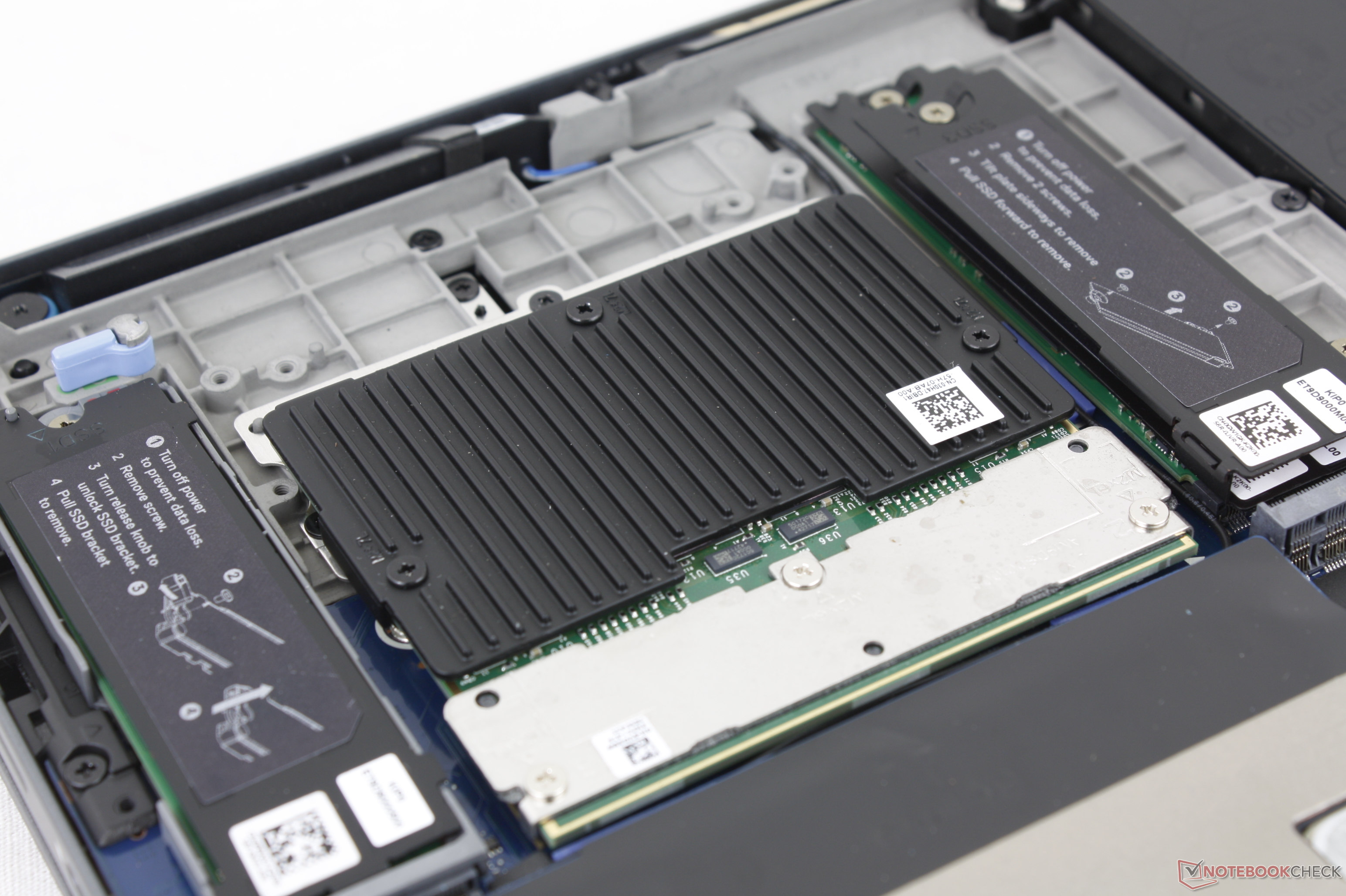
Dell’s biggest mobile workstation is pushing memory tech forward. The Pro Max 18 Plus—and its slightly smaller Pro Max 16 Plus sibling—can be configured with either traditional DDR5 SODIMM or the newer CAMM2 memory, giving professionals a choice between familiar standards and cutting-edge performance.
CAMM2 is designed to go beyond the limits of SODIMM by enabling higher capacities and faster speeds in a slimmer module. In the Pro Max 18 Plus, that translates into some eye-catching options:
– With DDR5 SODIMM: up to 96 GB (2×48 GB) running in dual-channel at DDR5-6400. That’s on par with many high-end laptops and workstations, where most SODIMM configurations typically land between 4800 and 5600 MT/s—especially as capacities climb past 64 GB.
– With CAMM2: up to 128 GB in dual-channel at up to 7200 MT/s. This is a clear step up for bandwidth-hungry tasks like heavy 3D work, complex simulations, or high-frame-rate media workflows.
– For extreme capacity needs: up to 256 GB via CAMM2. This configuration operates in single-channel at 4400 MT/s, prioritizing sheer memory size over raw bandwidth—ideal when you must fit massive AI datasets, large-scale VMs, or huge engineering assemblies into memory.
Because CAMM2 packs high density and speed into a thin form factor, the module in the Pro Max 18 Plus uses its own heatsink to help manage thermals during sustained workloads.
Which memory should you choose?
– Pick DDR5 SODIMM if you want a familiar, widely available standard and your projects fit within 64–96 GB while benefiting from dual-channel bandwidth at up to 6400 MT/s.
– Pick CAMM2 up to 128 GB if you need the best blend of capacity and speed, with dual-channel performance reaching up to 7200 MT/s for demanding creative and technical workflows.
– Pick CAMM2 256 GB if your priority is maximum capacity for AI training, large datasets, complex CAD, or multiple heavyweight virtual machines—even if that means a single-channel speed of 4400 MT/s.
By offering both SODIMM and CAMM2 across the Pro Max 18 Plus and Pro Max 16 Plus, Dell gives power users a rare level of flexibility. Whether you’re optimizing for bandwidth, capacity, or a balance of both, these mobile workstations let you tailor memory to your workload—and that can make a measurable difference in real-world performance.