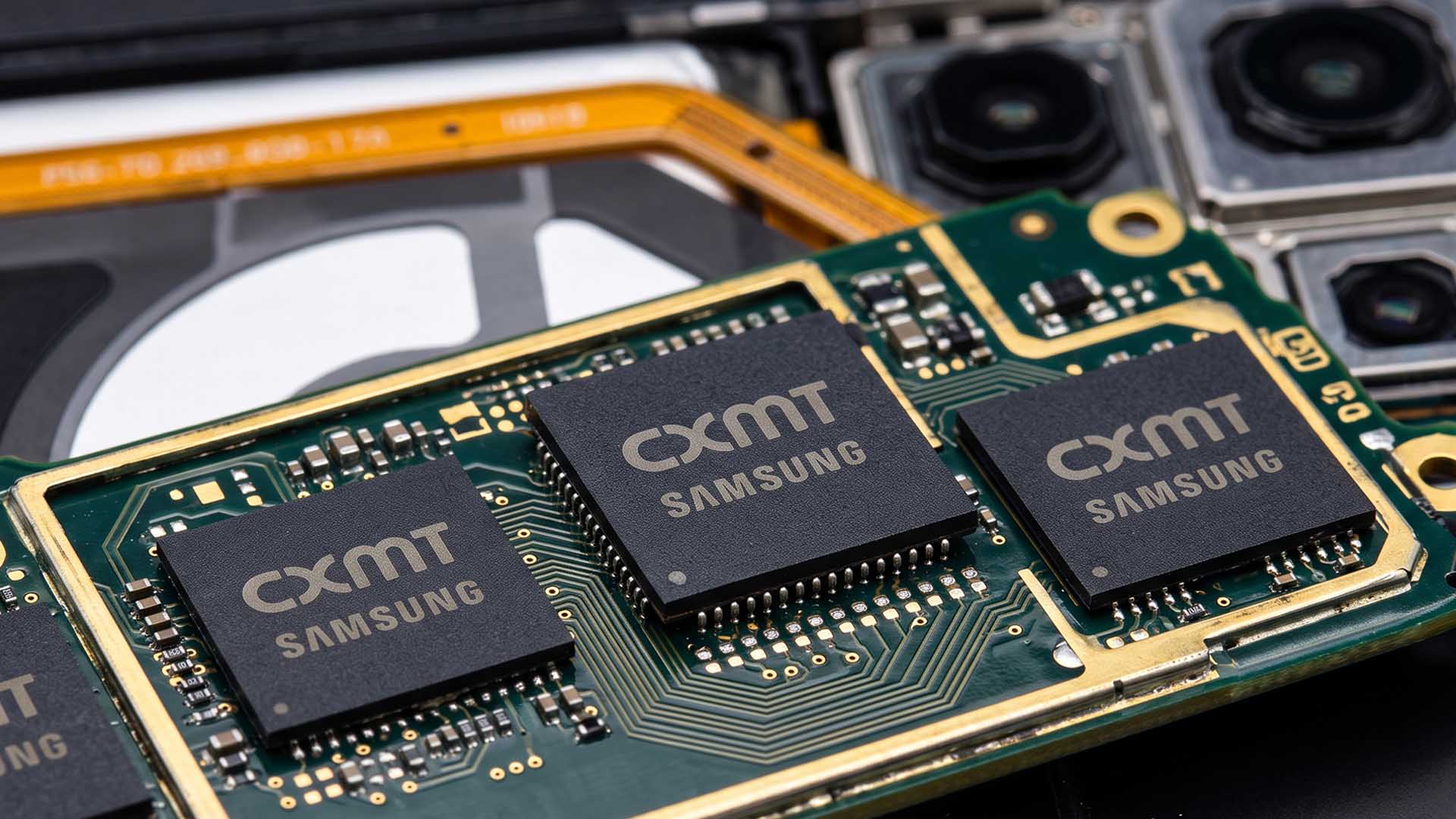
CXMT’s 4F² DRAM Push Could Shake Up the Global Memory Market
CXMT is drawing major attention in the semiconductor industry after outlining an ambitious plan to launch a memory product built on the advanced 4F² DRAM cell architecture. The announcement has quickly become one of the most closely watched developments in the memory chip market, especially as investors weigh the possibility that China’s rising DRAM maker could move faster than established global rivals.
The news has already stirred concern across South Korea’s semiconductor sector, contributing to pressure on the KOSPI index as analysts reassess the competitive landscape. The central question now is whether CXMT can turn its technical progress into a commercially viable product with strong enough manufacturing yields before the end of 2026.
At the center of the story is CXMT President Dr. Cao Kanyu, who recently discussed the company’s progress at the 4th Integrated Chip and Chiplet Conference in Shanghai. During the event, he highlighted CXMT’s work on next-generation DRAM technology, including the 4F² memory cell architecture and hybrid bonding.
Most notably, Dr. Cao said CXMT plans to introduce a DDR5 RDIMM product based on 4F² DRAM before the end of 2026. If achieved, that timeline would put CXMT ahead of some industry expectations and potentially ahead of the roadmap associated with major DRAM leaders.
The 4F² architecture is seen as a major step forward because it changes how a DRAM memory cell is arranged. Traditional DRAM designs place the transistor and capacitor more horizontally, while 4F² stacks key components vertically. This reduces the area needed for each memory cell and allows more cells to fit into the same chip space.
In simple terms, 4F² refers to a cell footprint measuring four times the square of the minimum feature size. The design uses two bitlines and two wordlines, the structures that help control and access the transistors inside each memory cell. By shrinking the cell area, DRAM makers could potentially reduce the memory cell footprint by 30% to 40% and increase chip density by around 30% to 50%.
That kind of improvement would be highly significant for the DRAM industry. Higher density can help manufacturers produce more memory capacity per wafer, improve cost efficiency over time, and support demand from servers, AI systems, data centers, PCs, and high-performance computing platforms.
However, the technology also comes with serious engineering challenges. Semiconductor expert Fred Chen has expressed skepticism about the physical limits of the 4F² design, noting that the architecture leaves very little room for critical elements such as capacitor dielectric thickness, gate thickness, gate dielectric thickness, and transistor body thickness.
These are not minor concerns. DRAM scaling becomes increasingly difficult as cell structures shrink, because maintaining reliability, performance, and data retention requires extremely precise materials and manufacturing control. If the capacitor or transistor structures become too thin or difficult to manage, yield and long-term reliability can suffer.
That is why many analysts remain cautious. Major DRAM companies including Samsung, Micron, and SK hynix have reportedly studied or developed 4F²-related technologies for years, but mass production has remained difficult due to low yields, high costs, customer qualification hurdles, and complex manufacturing requirements.
This is the main reason CXMT’s target has surprised the market. Developing a working 4F² DRAM product is one thing; producing it at scale with competitive yields and acceptable cost is another. For memory makers, yield is everything. Even an advanced design can struggle commercially if too many chips fail during production or if customers are not confident in long-term performance.
Still, CXMT may not be starting from scratch. The company is believed to hold roughly 300 patents related to the 4F² memory cell architecture and has reportedly had operational demonstration units since at least 2023. That suggests CXMT has been investing heavily in the technology for some time and may have built a deeper foundation than some observers expected.
If CXMT can overcome the technical obstacles, the payoff could be substantial. A successful 4F² DDR5 RDIMM launch would boost its position in the global DRAM market and strengthen China’s ambitions in advanced semiconductor manufacturing. It could also put pressure on established memory giants to accelerate their own next-generation DRAM roadmaps.
For now, the industry is watching closely. CXMT’s 4F² DRAM plan is bold, and skepticism remains high. But if the company can solve the yield, cost, and reliability challenges, it could mark a major turning point in the race for denser, more advanced memory chips.