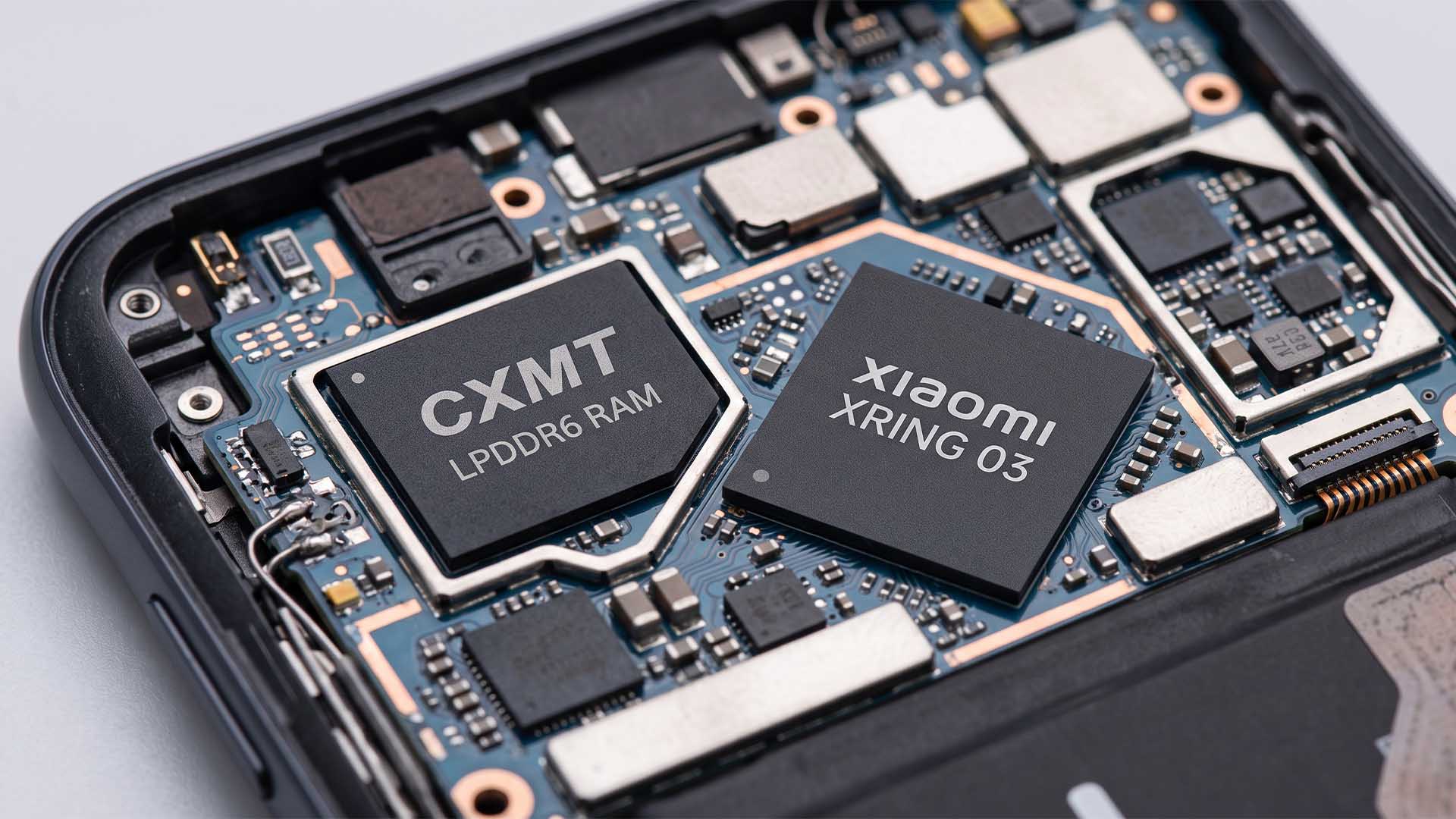
Xiaomi appears to be preparing a major leap in smartphone hardware with its upcoming XRING 03 chipset, which is reportedly the first mobile SoC designed to support LPDDR6 RAM. This move could put Xiaomi ahead in the race for next-generation mobile performance, especially as faster memory becomes increasingly important for AI features, multitasking, gaming, and high-resolution camera processing.
A key part of this development is CXMT, the Chinese memory manufacturer said to be supplying LPDDR6 RAM for Xiaomi’s new chip platform. Recent reports suggest that CXMT has moved quickly from research and development verification to production readiness, with its next-generation memory reportedly reaching 12.8Gbps. The company is also said to have already sampled LPDDR6 RAM to customers, signaling that commercial deployment may be closer than expected.
This is significant because major memory producers are still preparing their own LPDDR6 production timelines, with broader industry output expected around the second half of 2026. If CXMT can deliver stable supply earlier, it could become a crucial player in the mobile memory market and strengthen China’s domestic semiconductor supply chain.
Xiaomi is expected to be one of CXMT’s first major customers for LPDDR6 RAM. Other Chinese smartphone brands may also show interest as they look to secure access to advanced memory technology. However, CXMT’s past business approach suggests that local companies may not automatically receive favorable treatment, meaning pricing and supply agreements could still be highly competitive.
The XRING 03 chipset is also drawing attention because it is expected to be manufactured using TSMC’s 3nm N3P process rather than a newer 2nm node. While 2nm technology is more advanced, choosing 3nm may help Xiaomi avoid early yield challenges and support more stable production volumes. This could be important if Xiaomi plans to use the chip in premium devices sold both in China and international markets.
One rumored device that may benefit from the XRING 03 is the Xiaomi 18 Pro Fold. If the foldable launches beyond China, it could give Xiaomi a stronger opportunity to showcase its in-house chip technology globally. A wider release would also increase demand for the XRING 03 and potentially boost CXMT’s LPDDR6 memory shipments.
The combination of Xiaomi’s custom silicon and advanced LPDDR6 RAM could also improve the company’s position against rivals in China. Some competing devices continue to rely on older chipset manufacturing processes, while Xiaomi’s 3nm-based XRING 03 may offer stronger performance, better efficiency, and more modern hardware support.
Still, there are important details that remain unclear. The XRING 03 is reportedly backward compatible with LPDDR5X RAM, which means Xiaomi may not use LPDDR6 in every model or configuration. The final decision could depend on CXMT’s production yields, supply stability, and the cost of using the newer memory standard.
Even with those uncertainties, CXMT’s progress marks an important step for the mobile industry. If Xiaomi successfully pairs the XRING 03 with LPDDR6 RAM in a commercial smartphone, it could help accelerate the adoption of next-generation memory and give the company a valuable edge in flagship Android performance.