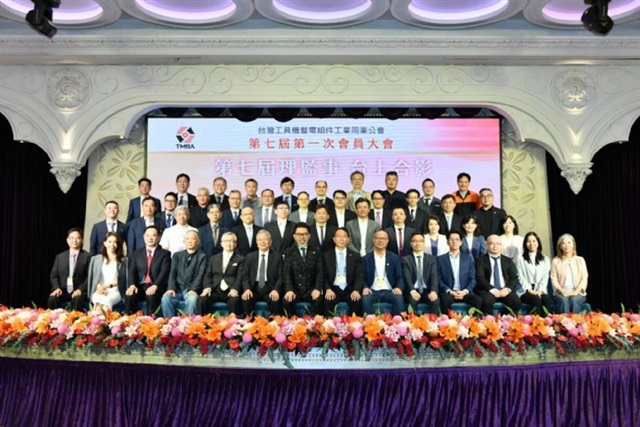
Taiwan’s machine tool makers are sending mixed signals about when business will truly rebound. At the recent member assembly of the Taiwan Machine Tool and Accessory Builders’ Association (TMBA), leaders shared differing views on the timing and strength of a recovery, underscoring just how uneven the global manufacturing cycle remains. Some executives see signs of stabilization and gradual improvement ahead, while others warn that demand remains patchy and visibility is still limited. The consensus: uncertainty continues, and the path to a full upswing may stretch into 2026.
The conversation reflects what many in precision machinery and CNC equipment already feel on the ground. Order books have improved in select niches but remain thin in others. Export markets are inconsistent, with customers delaying capital expenditures or ordering in smaller batches. The result is a cautious stance among manufacturers, even as they continue to invest in technology and services that can differentiate their offerings when demand does recover.
A central theme is currency volatility. Exchange-rate swings can quickly tip the balance in export-heavy sectors like machine tools, where even small changes can affect pricing power and margins. A stronger local currency squeezes competitiveness abroad, while fluctuations among key trading partners can complicate quoting, hedging, and delivery schedules. This currency backdrop has turned into a major variable for planning, pricing, and long-term contracts.
Industry leaders also point to a set of crosscurrents shaping the outlook:
– Uneven global demand: The pace of capital spending differs by region, with some markets prioritizing automation upgrades and others holding back due to interest rates or uncertain order pipelines.
– Sector-specific momentum: Aerospace, semiconductors, medical devices, and certain automotive programs continue to invest in precision equipment, while traditional sectors tied to construction and general manufacturing remain more cautious.
– Supply chain normalization: Lead times for components and logistics have improved from pandemic-era peaks, but select parts and electronics still face bottlenecks, affecting delivery schedules and project planning.
– Inventory and order visibility: Distributors and end users are keeping inventories lean, placing orders closer to need, which limits long-range forecasting and makes production planning more complicated.
Despite the mixed sentiment, companies are preparing for the next upcycle. Many are doubling down on higher-value systems, intelligent automation, and complete solutions rather than competing solely on price. That includes smarter CNC controls, integrated software, predictive maintenance tools, and turnkey services that reduce downtime and improve throughput for customers. There is also heightened focus on energy efficiency and sustainability, which are increasingly part of procurement criteria in Europe, North America, and parts of Asia.
To navigate the current environment, Taiwan’s machine tool ecosystem is emphasizing:
– Product differentiation: High-precision, multi-axis, and application-specific machines tailored to growth segments such as EV components, aerospace materials, and semiconductor tooling.
– Service-centric models: Lifecycle support, remote diagnostics, and performance-based service contracts to build recurring revenue and stickier customer relationships.
– Regional agility: Tighter collaboration with local partners to adapt to standards, certifications, and after-sales needs in key export regions.
– Risk management: Better currency hedging strategies, diversified supplier bases, and flexible production planning to handle sudden shifts in orders or component availability.
Looking ahead to 2025–2026, the industry’s trajectory will hinge on several watchpoints. Interest rate trends will influence capital investment budgets. Exchange-rate stability will either support or undermine international competitiveness. Industrial policy and reshoring dynamics could create new demand pockets for automation and precision machining. Finally, the pace of technological upgrades—especially in digitalization and AI-driven manufacturing—will reward suppliers that can deliver measurable productivity gains.
For now, the takeaway from the TMBA member assembly is clear: the recovery is not linear, and expectations remain split. Some manufacturers anticipate a more convincing turnaround taking shape in late 2025, with broader momentum extending into 2026. Others are bracing for a longer wait, given the sensitivity of export demand to currencies and macro conditions. In this climate, resilience comes from sharpening product portfolios, staying close to customers, and building the flexibility to scale when orders return.
In short, Taiwan’s machine tool industry is preparing for the next phase, but not betting on a single timeline. By focusing on precision, smart features, and service, companies aim to be ready when sentiment shifts—whether that inflection arrives sooner or closer to 2026.