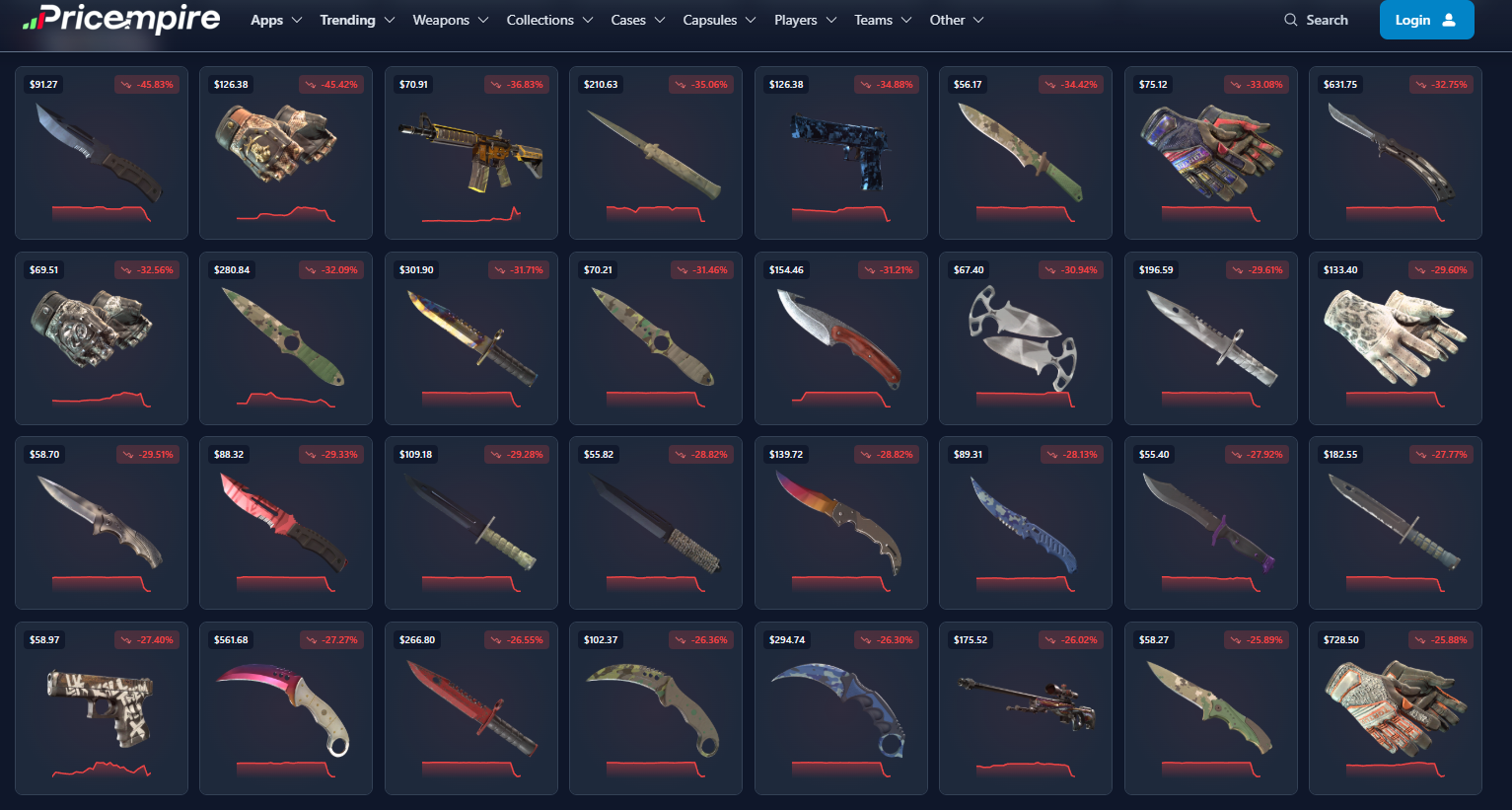
Counter‑Strike 2’s latest patch just detonated the skin economy, and the shockwaves are massive. Valve has quietly enabled trade-up contracts that let players craft knives and gloves by exchanging five Covert items. According to price tracker PriceEmpire, the total CS2 skin market cap tumbled from roughly $6 billion to about $4.27 billion within a day—a nearly $2 billion swing.
What changed in the update
– Players can trade 5 StatTrak Covert items for 1 StatTrak knife from one of the submitted collections.
– Players can trade 5 regular Covert items for 1 regular knife or a pair of gloves from one of the submitted collections.
– Previously, knives and gloves weren’t craftable through standard trade-ups, which kept their supply more constrained.
Immediate market impact
– Knives and gloves took the hardest hit, with many once-premium items falling 40%–60% as supply pressure eased overnight.
– “Red” Covert skins surged in price because they’re now the essential inputs for crafting top-tier gear.
– The market rapidly repriced to reflect the new path to high-end items, shifting value from previously scarce outputs to the inputs needed to make them.
Why it happened
The economics are straightforward: when you unlock a direct, predictable path to knives and gloves, their effective rarity drops. That forces a top-to-bottom reevaluation of prices. Some traders see this as a long-overdue correction to inflated valuations; others view it as a sudden blow to long-term collectors who held high-end items as appreciating digital assets. Many players, however, welcome the change because it makes coveted cosmetics more attainable without relying solely on luck or paying steep premiums.
What this means for players and traders
– Newcomers have a more accessible route to their first knife or gloves through trade-ups.
– Active traders will likely pivot to arbitraging Covert inputs and monitoring collection odds.
– Long-term collectors may reassess portfolios and focus on exceptionally rare patterns, finishes, or historically significant items that could retain premium status.
The platform angle
Cheaper entry points typically drive more participation. If more players start crafting and trading, the Steam marketplace could see higher transaction volume—good for overall liquidity and, by extension, for Valve’s marketplace revenue. In short, this change may widen the funnel while shifting where value concentrates.
How to navigate the new CS2 skin meta
– Don’t panic sell: volatility is highest right after seismic changes.
– Audit your inventory: identify Covert items from desirable collections that feed into attractive knife/glove outcomes.
– Track input/output math: weigh current Covert prices against the expected value of the trade-up results.
– Prioritize uniqueness: rare patterns, limited collections, and top-tier float values may hold better in the long run.
– Watch liquidity: fast-moving items reveal where the market is rebalancing and where opportunities still exist.
What to watch next
– Stabilization window: prices often settle after the first shock; expect continued swings as the market finds equilibrium.
– Collection-specific trends: some collections may become hotspots depending on output desirability and relative input costs.
– Community sentiment: players embracing craftable knives and gloves could set new norms for what’s considered “premium.”
Valve hasn’t publicly weighed in on the financial impact, but the results are already clear to anyone watching CS2’s economy. Whether you’re a collector, a trader, or a player chasing that first knife, this update rewrites the rules overnight—and it’s reshaping how value flows across the entire Counter‑Strike 2 skin market.