## Exploring the Cutting-Edge of Computing: Beyond Silicon with 2D Magnets
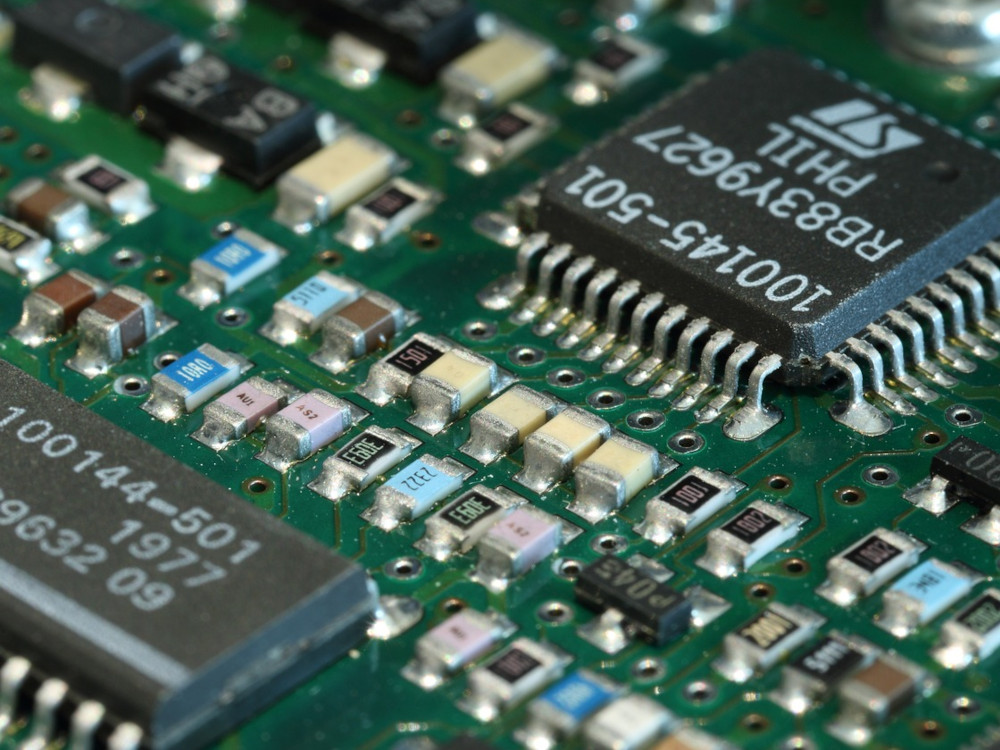
The advent of integrated circuits revolutionized technology, embedding their silicon foundations into gadgets aplenty, from mundane appliances to advanced artificial intelligence systems. The evolution from the modest Intel 80386, which operated without the need for cooling, to today’s voracious processors and graphics cards, mirrors the insatiable demand for power and performance in modern computing. However, there’s a catch—power consumption is hitting the ceiling, urging researchers to look beyond traditional frameworks.
Enter the world of 2D magnetic materials. These substances bear similarity to the transistors that form the backbone of modern circuits, yet they operate on an entirely different principle. The core concept of binary data—represented by “0s” and “1s”—remains unchanged, but 2D magnets propose a novel avenue to achieve this digital language.
Historically, a major hurdle for these materials was their reliance on extreme sub-zero temperatures to function, a requirement impractical for everyday applications. In a groundbreaking development, researchers at the Massachusetts Institute of Technology (MIT) have made significant progress, constructing a circuit from 2D van der Waals magnets that operates reliably at normal temperatures.
Combining an alloy of iron, gallium, and tellurium with another layer fabricated from tungsten and tellurium, the research team incorporated rare elements to achieve this feat. More impressively, the technique has brought forward the technical feasibility of designing integrated circuits entirely without transistors, instead utilizing the novel 2D magnets.
These circuits are not only operable at standard conditions, but they can also be manufactured in microscopic form, holding the promise that they could someday match or surpass the density of present-day transistor arrays. Still, widespread commercial production is yet to begin and requires further exploration to ascertain viability.
A particularly exciting aspect of this research is the potential impact on power efficiency. The study suggests these next-generation circuits might consume less than 1% of the electricity used by current technologies. This dramatic decrease in power requirement heralds a dual benefit—an exponential boost in efficiency and the elimination of elaborate cooling systems, reminiscent of the simpler days of processors like the 386.
The implication this technology has for the future of computing is substantial. A shift away from silicon-based transistors to these 2D magnetic materials could redefine the boundaries of power consumption, efficiency, and miniaturization in electronics, paving the way for devices that are far more sustainable and eco-friendly, as well as powerful. This advancement delineates a crucial step forward as we embark on the next chapter in the saga of silicon and look towards a future brimming with transformative potential.