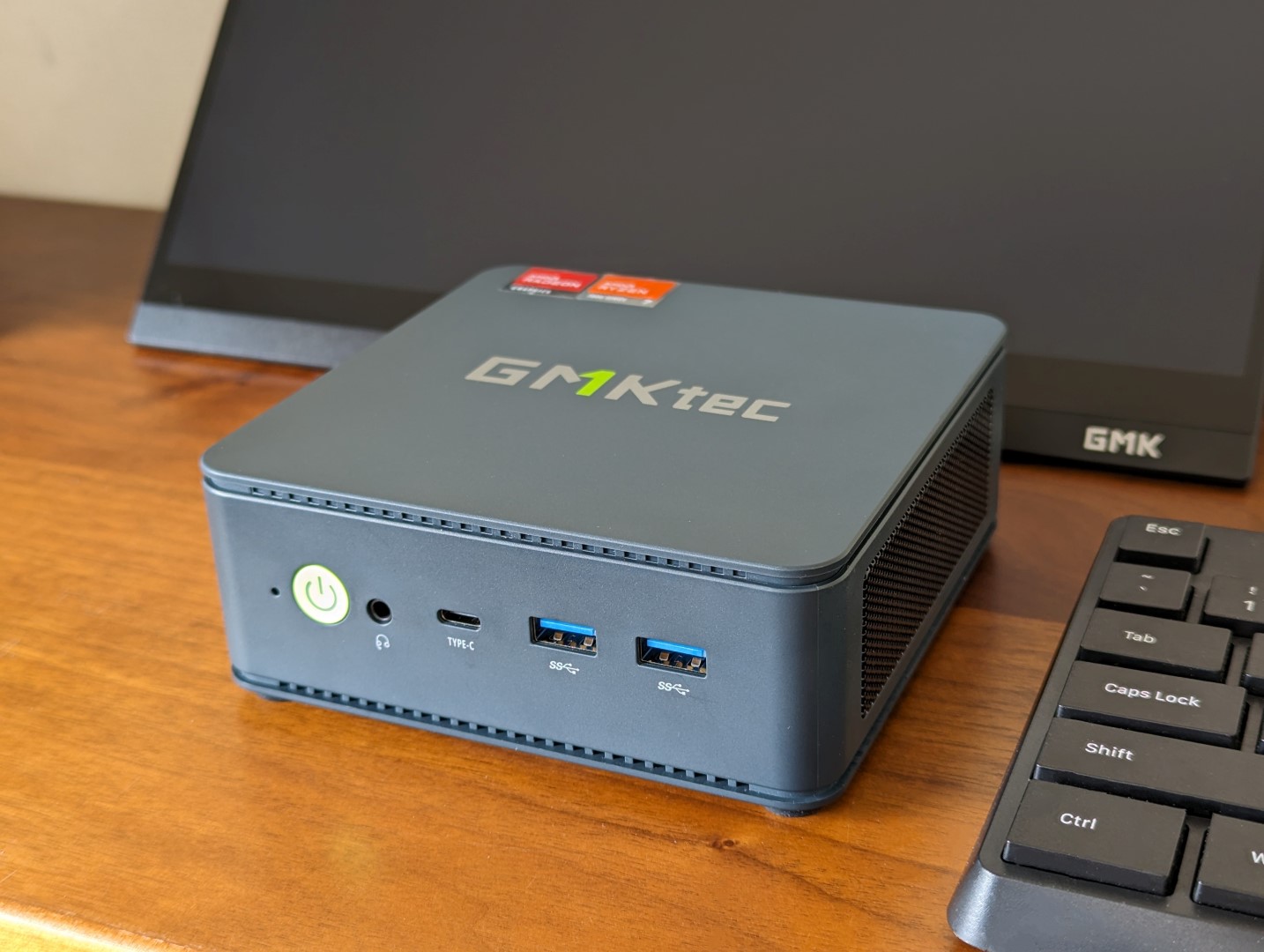
Designed to offer robust computing power in a compact form factor, the GMK NucBox K6 mini PC has entered the market as a formidable contender. This device is equipped with an AMD Ryzen 7 7840HS processor and an AMD Radeon 780M graphics unit, positioning it alongside the latest Intel Core Ultra laptops in terms of performance.
The GMK NucBox K6 delivers impressive results, averaging performance scores that compete with various models from well-known brands. Similar devices in its performance range include the Aoostar GOD77 with an AMD Ryzen 7 7735HS processor and AMD Radeon 680M GPU, the Geekom A7 featuring an AMD Ryzen 9 7940HS processor also with a Radeon 780M, and the Intel NUC 13 Pro Desk Edition Kit sporting an Intel Core i7-1360P CPU and Intel Iris Xe Graphics G7 96EUs.
Another comparable device is the Lenovo IdeaCentre Mini 01IRH8, which houses an Intel Core i7-13700H processor paired with Intel Iris Xe Graphics. Beelink’s contributions, such as the SER5 with an AMD Ryzen 5 5560U CPU and Radeon RX Vega 6 graphics, and the SER6 Pro with an AMD Ryzen 7 6800H with Radeon 680M, also fall into a similar performance category.
Even smaller form factors like the GMK NucBox M3 with an Intel Core i5-12450H and Intel UHD Graphics Xe G4 48EUs are part of the comparison, along with the GMK NucBox M4 that boasts an Intel Core i9-11900H and Intel UHD Graphics Xe 32EUs from Tiger Lake-H.
Performance metrics such as Frames Per Second (FPS) in gaming and graphic-intensive tasks give us an insight into the capability of these mini PCs. The GMK NucBox K6, with its AMD Radeon 780M, achieves FPS values that resonate with the high end of the average performance for the same GPU across other systems.
When benchmarked against its peers, the GMK NucBox K6 fluctuates within the higher FPS ranges, sometimes surpasses the average, and at other intervals, slightly falls below. In comparison to the Aoostar GOD77 and the Geekom A7, the GMK NucBox K6 holds its ground, revealing its strength in the mini PC space.
The Beelink GTR6 with an AMD Ryzen 9 6900HX and AMD Radeon 680M, and the Geekom A7 with an AMD Ryzen 9 7940HS and AMD Radeon 780M show comparable results, as do the GMK NucBox K3 Pro with an Intel Core i7-12650H and Intel UHD Graphics, highlighting the NucBox K6’s relevance in this high-performance niche.
In a rapidly evolving tech landscape where power and size are increasingly in a tug-of-war, the GMK NucBox K6 mini PC demonstrates that desktop-level performance can come in pint-sized packages. Whether for work, gaming, or media consumption, it establishes itself as a compact powerhouse suited for a variety of tasks that traditionally demanded much larger hardware.Selecting the right mini PC for your needs can be a challenging task, especially with the multitude of options available on the market. When it comes to raw performance, particularly in terms of graphics, the AMD Radeon 780M series and Intel’s Iris Xe Graphics are frequently discussed. Understanding the differences in performance across various models can help you make an informed decision when purchasing your next mini PC.
Mini PCs powered by AMD Ryzen processors with integrated Radeon graphics, such as the Geekom A7 with a Ryzen 9 7940HS and the GMK NucBox K6 with a Ryzen 7 7840HS, showcase solid performance. The Radeon 780M GPUs in these systems offer respectable frame rates across various benchmarks, making them suitable for tasks that require a fair amount of graphical horsepower, like light gaming or video editing.
On the other hand, mini PCs featuring Intel processors with integrated Iris Xe Graphics offer a varying range of performance.
When it comes to looking at the data, it’s essential to consider the frame rates across different resolutions and settings. Higher frame rates indicate a smoother and more responsive experience, which is crucial for gaming and multimedia tasks. It’s evident that PCs with AMD Radeon 780M GPUs often outperform their counterparts with Intel UHD Graphics with a greater number of Execution Units (EUs).
For instance, the Beelink SER6 Pro, which comes with an AMD Ryzen 7 6800H and AMD Radeon 680M graphics, can deliver substantial performance that could be ideally suited for professionals and creators who require power in a compact form.
Benchmark data often quote minimum and peak frame rates to provide an understanding of the range you can expect under different circumstances. Performance can vary significantly under load, so it’s important to consider these figures, especially if you intend to use your mini PC for demanding applications.
When choosing between AMD and Intel-based mini PCs, think about the specific applications you’ll be running. AMD’s offerings tend to have a strong presence in the gaming sector, delivering robust performance in a compact form factor. Meanwhile, Intel’s integrated graphics are no slouch, particularly with the Iris Xe pushing impressive frame rates for integrated graphics.
For users who need a balance between performance and power efficiency, models like the Intel NUC 13 Pro Desk Edition Kit and the Lenovo IdeaCentre Mini stand out. These systems, equipped with Intel Core i7 processors and Iris Xe Graphics, aim to deliver a combination of high performance and energy efficiency suitable for a range of tasks, from office productivity to multimedia consumption.
While gaming might not be the primary use for many mini PC consumers, those looking to dabble in this area should pay close attention to frame rates at different resolutions. For casual gaming, systems like the aforementioned Geekom A7 and GMK NucBox K6 are noteworthy due to their integrated Radeon 780M graphics solutions.
For users with less demanding graphics needs, options like the Beelink SER5 or the GMK NucBox M3, which contain lower-tier integrated graphics, could suffice. These may provide adequate performance for everyday productivity and media streaming while offering a more budget-friendly price point.
When considering the purchase of a mini PC, also take into account factors such as thermal management, upgradability, and connectivity options, as they can significantly impact your user experience.
In conclusion, assessing and comparing frame rate data alongside other specifications is critical when selecting a mini PC. Whether you’re a content creator, a professional seeking a powerful yet compact workstation, or a casual gamer, there are plenty of options in the market to suit your requirements. Always cross-reference performance metrics against your personal or work needs to determine the best fit for your situation.As the demand for compact yet powerful desktop computers increases, the performance capacity of mini PCs has become increasingly relevant. With various manufacturers offering units that pack considerable computational power, understanding how different systems compare in terms of performance is crucial for consumers who need to balance size constraints with computing requirements.
In the realm of mini PCs, the competition is stiff, with companies pushing the boundaries of integrated graphics and processing power. To provide a clearer picture of the current landscape, let’s dive into a comparative analysis of several mini PCs currently on the market, with a focus on their gaming frame rates (fps), which serve as a good indicator of graphical performance.
AcePC Wizbox AI equipped with an Intel Core Ultra 7 155H and Intel Arc 8-Cores iGPU leads the pack with impressive results, offering a solid balance between efficiency and power. This system is an excellent option for users who require a blend of performance features with the compact design of a mini PC.
Following closely, the Beelink SER5 powered by an AMD Ryzen 5 5560U and AMD Radeon RX Vega 6 iGPU presents a decent alternative, particularly for those invested in AMD’s ecosystem. Although it demonstrates a significant performance drop compared to the AcePC, it provides reasonable frame rates for less demanding gaming scenarios and everyday tasks.
Turning to the Intel camp, the NUC 13 Pro Desk Edition Kit with an Intel Core i7-1360P CPU and Intel Iris Xe Graphics G7 96EUs delivers moderate gaming performance. This kit is suitable for professionals who need a little more graphical prowess for their design work or casual gaming.
Lenovo IdeaCentre Mini 01IRH8, armed with an Intel Core i7-13700H and the same Intel Iris Xe Graphics G7 96EUs, falls behind in frame rates, suggesting that other factors like thermals or power limits might be impeding its full potential.
The GMK NucBox M3 and the Geekom A7 round out our comparison list. The former, utilizing an Intel Core i5-12450H with Intel UHD Graphics Xe G4 48EUs, is more aligned with essential computing tasks rather than gaming, reflecting its lower fps rates. The Geekom A7, featuring an AMD Ryzen 9 7940HS CPU and an AMD Radeon 780M iGPU, can still handle an array of games at reduced settings.
For potential buyers, understanding the trade-offs between performance and form factor is critical. Although mini PCs like the AcePC Wizbox AI and the Beelink models may not match the raw power of full-sized desktops, they are remarkable feats of engineering that bring considerable power to space-constrained environments.
For those seeking to purchase a mini PC, consider the intended use. If gaming is a priority, looking for models with the best iGPU performance will be key, keeping in mind that external factors such as cooling solutions and power delivery can also impact performance. On the other hand, if the focus is on general productivity or media consumption, moderate iGPU performance may suffice, allowing for a more budget-friendly choice.
In conclusion, the landscape of mini PCs offers a broad spectrum of performance options, catering to diverse user needs. Whether it’s for gaming, everyday computing, or professional tasks, there’s a mini PC designed to fit the bill, with the AcePC Wizbox AI standing out as an impressive contender in terms of graphical capabilities. As technology progresses, we can only expect these compact computers to get even more powerful and efficient.In the world of compact computing, understanding the performance capabilities of various processors and integrated graphics units is essential. With numerous options available, comparing the frame rates (fps) of different devices can give significant insights into their graphical performance, particularly for gaming or graphically intensive tasks.
The Beelink SER6 Pro, powered by an AMD Ryzen 7 6800H processor with an AMD Radeon 680M GPU, delivers a commendable performance, reaching 41.9 fps, only a 14% dip compared to the leading scores. Its sibling, the Beelink GTR6, which boasts the AMD Ryzen 9 6900HX and AMD Radeon 680M, shows a similar fps of 41.6, making it a strong competitor in the compact computing space.
On the other hand, comparing to leading competitors, the Aoostar GOD77, with an AMD Ryzen 7 7735HS and AMD Radeon 680M GPU, records a slightly lower 39.1 fps. Meanwhile, the Intel NUC 13 Pro Desk Edition Kit with an Intel Core i7-1360P CPU and Intel Iris Xe Graphics G7 hits 26.1 fps, showcasing the disparity between AMD and Intel integrated graphics performance in certain configurations.
The Lenovo IdeaCentre Mini 01IRH8, using an Intel Core i7-13700H processor coupled with an Intel Iris Xe Graphics G7, sits at 22.9 fps. This is nearly half the performance seen with the AMD-equipped counterparts, which is crucial for users prioritizing graphical output.
For those considering more budget-oriented models like the Beelink SER5 with an AMD Ryzen 5 5560U and Radeon RX Vega 6 GPU, expectations should be tempered as it achieves 20.5 fps. Similarly, the GMK NucBox models with varying processors such as the Intel Core i5-12450H, i9-11900H, and AMD Ryzen 7 7840HS with respective integrated graphics units present lower frame rates, illustrating the trade-offs between performance and price point.
It is apparent that AMD’s Radeon 680M and 780M GPUs in small form factors offer a robust performance balance between the higher-tier Beelink SER6 Pro and the more modest GMK NucBox K6. Potential buyers should consider these metrics when assessing their compact computing needs, especially if they require systems that can handle higher graphical demands.
In summary, when choosing a mini PC or compact computing device, it’s crucial to weigh the performance of the integrated GPUs combined with their CPU counterparts. The AMD Ryzen 7 and 9 series, particularly when paired with Radeon 680M or 780M GPUs, seem to deliver superior frame rates, making them a favorable choice for users needing more intensive graphical processing capabilities.