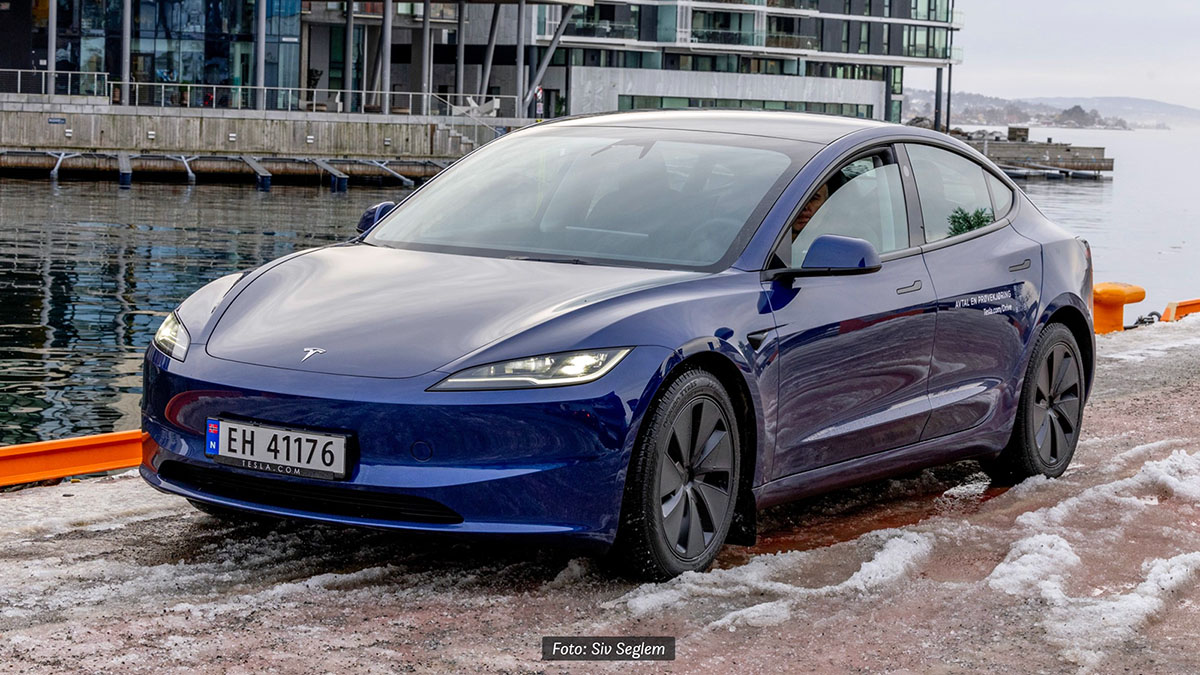
Tesla has long been a frontrunner in the Norwegian Automotive Federation’s winter range tests, demonstrating modest range reductions for their performance vehicles such as the Model S. However, during the 2024 winter EV battery test event known as the El Prix, the new Tesla Model 3 Highland demonstrated a significant range reduction in the cold, undercutting its previously impressive performance in such conditions.
Despite boasting the longest official range among the participants before the test, the Model 3 Highland experienced an unexpected 30% range reduction in freezing temperatures, resulting in an 18kWh/100km power consumption rate that positioned it towards the bottom of the rankings.
In stark contrast, competitors from China fared much better, with the BYD Dolphin—manufactured by the world’s largest EV maker—suffering only a 20% range loss. Other brands including KIA, NIO, XPeng, BMW, and Lotus also showcased resilience in the winter test, with range declines between 12% and 14% under temperatures that varied from -2 to -10 degrees Celsius.
Surprisingly, a premium entrant from China, the HiPhi Z, outperformed all others, showcasing a mere 5.9% range reduction. This luxury electric sedan, set to enter the European market, is equipped with a 120 kWh battery and advanced technology like an active grill shutter that improves thermal management and reduces drag. With a price tag of $113,500, the HiPhi Z is a testament to luxury meeting performance, even under challenging winter weather conditions.
The winter range test not only highlighted the competitive advancements of various electric car manufacturers but also underscored the significant differences in their vehicles’ performance in cold weather. The results from this rigorous testing provide invaluable insights for prospective EV owners who prioritize winter driving efficiency and reliability.