AI Helps Bring macOS Support to HP Laser Printer That Was Previously Windows-Only
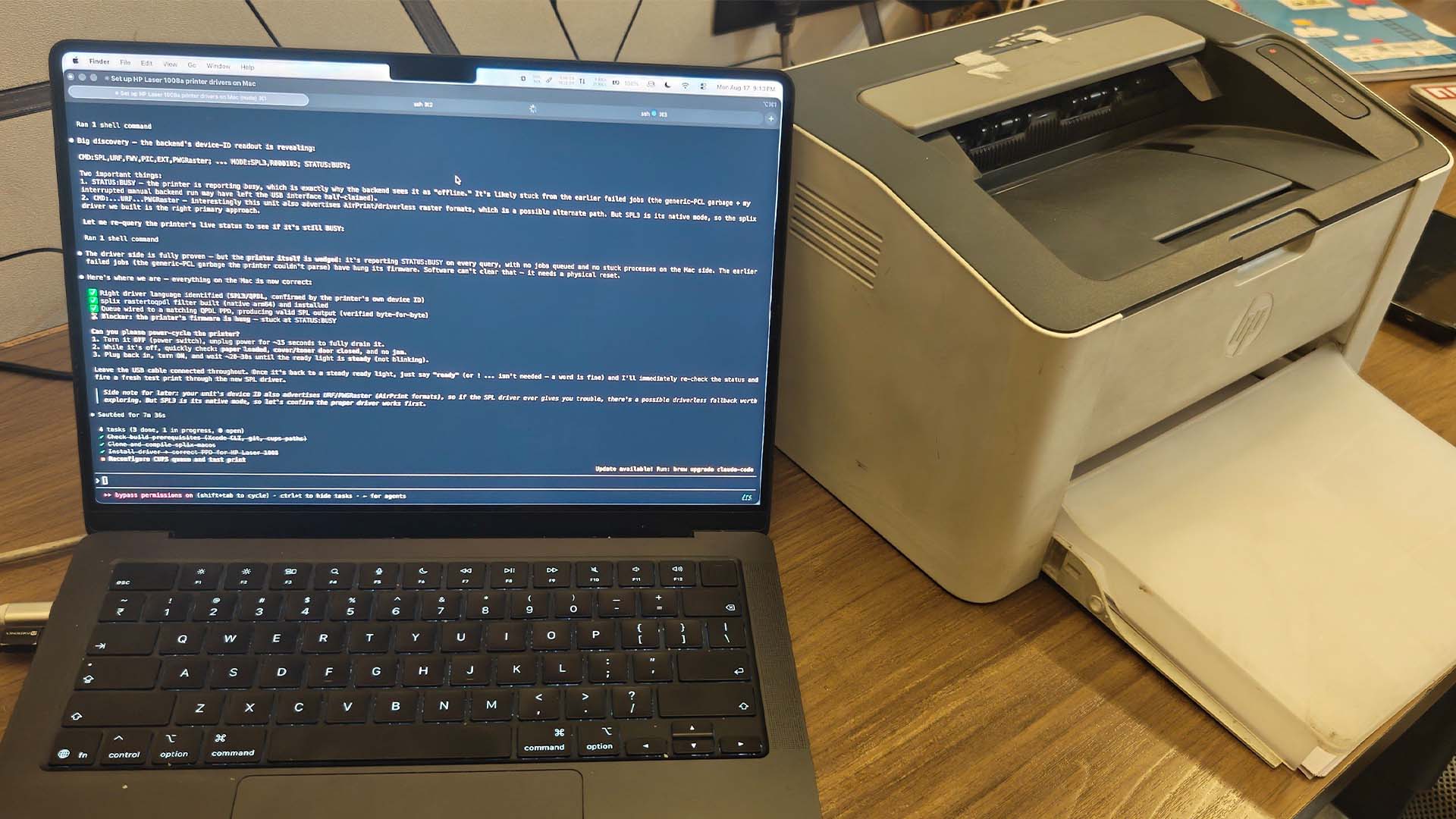
A low-cost HP Laser printer that was once limited to Windows has reportedly been made compatible with macOS thanks to a custom driver developed with the help of Claude AI. The workaround solves a long-standing problem for users who own HP Laser models that never received official Mac drivers.
The printer in question appears to be the HP Laser 1008a, an affordable model that uses HP’s host-based printing system, also known as Quick Page Description Language. Unlike printers that support widely used standards such as AirPrint or PostScript, this type of printer depends on software translation from the operating system. Because HP did not provide a macOS driver for this lineup, the printer could only function properly on Windows.
That limitation became especially frustrating for users who moved to newer Macs, including Apple Silicon models. Even if the printer itself was still working perfectly, macOS could not communicate with it in the way required to process print jobs. For many people, that meant keeping a Windows PC around simply to continue using an otherwise functional printer.
A developer named Kuber found a way around the issue by using Claude AI to help build a custom macOS driver. The driver works by adding a translation layer between macOS and the printer’s proprietary communication method. In simple terms, it allows the Mac to send print data in a way the HP Laser printer can understand.
Kuber also shared evidence of a successful test print, showing that the solution is not just experimental but actually works. The result is a practical example of how AI coding tools can help solve real-world hardware compatibility problems that previously required deep technical knowledge, extensive reverse engineering, or official manufacturer support.
Even better, Kuber made the code publicly available, allowing other users with similar HP Laser printers to try the fix instead of starting from scratch. This could be especially useful for people who still own older but reliable printers and do not want to replace them simply because of missing macOS support.
This case highlights a growing trend: AI is becoming increasingly useful for software development, device compatibility, and platform porting. In the past, a missing driver could permanently limit hardware to one operating system. Now, AI-assisted development can help skilled users create bridges between devices and platforms that were never officially designed to work together.
The HP Laser 1008a macOS driver workaround is more than just a clever hack. It shows how artificial intelligence can extend the life of existing hardware, reduce electronic waste, and give users more freedom to choose the operating system they prefer. For Mac users stuck with a Windows-only HP Laser printer, this development could be the breakthrough they have been waiting for.


