Several U.S. States Push 3D Printer Restrictions to Stop Homemade Gun Parts
3D printing has moved far beyond a hobbyist trend. Once seen as a niche technology for makers and engineers, it has quickly become a major global industry. In 2025, the worldwide 3D printing market was valued at roughly $24 billion to $29 billion, and forecasts suggest it could climb as high as $89 billion to $135 billion between 2030 and 2034. That would mean annual growth of around 18% to 24%, making additive manufacturing one of the fastest-growing areas in modern technology.
The appeal is easy to understand. A 3D printer allows people to create physical objects at home with surprising flexibility. Users can print toys, replacement parts, household tools, fashion accessories, medical devices, prototypes, and even specialized industrial components. In many cases, people do not need advanced engineering knowledge to turn a digital design into a usable object.
But the same convenience that makes 3D printing so powerful has also raised serious concerns among lawmakers and law enforcement agencies. One of the biggest issues is the ability to print firearm parts at home. When these parts are assembled into working weapons without serial numbers, they can become difficult or impossible for authorities to trace. These unregistered weapons are often referred to as “ghost guns,” and they have become a growing focus in debates over public safety, digital manufacturing, and gun control.
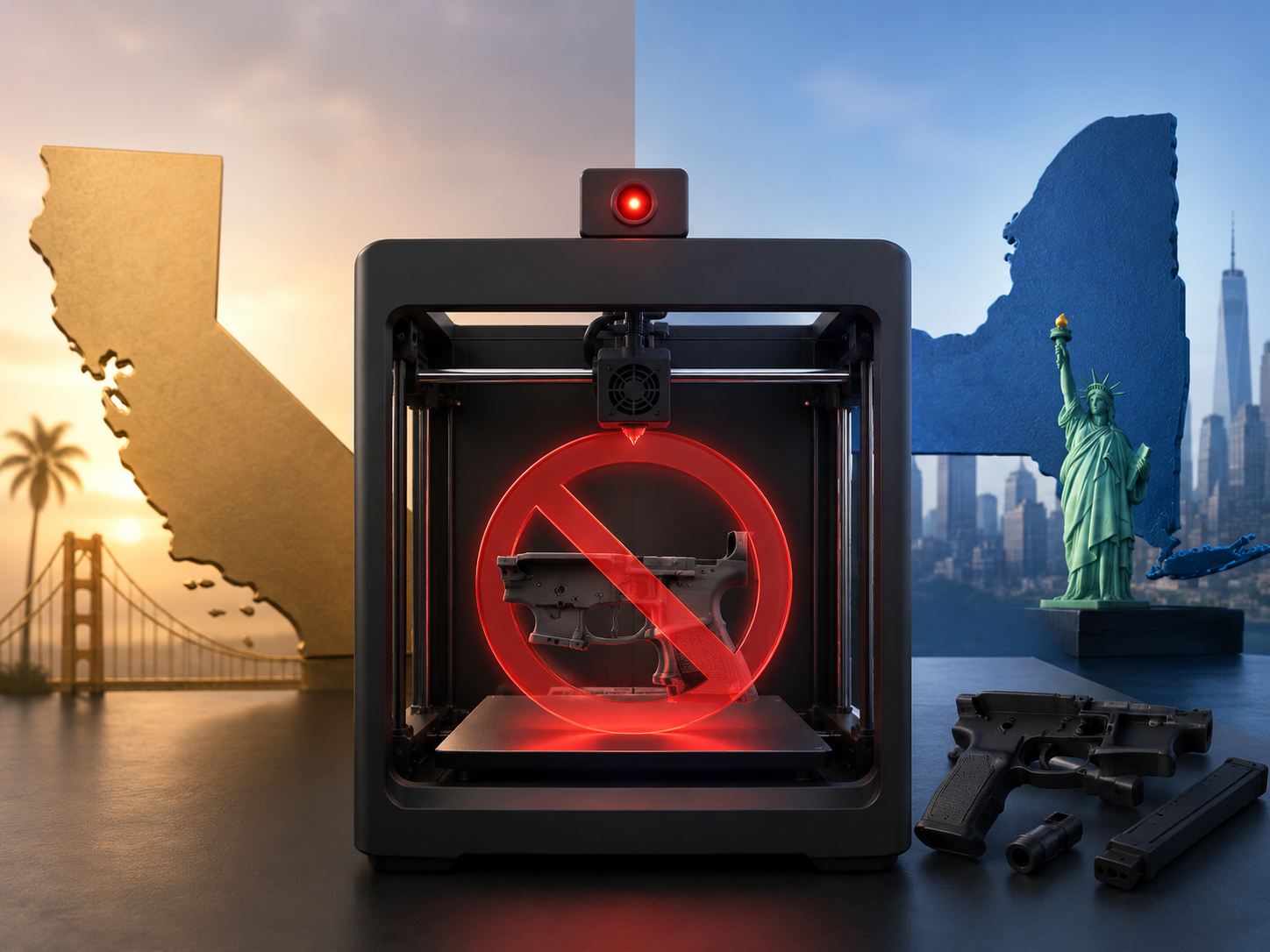
Now, two of the most populous U.S. states are moving toward new legislation aimed at limiting the use of 3D printers for producing firearm components. California’s AB 2047 and a proposed New York mandate would require future 3D printers to include blocking technology designed to detect and prevent the printing of gun parts.
The proposed system would work by scanning each digital file before printing begins. The printer or related software would compare the submitted design against a database of known firearm components. If the design closely matched a restricted gun part, the printer would reject the file and stop the print from going forward.
If these laws are successfully implemented, the required blocking technology could begin appearing in 3D printers as early as 2029.
Supporters argue that this kind of safeguard is necessary as 3D printers become more affordable, more advanced, and more common in homes, schools, workshops, and businesses. They believe that preventing the easy production of untraceable firearm parts could help close a dangerous loophole in existing gun laws.
However, the proposals are already facing criticism from privacy advocates, technologists, digital rights groups, and some 3D printing enthusiasts. One major concern is that the technology could mistakenly block harmless designs that simply resemble firearm components. A mechanical bracket, artistic object, tool part, or custom hardware design could potentially be flagged even if it has nothing to do with weapons.
Others worry about the broader implications of scanning user-created files. If every 3D model must be analyzed before printing, critics argue that private designs, artistic work, inventions, and proprietary business concepts could be exposed to outside systems. For designers, engineers, and small manufacturers, that raises concerns about intellectual property and creative freedom.
There is also debate over whether the proposed restrictions would actually stop determined criminals. Critics say people with enough technical knowledge may find ways to bypass the filters, alter designs to avoid detection, use older printers without the technology, or produce parts in places where the rules do not apply. From that perspective, the legislation may place heavier limits on ordinary users than on those intentionally trying to break the law.
The debate highlights a growing challenge for governments: how to regulate powerful consumer technology without limiting innovation. 3D printing is transforming manufacturing by making production faster, cheaper, and more accessible. At the same time, it creates new risks when digital files can be turned into real-world objects with little oversight.
As California and New York move forward with 3D printer safety legislation, the outcome could influence future regulations across the United States. If the laws take effect, printer manufacturers may need to redesign their machines and software to meet new compliance standards. That could affect pricing, privacy, usability, and the future direction of the consumer 3D printing market.
For now, the issue remains a balancing act between public safety and technological freedom. As 3D printing continues to grow, the question is no longer just what people can make at home. It is also what society is willing to allow, restrict, or monitor in the age of digital manufacturing.