Chinese tech giants are still turning to NVIDIA for AI GPUs despite growing pressure to use local alternatives, highlighting how difficult it remains to replace NVIDIA’s hardware and software ecosystem in artificial intelligence workloads.
Huawei has been gaining ground in China’s AI accelerator market, especially as U.S. export restrictions continue to limit access to NVIDIA’s most powerful chips. However, major companies such as ByteDance, Alibaba, and Tencent reportedly continue to view NVIDIA as their preferred option because of its strong performance, mature CUDA software platform, and broad developer support.
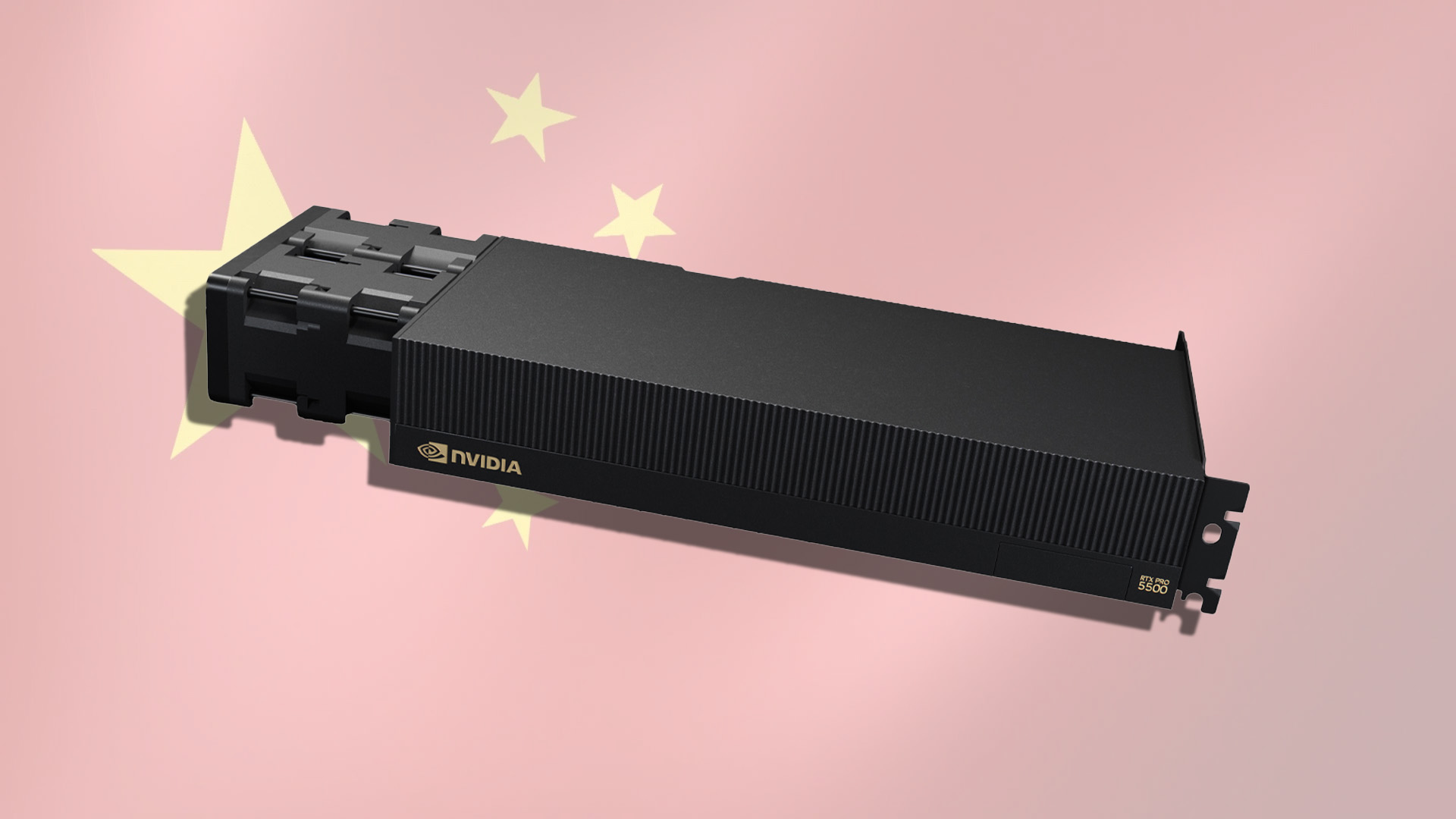
According to a recent report, Chinese companies have placed massive orders for NVIDIA RTX PRO 5500 GPUs, with demand reaching far beyond what NVIDIA can currently supply. The combined value of these orders is estimated at around $35 billion, showing just how aggressively China’s leading technology firms are investing in AI infrastructure.
The demand comes at a time when NVIDIA’s more advanced B300 chip is not cleared for shipment to China under current U.S. restrictions. The H200 is also subject to licensing requirements, making procurement more complicated. In theory, this situation should push Chinese companies toward domestic AI chips such as Huawei’s Ascend series. In practice, many firms still appear unwilling to move away from NVIDIA unless they have no other choice.
One of the biggest reasons is CUDA. NVIDIA’s software platform remains a major advantage in AI development, giving developers access to a highly optimized ecosystem for training, inference, and deployment. While Huawei has made progress with its Ascend hardware, software compatibility and developer adoption remain critical factors for large-scale AI operations.
The NVIDIA RTX PRO 5500 is not the company’s most powerful AI-focused GPU, but it offers a strong balance of performance, memory capacity, and usability. Each unit features 84GB of GDDR7 ECC memory, 21,760 CUDA cores, and memory bandwidth of up to 1.398TB/s. These specifications make it a capable option for AI inference, enterprise workloads, and model development where access to higher-end NVIDIA accelerators is restricted.
Huawei’s Ascend 950PR looks highly competitive on paper. It reportedly offers 128GB of HiBL 1.0 memory and memory bandwidth of around 1.4TB/s to 1.6TB/s, while operating in a similar power range to the RTX PRO 5500. Even so, hardware specifications alone do not decide the winner in the AI accelerator market. For many companies, the software stack, developer tools, optimization libraries, and existing AI workflows matter just as much as raw performance.
The scale of demand is also creating a serious supply problem. NVIDIA has reportedly informed partners that it may only be able to fulfill around 5% to 10% of RTX PRO 5500 shipments requested by Chinese customers. Total demand from China is said to have exceeded 6 million units, far above available supply.
For companies such as ByteDance, Alibaba, and Tencent, the RTX PRO 5500 appears to be a practical solution for AI inference. Inference generally requires less computing power than training large models from scratch, but it still benefits heavily from high memory capacity, bandwidth, and efficient software support. As AI products scale to serve millions of users, inference infrastructure becomes one of the most important areas of investment.
The situation also shows why older NVIDIA GPUs continue to attract attention. The discontinued Tesla V100, now several years old, has seen renewed demand because its 32GB of HBM2 memory remains useful for running medium-sized large language models and other AI workloads. As demand rises, used V100 prices have reportedly increased on the second-hand market, with some units carrying a noticeable premium.
Overall, the AI hardware race in China is becoming more complex. Huawei is narrowing the gap and benefiting from domestic demand, but NVIDIA’s lead in software, performance consistency, and ecosystem maturity remains difficult to overcome. Even with export limits and supply shortages, China’s biggest tech firms are still lining up for NVIDIA GPUs, proving that in the AI accelerator market, the strongest chip is not always defined by hardware alone.