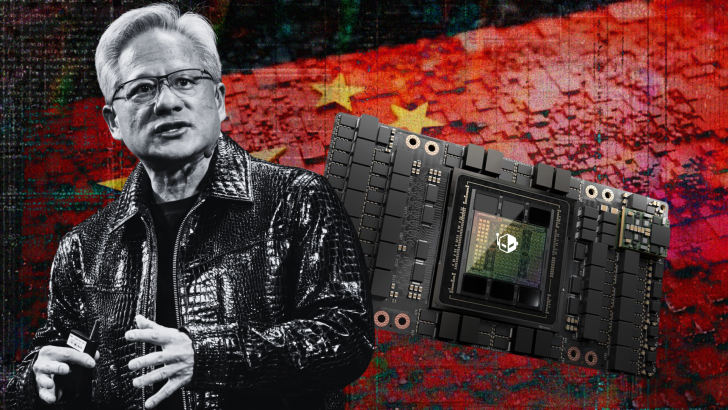
China is reportedly taking a hard line on NVIDIA’s H200 AI chip shipments, with customs authorities said to be telling customers and logistics agents that the latest accelerators are not currently allowed to enter the country. If accurate, the message signals a practical freeze on H200 imports into China, despite recent policy noise suggesting the opposite.
This development adds another twist to the ongoing NVIDIA-China chip story, which has been marked by rapid shifts and mixed signals. In recent weeks, there have been indications that sales of H200-class hardware to China could move forward, and separate reports have suggested U.S. officials might consider loosening some restrictions affecting shipments. But the latest claims indicate China’s customs position may be blocking the H200 at the border, creating fresh uncertainty for data center buyers and AI infrastructure planners.
Sources describe the language from officials as strict enough that it amounts to a ban for now, even if that stance could change later depending on how the situation evolves. The result is a confusing environment for companies trying to secure high-end AI computing capacity, especially those building or expanding large-scale training clusters.
What stands out is that resistance to the H200 doesn’t appear to be driven by lack of interest from Chinese customers. Demand for cutting-edge AI GPUs remains intense, and the H200 is widely viewed as a more capable option than previously available alternatives like the H20. Instead, the bigger obstacle appears to be administrative control over what can be imported and under what conditions.
Earlier reporting suggested Chinese authorities were reviewing H200 imports on a case-by-case basis, with approvals potentially limited to research and development use within academic institutions. That kind of narrow channel, however, would be unlikely to satisfy the needs of major AI companies and hyperscalers. Those firms require massive GPU volumes to stay competitive in model training and inference at scale, and demand has been described as reaching into the millions of units—an indication of just how critical access to top-tier compute has become in the global AI race.
For now, the situation leaves enterprises, cloud providers, and research organizations in China facing a familiar question: whether they can reliably plan around NVIDIA’s newest AI hardware, or whether supply will remain constrained by policy and customs enforcement. As both U.S. and Chinese approaches continue to evolve, the only certainty is continued volatility in the China-bound AI chip pipeline.