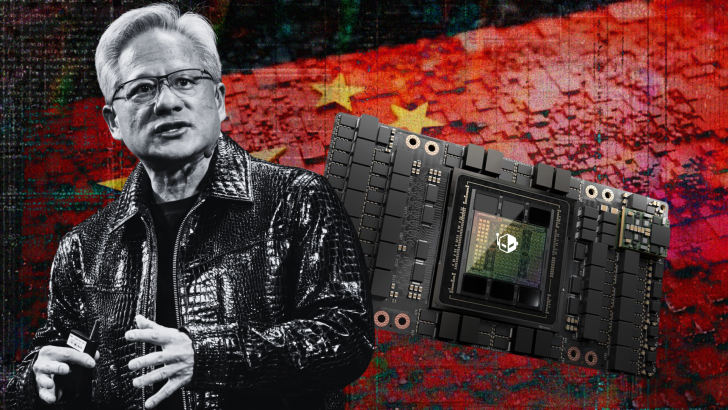
Major Chinese AI labs and hyperscale cloud providers are reportedly moving closer to getting their hands on NVIDIA’s H200 AI GPUs, after securing the licenses needed to buy the chips. The shift suggests NVIDIA is regaining momentum in one of its most important markets, and that CEO Jensen Huang’s recent trip to Beijing may have helped unlock progress that had been stuck for months.
According to a new report from Reuters, some of the first Chinese tech giants expected to receive access to the China-compliant NVIDIA H200 include DeepSeek, ByteDance, Alibaba, and Tencent. The early wave of orders alone could reportedly top 400,000 H200 GPUs, with broader demand from Chinese firms said to be around 2 million chips in total. That’s a striking figure, especially given that the H200 is part of NVIDIA’s Hopper generation, which has been on the market for a while—yet demand remains extremely high because NVIDIA’s AI accelerators are still widely seen as the most effective option for training and running large-scale AI models.
NVIDIA’s push back into China hasn’t been simple. The company has faced intensifying competition from domestic chipmakers and significant revenue pressure from reduced access to Chinese customers. Earlier, NVIDIA reportedly received approval from the Trump administration to sell H200 chips into China, and the company even agreed to a profit-sharing arrangement. But despite that progress, Chinese regulators reportedly slowed things down afterward, delaying licensing and approvals as Beijing weighed its next steps.
Now, those approvals appear to be moving again. At the same time, the report indicates Chinese authorities may attach conditions to companies that receive NVIDIA’s AI chips. While specifics aren’t fully clear, that detail points to a tightly managed rollout, with regulators seeking oversight as major firms add powerful compute capacity.
For NVIDIA, the development is a notable turnaround from the company’s recent public stance on China. Jensen Huang had previously said NVIDIA’s market share in the region had effectively fallen to zero, and the company had signaled that China revenue expectations would no longer be part of its guidance. If licensing continues to open up and shipments begin at scale, China could quickly become a meaningful driver of demand again—even if the market looks different than it did before export controls and compliance requirements reshaped what can be sold.
The bigger question now is what a new influx of H200 GPUs means for China’s AI landscape. With more high-end compute available, leading AI labs and cloud platforms could accelerate model training, expand inference capacity, and shorten development cycles—areas where constrained access to advanced GPUs has been a growing bottleneck. It also highlights the ongoing challenge for local alternatives: despite years of investment, domestic AI chip options reportedly haven’t displaced NVIDIA in performance or ecosystem readiness at the scale many hyperscalers want, which helps explain why so many Chinese firms are eager to secure H200 supply as soon as approvals allow.
If these reported orders materialize, the next few quarters could show whether NVIDIA’s China-compliant Hopper strategy can meaningfully restore its position in the region—and how quickly Chinese AI leaders can translate fresh GPU capacity into new models, services, and competitive gains.


