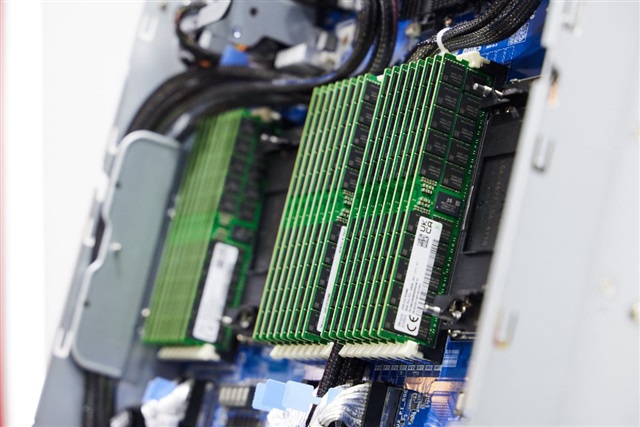
China’s AI-fueled supply chain push is rapidly reshaping the global DRAM market. At the center of this shift is CXMT, the country’s leading DRAM manufacturer, which plans to focus entirely on next‑generation memory in 2025. The company is pivoting to DDR5, LPDDR5, and high-bandwidth memory (HBM), mirroring where demand is strongest across AI, data centers, PCs, and advanced mobile devices.
This strategic move accelerates the industry’s broader transition away from legacy standards. DDR5 is becoming the default for new servers and PCs, LPDDR5 powers premium smartphones and AI-capable laptops, and HBM sits at the heart of cutting-edge AI accelerators and high-performance computing. By concentrating on these segments, CXMT is aligning capacity with the fastest-growing end markets instead of diluting output across older technologies.
For months, the market has wrestled with fears that a wave of new production could flood DDR5 supply and drive prices sharply lower. Those concerns were understandable as more fabs and lines came online while adoption was still ramping. However, the product mix now matters as much as raw capacity. A shift toward HBM and advanced LPDDR5 can absorb substantial wafer allocation, easing the risk that mainstream DDR5 gets oversupplied. At the same time, a full-throttle migration to newer standards naturally reduces the industry’s focus on DDR4, which could tighten availability for legacy platforms and stabilize or even firm DDR4 pricing in some channels.
What this means for different buyers and industries:
– Data centers and AI infrastructure: HBM remains the performance crown jewel, and prioritizing it can keep supply constrained relative to demand. DDR5 server memory should continue to scale, with pricing influenced by how aggressively AI deployments grow through 2025.
– PC builders and enthusiasts: DDR5 adoption keeps rising as new CPU platforms standardize on it. If capacity is balanced by demand from servers and AI, retail DDR5 pricing trends are more likely to stabilize than collapse.
– Mobile and edge devices: LPDDR5 will benefit from CXMT’s pivot as OEMs push more on-device AI features, which favor higher bandwidth and lower power draw.
– Legacy systems: Reduced emphasis on DDR4 may limit selection over time. Enterprises with long refresh cycles should plan accordingly.
Key takeaways for 2025:
– The center of gravity in DRAM is shifting to AI-centric memory, especially HBM, with DDR5 as the mainstream backbone for servers and PCs.
– Concerns about a DDR5 glut and steep price drops are tempered by stronger AI demand and a product mix that allocates more wafers to HBM and LPDDR5.
– DDR4 could see tighter supply as manufacturers retool for newer standards, influencing procurement strategies for organizations still dependent on older platforms.
In short, China’s AI-driven expansion isn’t just adding capacity—it’s redirecting it. By prioritizing DDR5, LPDDR5, and HBM, CXMT is helping push the industry toward faster, denser, and more efficient memory at the exact moment when AI workloads, high-bandwidth applications, and next-gen compute are hungry for it. For buyers, the practical play is to watch how much capacity flows into HBM versus mainstream DDR5, since that balance will shape price trends through 2025.