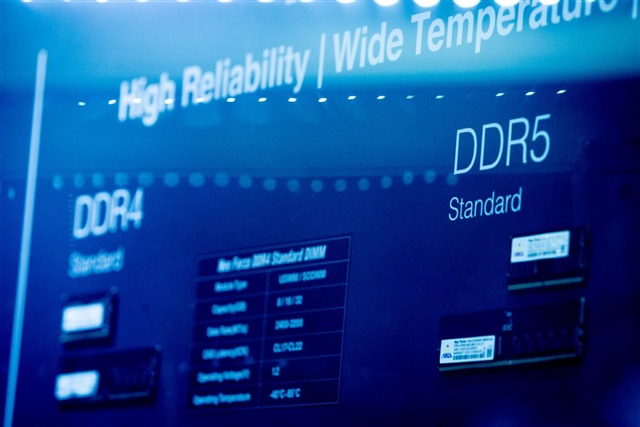
DDR4 price surge squeezes industrial PC makers, accelerating the shift to DDR5
The global components market has been hit by another wave of price volatility, and memory is at the center of the storm. DDR4 prices, in particular, are climbing fast as manufacturers scale back production and redirect capacity toward newer-generation DDR5. That shift is rippling through the industrial PC ecosystem, where long product lifecycles and tightly qualified bill of materials make sudden cost spikes especially painful.
Industrial PC vendors acknowledge the trend is hard to ignore: as memory makers prioritize DDR5, DDR4 supply tightens, lead times stretch, and module costs rise. The result is mounting pressure to transition roadmaps, validate new platforms, and protect margins while keeping delivery commitments to customers in manufacturing, automation, transportation, healthcare, and energy.
Why DDR4 costs are rising now
– Reduced output: Memory suppliers are trimming DDR4 production to focus on higher-growth DDR5, constraining supply for legacy modules such as UDIMM, SO-DIMM, and ECC variants commonly used in industrial systems.
– Inventory normalization: The post-downcycle digestion of excess DRAM stock has largely ended, removing a buffer that kept prices subdued.
– Broad DRAM uptrend: Strength in server and advanced computing demand is lifting overall DRAM pricing, which amplifies the squeeze on mature products like DDR4.
How this impacts the IPC market
– Budget pressure: BOM costs are rising quickly, squeezing already tight project margins and forcing vendors to reprice proposals more frequently.
– Tighter planning windows: Quote validity periods are shrinking as memory pricing moves week to week, complicating procurement and contract negotiations.
– Delivery risk: Lengthening lead times on specific DDR4 ECC and industrial-temperature modules can jeopardize deployment schedules for systems in regulated or mission-critical environments.
– Lifecycle friction: Many industrial platforms were qualified on DDR4 for stability and longevity. Requalifying with DDR5 takes time, even if the performance gains are attractive.
Why some IPC designs still lean on DDR4
– Long qualification cycles: Ruggedized systems undergo extensive validation for temperature, shock, vibration, and electromagnetic compatibility. Changes to memory can trigger retesting across the stack.
– Ecosystem maturity: Although DDR5 is gaining ground fast, not every industrial board, CPU, or BIOS/firmware combination supports the exact module types needed across use cases, especially with ECC and wide temperature ranges.
– Consistency and serviceability: Large fleets already deployed on DDR4 benefit from simplified spares and maintenance, which can outweigh performance considerations in certain applications.
Why the DDR5 transition is accelerating anyway
– Narrowing cost gap: As DDR5 scales and DDR4 supply tightens, the price delta is shrinking, making DDR5 more cost-competitive than it was just a short time ago.
– Higher bandwidth and efficiency: DDR5 delivers significant throughput gains and improved power efficiency, unlocking headroom for AI at the edge, vision systems, and data-intensive industrial workloads.
– Future-proofing: Designing in DDR5 now reduces the risk of mid-lifecycle component discontinuities and helps ensure longer platform availability.
What IPC vendors and buyers can do now
– Diversify sources: Qualify multiple DRAM suppliers and module types (including industrial-temp and ECC options) to reduce single-source exposure.
– Lock in commitments: Use longer-term supply agreements and time-phased purchase orders to stabilize pricing and secure allocation for critical builds.
– Accelerate validation: Fast-track DDR5 testing on current and next-gen boards, including SO-DIMM and UDIMM ECC configurations common in embedded and industrial PCs.
– Build flexible BOMs: Where possible, certify alternative densities and speeds to widen procurement options without sacrificing system stability.
– Revisit specs: For deployments where DDR5 is viable, adjust platform requirements to benefit from its performance and improving availability.
– Communicate early: Coordinate closely with customers on forecast visibility, lead-time expectations, and potential substitutions to avoid schedule slips.
What buyers should watch
– Lead-time signals: Pay attention to sudden changes in delivery windows for specific DDR4 SKUs; that’s often an early warning of further price movement.
– Module specifics: Validate exact part numbers, timings, and temperature ratings; subtle differences can affect stability in industrial environments.
– Total cost of ownership: Factor in potential DDR4 price escalation over the service life. The higher upfront cost of DDR5 may offset future procurement risks and maintenance complexity.
Outlook
Memory pricing remains volatile, but the direction is clear. With manufacturers concentrating on DDR5 and trimming DDR4 output, the industrial PC market faces sustained pressure on legacy modules. Expect DDR4 tightness and elevated pricing to persist in the near term, while DDR5 continues to mature and become the default choice for new designs. Vendors that move quickly to validate DDR5, diversify their memory options, and secure supply will be best positioned to protect margins and delivery timelines as the market recalibrates.