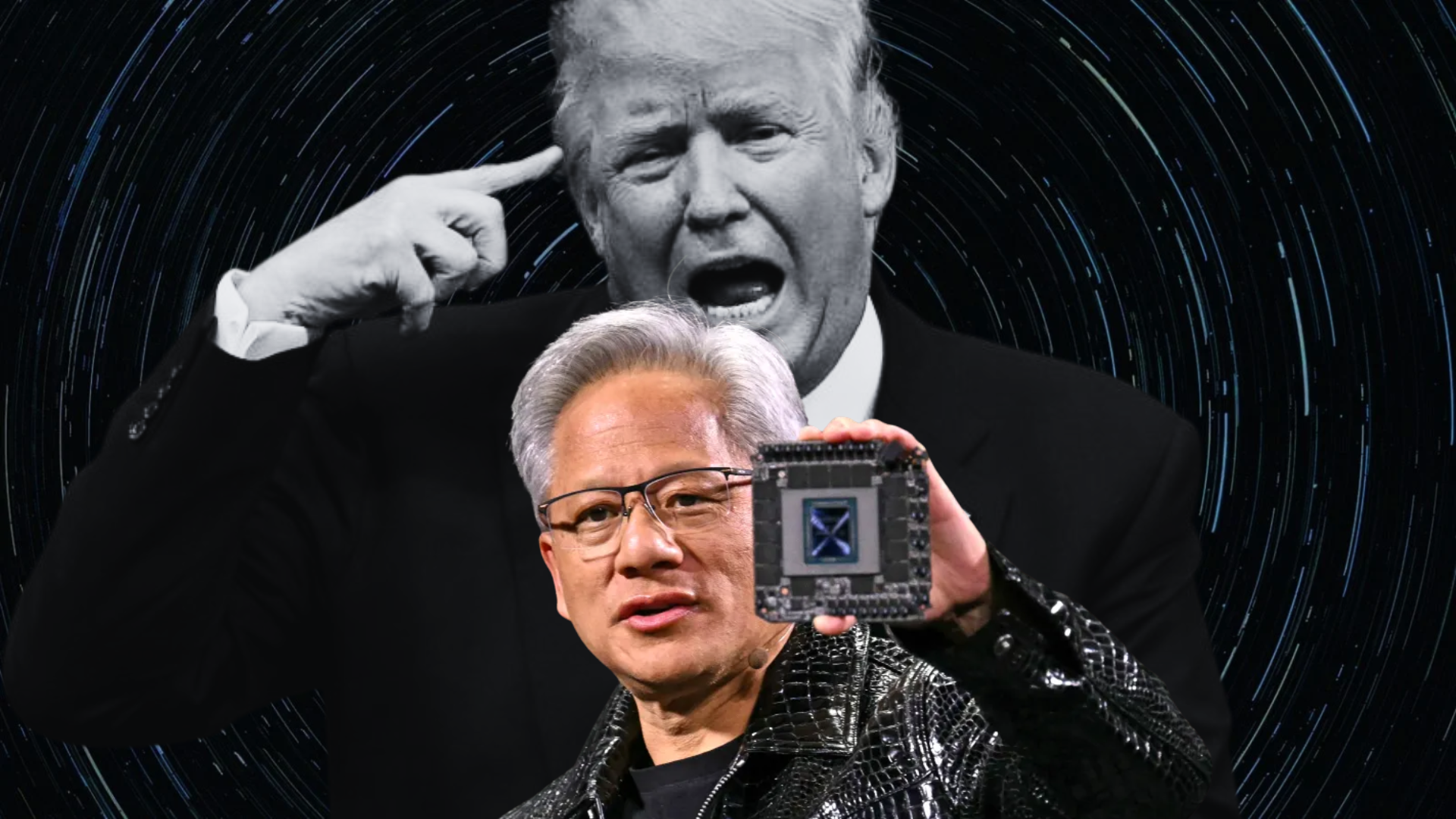
NVIDIA may be on the verge of a major comeback in China as a high-stakes meeting between Donald Trump and Xi Jinping reportedly includes one headline topic: Blackwell, NVIDIA’s next-generation AI chip platform. With the prospect of tariffs being eased and advanced AI hardware back on the table, this could mark a meaningful reset for the company’s position in the world’s second-largest economy.
The Chinese market has been a thorny issue for NVIDIA since escalating US-China trade restrictions disrupted sales of its high-performance accelerators. Jensen Huang has previously acknowledged that NVIDIA’s market share in China effectively fell to zero after once dominating the segment. He also emphasized that any future solution for China would need to be based on Blackwell, as the prior Hopper lineup could not be further “cut down” to meet regulatory requirements.
Recent comments from Trump suggest he expects to discuss lowering certain tariffs tied to the fentanyl crisis and to speak directly with Xi about NVIDIA’s flagship Blackwell AI offerings. If those conversations lead to clarity or concessions on allowable performance thresholds, it could unlock a path for a China-specific Blackwell product and restore some of NVIDIA’s lost momentum in the region.
Rumors point to a potential China-bound variant known as the B30A. While unconfirmed, early chatter suggests:
– 8‑Hi HBM3E memory stacks
– Fabrication on TSMC’s N4P process
– NVLink interconnect support
– A dual‑die (chiplet) design, in contrast to the monolithic H20
This design approach would align more closely with the architecture seen in higher-end Blackwell parts like the B200 and B300 from a chiplet perspective, with the Blackwell architecture expected to drive most of the performance gains. Still, specifications remain fluid until there is official confirmation, and final capabilities will depend on the outcome of US-China negotiations and export rules.
For NVIDIA, approval to ship a compliant Blackwell-based accelerator into China would be a game-changer. Beyond immediate revenue implications, it could rapidly rebuild market share and reestablish NVIDIA as a preferred AI platform for Chinese cloud providers, research institutions, and enterprises racing to deploy next-gen AI infrastructure. It would also help stabilize NVIDIA’s global product roadmap by reducing the uncertainty created by fragmented regional SKUs and shifting regulatory lines.
Key context to watch:
– Any concrete policy changes or guidance following the Trump–Xi meeting
– Confirmation of export-compliant performance limits for new AI accelerators
– Official details on a potential B30A model, including memory bandwidth, NVLink topology, thermal design power, and system integration requirements
– Availability timelines and how closely the China-focused parts track with global Blackwell releases
If the talks translate into a green light for a Blackwell-based solution tailored for China, NVIDIA could move from a near-standstill to a strong resurgence in one of the most important AI markets in the world. Until then, all eyes are on the negotiating table—and on how Blackwell might be adapted to meet both regulatory demands and the massive compute appetite of China’s AI ecosystem.