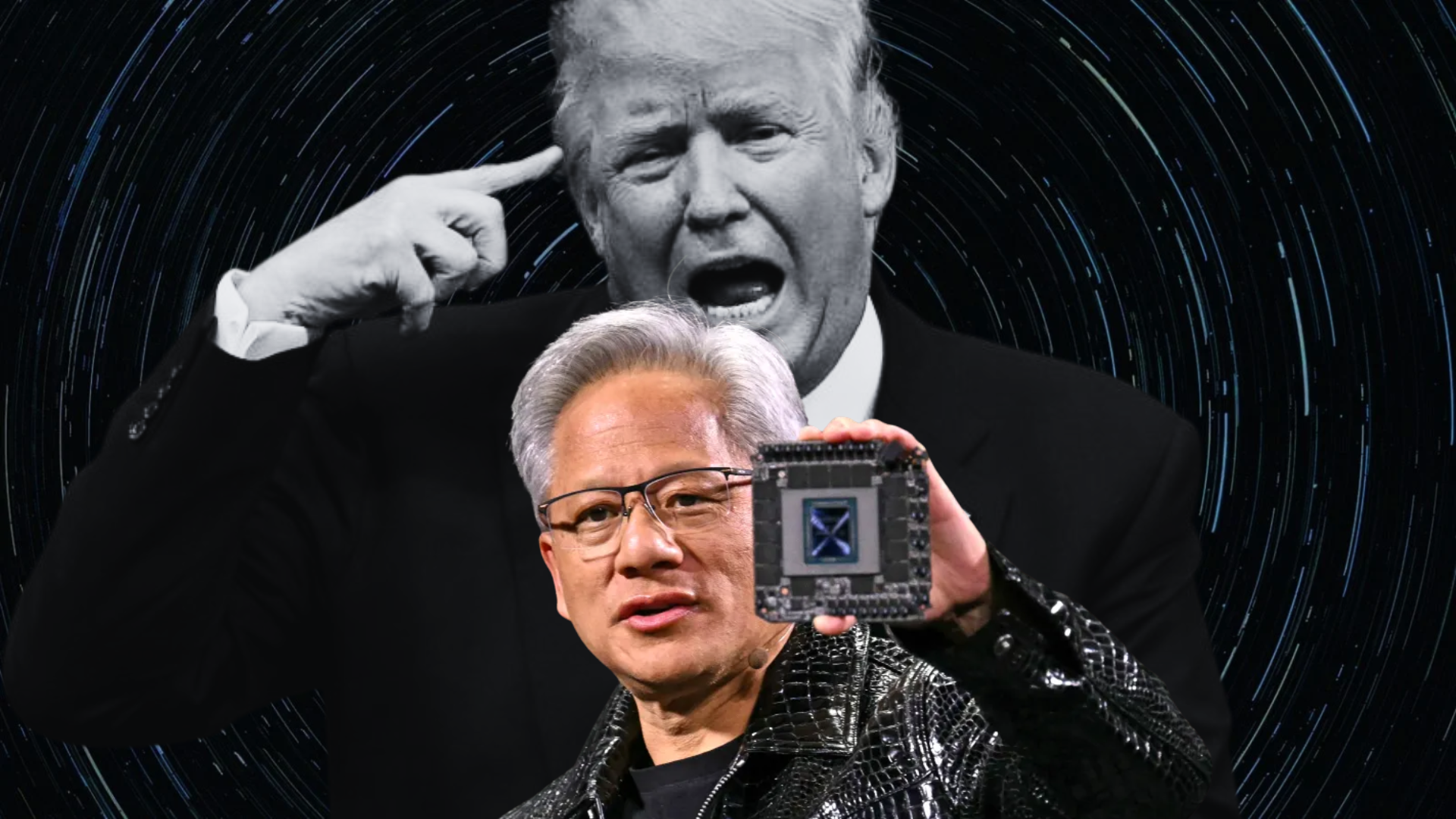
Trump set to meet NVIDIA’s Jensen Huang in South Korea, with congratulations for first US-made Blackwell chip wafer
A high-profile tech-and-policy moment is taking shape in Seoul. During his visit to South Korea, President Trump is expected to meet with NVIDIA CEO Jensen Huang and congratulate him on a milestone for American chipmaking: the first reported Blackwell chip wafer produced in the United States at TSMC’s Arizona facility, according to Yahoo Finance. The timing lands as Washington and Beijing have reportedly agreed on a framework aimed at easing trade tensions, and as Huang prepares to deliver a pivotal GTC keynote in Washington.
While the meeting agenda hasn’t been disclosed, the symbolism is clear. Producing a next-generation Blackwell wafer on US soil signals progress toward a more resilient, domestic semiconductor supply chain—something Huang has repeatedly emphasized as critical to America’s AI leadership. It also marks a notable win for US manufacturing at a moment when demand for AI accelerators is surging across data centers, cloud providers, and enterprise AI deployments.
There’s also quiet speculation that improving US–China trade relations could open the door—at least partially—for NVIDIA’s return to the Chinese market. Huang has previously said NVIDIA’s share in China fell “from 95% to 0%,” underscoring how export rules reshaped the company’s regional outlook. Any easing would be consequential for NVIDIA’s revenue mix and for the broader AI hardware landscape. For now, however, the reported Trump–Huang meeting appears focused on domestic breakthroughs and onshoring momentum rather than immediate changes in China policy.
Why this matters:
– It highlights a US manufacturing milestone for one of the world’s most critical AI chip platforms, Blackwell.
– It underscores ongoing efforts to localize advanced semiconductor production and strengthen the American supply chain.
– It arrives amid signs of thawing trade tensions, which could influence NVIDIA’s long-term strategy in China’s fast-growing AI market.
– It puts political and industrial attention squarely on US-based innovation ahead of key product cycles.
What to watch next:
– Additional details from the Trump–Huang meeting, especially any commitments around US capacity, supply assurance, or workforce development.
– Updates from Huang’s GTC keynote that clarify NVIDIA’s manufacturing roadmap and Blackwell rollout.
– Signals on export policies and whether normalization efforts translate into practical changes for AI hardware sales in China.
– The pace of TSMC Arizona’s ramp and its role in next-generation US semiconductor production.
Bottom line: The expected meeting pairs a headline-making US manufacturing moment with broader geopolitical currents. If NVIDIA can scale Blackwell production domestically while navigating evolving trade dynamics, it would strengthen America’s position in the global AI chip race and potentially reshape the company’s growth trajectory in 2025 and beyond.