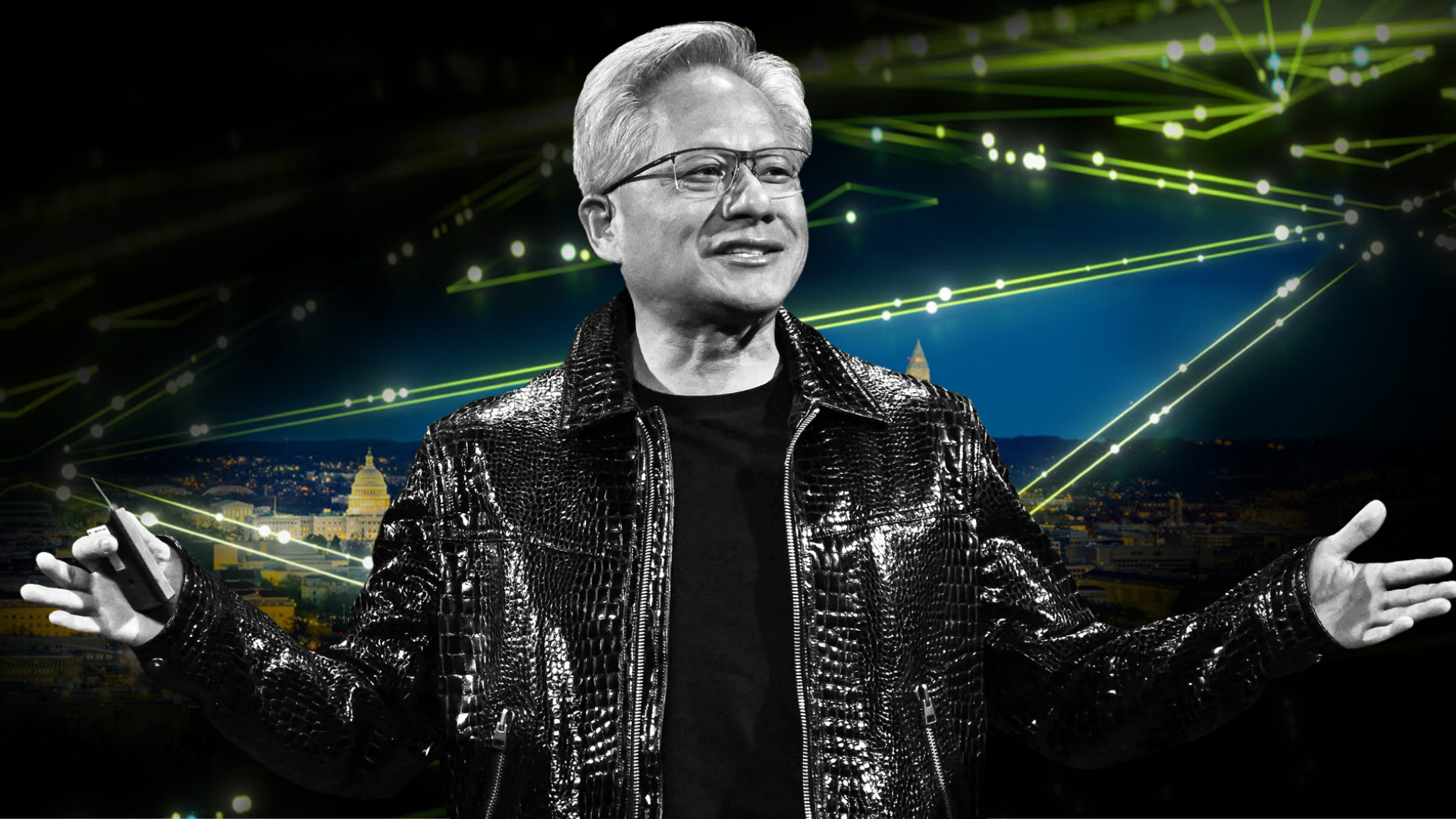
NVIDIA’s GTC 2025 has officially kicked off, and for the first time the conference is being held in Washington, underscoring a clear focus on America’s leadership in artificial intelligence. The event is taking place at the Walter E. Washington Convention Center, with hands-on workshops already underway and a high-profile keynote from CEO Jensen Huang set for October 28 at 12:00 p.m. ET.
This marks the second GTC of 2025. Earlier in March, Jensen Huang unveiled the GB300 Blackwell Ultra AI servers and laid out a forward-looking AI roadmap. Now, attention turns to Washington for what’s next. NVIDIA says this keynote will outline how AI will reshape industries, critical infrastructure, and the public sector, hinting at a broader strategy that spans both technology and policy.
Expect updates on the production ramp of Blackwell Ultra and fresh details on the next-generation Rubin AI lineup. With a roadmap-centric presentation likely, various computing architectures should take center stage as NVIDIA maps out future data center and enterprise AI capabilities.
Holding GTC in Washington adds a strategic dimension. With geopolitical considerations increasingly intertwined with chip design, manufacturing, and deployment, NVIDIA is positioning this event to highlight efforts that help keep the United States at the forefront of AI. Industry leaders from across the supply chain, including Foxconn’s Young Liu, are slated to participate, reinforcing the event’s focus on end-to-end AI readiness—from silicon to systems to scale.
Billed as “See What’s Next in AI,” GTC Washington is expected to showcase announcements that matter to businesses, developers, and public-sector leaders alike. With Jensen’s keynote slated for tomorrow, this could be one of the most consequential moments in NVIDIA’s 2025 AI journey. Stay tuned for the full rundown of what gets announced and how it will shape the next wave of AI innovation.