Earlier this month, Adrian Holovaty, the founder of the innovative music-teaching platform Soundslice, unraveled a puzzling mystery that had been bugging him for weeks. Strange images of what appeared to be ChatGPT sessions kept popping up on his site.
Upon cracking the case, Holovaty realized that while ChatGPT was acting as an unwitting promoter for his company, it was misleading users about the app’s capabilities.
Holovaty is renowned for co-creating Django, an open-source Python web development framework, though he stepped back from managing it in 2014. In 2012, he ventured into launching Soundslice, a proudly bootstrapped platform. Currently, he balances his time between his roles as a music artist and an entrepreneur.
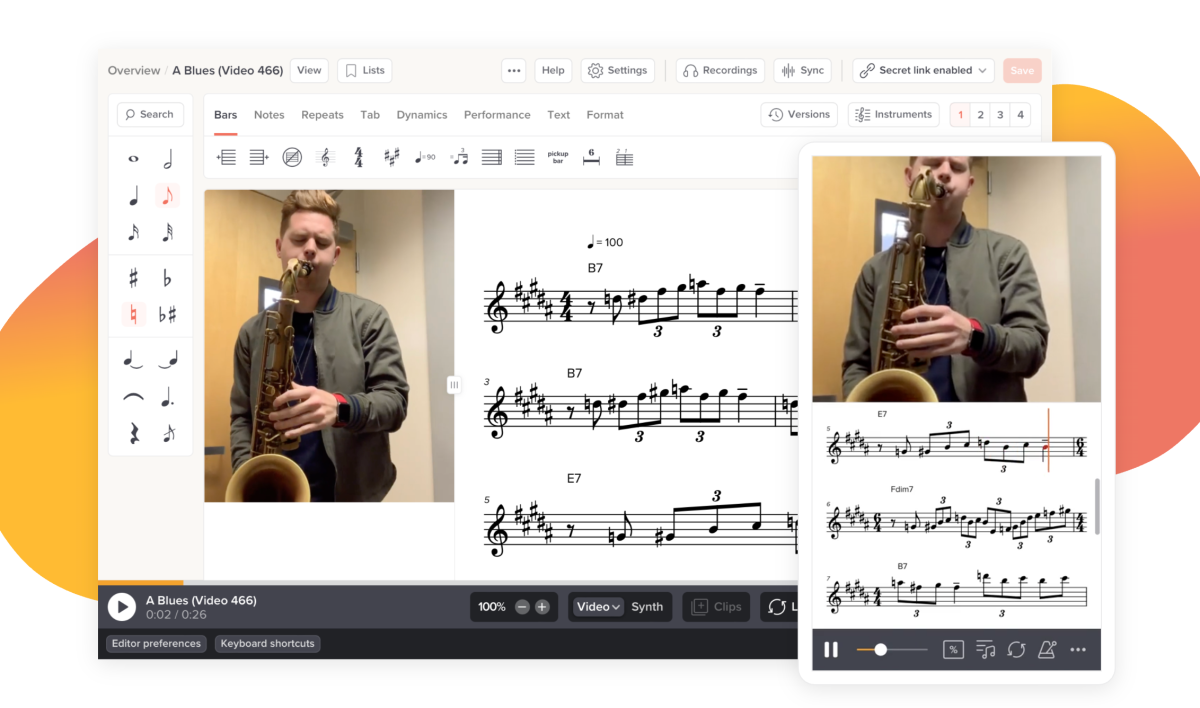
Soundslice is a cutting-edge app for teaching music, embraced by students and educators alike. It features a video player that synchronizes with music notations, offering guidance on note execution.
One standout feature is the “sheet music scanner,” which lets users upload paper sheet music images and employs AI to turn them into interactive notations. Holovaty closely monitors this feature’s error logs for potential enhancements.
That’s where the mystery began. The error logs were filled with uploads of ChatGPT session images instead of sheet music. These images contained words and ASCII tablature, a text-based guitar notation system using standard keyboards.
Though not costly in terms of storage or bandwidth, these uploads left Holovaty perplexed, as he shared in a blog post. “Our scanning system wasn’t designed for this type of notation. Why were we inundated with ASCII tab ChatGPT screenshots?” he wondered, until he decided to experiment with ChatGPT himself.
To his surprise, ChatGPT was telling users they could hear music by uploading chat session images to Soundslice. However, this wasn’t true—the uploads couldn’t convert ASCII tabs into audio.
This posed a new dilemma: reputational damage. New users arrived with false expectations, misled into thinking Soundslice offered a feature it didn’t. Holovaty and his team debated solutions: prominently disclaim the misinformation or develop the feature, despite its unconventional nature.
Ultimately, Holovaty chose to create the feature. He expressed mixed emotions about this decision, finding it odd that they were being driven to respond to misinformation. He even speculated if this represented a unique case of feature development influenced directly by AI-induced misinformation.
Commentators on Hacker News had an intriguing perspective, likening it to an overeager salesperson making extravagant promises, pushing developers to deliver new features. Holovaty found this comparison both apt and amusing.