CATL Tener+ Energy Storage System Promises 25-Year Battery Life and 9 MWh Capacity per Container
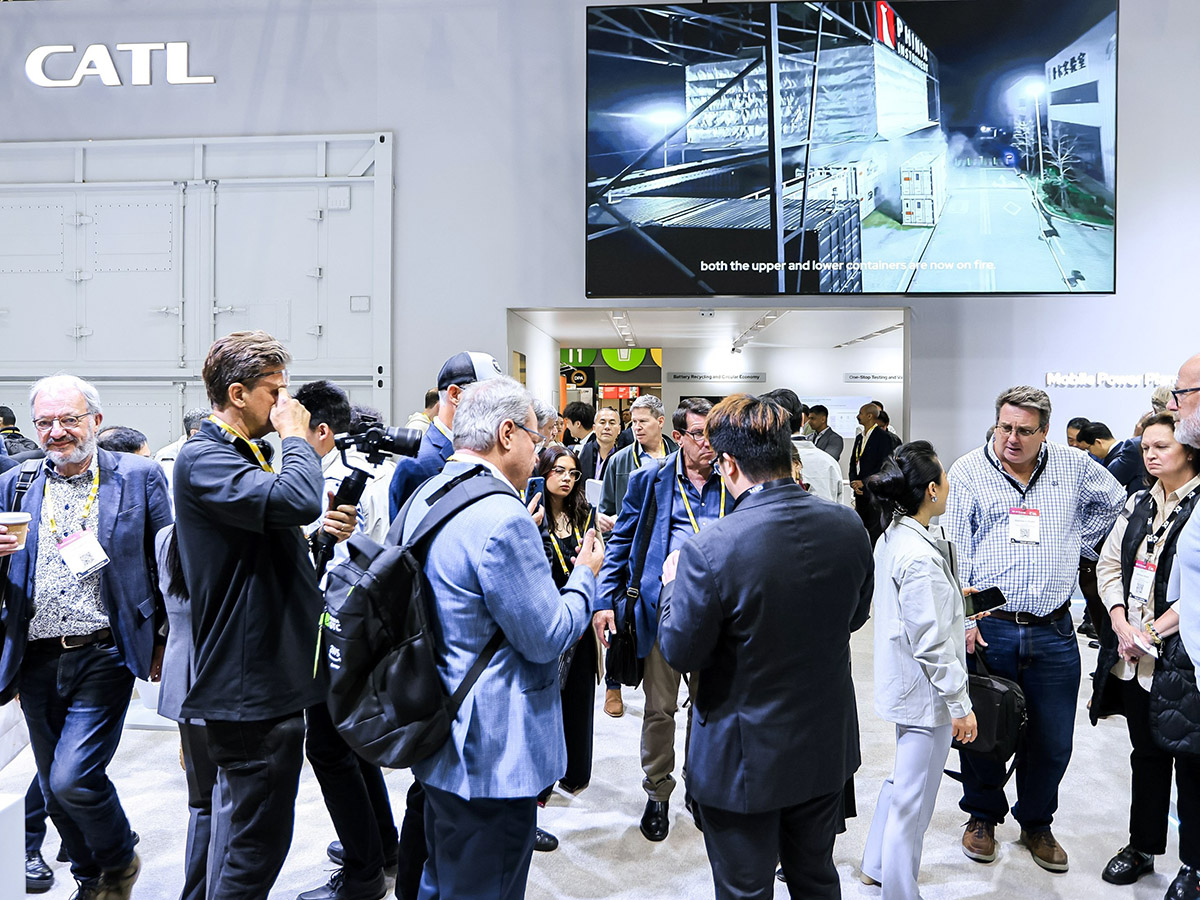
CATL has introduced the Tener+, a next-generation energy storage system designed for large-scale grid projects that need higher capacity, longer service life, and a smaller installation footprint. Revealed at the All Energy Australia 2026 event in Melbourne, the new lithium battery-based system is built to deliver 9 MWh of capacity per container while maintaining performance over an expected 25-year lifespan.
The biggest appeal of the CATL Tener+ is its impressive energy density. By packing 9 MWh into a single container, the system can reduce the number of containers needed for major energy storage projects by as much as 40% compared with more conventional solutions. For developers working on gigawatt-hour-scale battery storage installations, that could mean less land use, fewer cables, reduced construction complexity, and faster deployment.
This smaller footprint is especially important as utility-scale energy storage becomes a critical part of renewable energy infrastructure. As more solar and wind power is added to the grid, battery systems like the Tener+ are increasingly needed to stabilize electricity supply, store excess energy, and support demand during peak usage periods.
CATL is also emphasizing long-term durability. The company says the Tener+ has a 25-year design life and uses proprietary lithium battery cells engineered to slow capacity loss over time. Long battery life is a major factor for grid operators and energy project investors, as degradation can affect both performance and long-term return on investment.
The Tener+ will be available in different configurations depending on project needs. Some versions are optimized for extremely hot environments, such as desert regions, while others are designed to offer up to three years of zero degradation. However, the zero-degradation feature is not available across every Tener+ configuration.
For high-temperature deployments, CATL has designed the system with a top exhaust structure that directs hot air upward and away from nearby equipment. This helps prevent heat buildup around neighboring units and allows power conversion systems to maintain their rated output even during intense summer conditions.
The system also features intelligent thermal management, which is designed to improve round-trip efficiency and reduce auxiliary power consumption. In practical terms, that means the Tener+ can use less energy to cool and manage itself, helping improve overall project efficiency. CATL says multiple units can also be commissioned simultaneously with a simplified one-click process, reducing setup time for large installations.
The Tener+ builds on CATL’s expanding energy storage lineup. It follows the original 6.25 MWh Tener system introduced in 2024 and the 9 MWh Tener Stack announced in 2025. Together, these products show CATL’s strategy of pushing higher-capacity energy storage systems for utility-scale renewable energy projects.
CATL also presented its Tener Sodium energy storage system in Australia for the first time. Unlike the lithium-based Tener+, the Tener Sodium uses sodium-ion battery chemistry. It is designed for grid-level storage applications with more than 30 MWh of capacity and can operate in high ambient temperatures of up to 55°C, making it suitable for harsh climates such as Australian desert regions.
Australia has become an important market for CATL’s energy storage business. The company says its installed energy storage projects in the country now exceed 17 GWh. With Australia rapidly expanding its renewable energy capacity, demand for large-scale battery storage is expected to keep growing.
Globally, CATL remains one of the leading players in the energy storage system market, holding a reported 27% share. The company is also widely known as the world’s largest electric vehicle battery manufacturer, and it is now using that battery expertise to strengthen its position in stationary energy storage.
With the Tener+, CATL is targeting developers that want high-capacity battery storage with fewer containers, improved thermal performance, and long-term reliability. A 25-year design life could make the system especially appealing for utilities, renewable energy developers, and grid operators planning infrastructure that must remain profitable and dependable for decades.
As the energy transition accelerates, systems like the CATL Tener+ could play a major role in making renewable power more practical at scale. By combining high energy density, long service life, and reduced installation requirements, CATL is aiming to set a new benchmark for grid-scale battery storage.