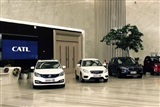
Chinese Automakers’ Expansion Is Making CATL Even More Powerful
Supply chain diversification has become one of the biggest priorities in high-tech manufacturing, but for the auto industry, breaking away from concentrated battery sourcing remains extremely difficult. As electric vehicles become the center of global competition, automakers are trying to secure stable access to batteries, raw materials, and advanced components. Yet the more aggressively many Chinese carmakers expand, the more they appear to strengthen the position of CATL, the world’s leading electric vehicle battery supplier.
The challenge starts with the structure of the EV battery industry. Unlike traditional auto parts, battery production depends on deep technical expertise, massive manufacturing scale, long-term raw material access, and strict quality control. Only a small number of companies can supply batteries at the volume, cost, and reliability demanded by fast-growing EV brands. This makes diversification easier to discuss than to execute.
Chinese automakers are under pressure to launch more electric cars, reduce costs, and compete both at home and overseas. To do that, they need batteries that are affordable, efficient, safe, and available in enormous quantities. CATL has built a strong advantage in all of these areas, making it a natural partner for automakers racing to expand production.
Even brands that want to avoid relying too heavily on one supplier often find themselves pulled back toward CATL because of its scale and technology. The company’s ability to produce batteries at competitive prices gives it a major edge, especially as automakers fight for market share in an increasingly crowded EV sector. In a price-sensitive market, battery cost can determine whether a vehicle is profitable or not.
This creates a difficult cycle for carmakers. The more electric vehicles they sell, the more battery supply they need. The more supply they need, the more they depend on companies capable of delivering at scale. CATL’s size, manufacturing footprint, and established relationships make it one of the few suppliers able to meet those demands consistently.
Battery supply is not just about production volume. It also involves chemistry innovation, energy density, charging performance, durability, and safety. Automakers need battery partners that can keep pace with rapid changes in EV technology. CATL’s investment in research and development has helped it remain a preferred supplier for many manufacturers seeking reliable performance and cost control.
At the same time, efforts to diversify the battery supply chain face real obstacles. Building new battery factories requires huge investment, years of development, and access to skilled engineers and raw materials. New suppliers must prove they can deliver consistent quality at automotive standards, which is a high barrier to entry. For automakers, switching suppliers is not as simple as changing a contract; it can affect vehicle design, performance, safety testing, and production schedules.
The global push for electric vehicles has also intensified competition for critical materials such as lithium, nickel, cobalt, manganese, and graphite. Companies with strong purchasing power and long-term supplier agreements are better positioned to manage price swings and supply shortages. This gives large battery makers another advantage over smaller competitors.
For Chinese automakers, the situation is especially complex. Their rapid growth has made them major players in the global EV market, but that same growth increases their need for dependable battery partners. As they expand into Europe, Southeast Asia, Latin America, and other markets, supply stability becomes even more important. CATL’s ability to support large-scale international ambitions makes it harder for rivals to displace.
The result is that aggressive expansion by Chinese EV makers may unintentionally reinforce CATL’s dominance. While automakers want more supplier options, their immediate need for proven battery technology keeps them closely connected to the strongest supplier in the market.
In the long term, more competition in battery manufacturing is likely to emerge as governments, startups, and established industrial groups invest in new capacity. Automakers will continue looking for ways to reduce risk, improve bargaining power, and localize supply chains. However, for now, the EV battery market remains highly concentrated, and CATL’s position looks increasingly secure.
The race to electrify transportation is reshaping the global auto industry, but it is also highlighting a central reality: batteries are the heart of the electric vehicle supply chain. Until more suppliers can match CATL’s scale, cost efficiency, and technical reliability, diversification will remain one of the toughest challenges facing automakers.