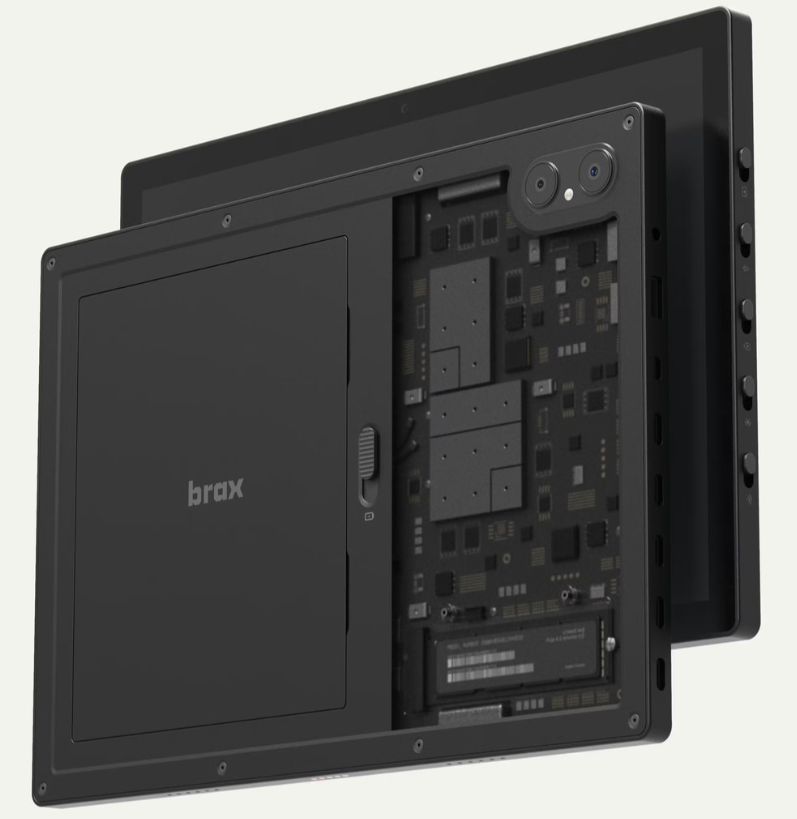
Brax is gearing up to enter the growing open-source tablet space with the Open_Slate, a device aimed squarely at users who want more control over their hardware and software. Built with Linux-friendly ambitions and the flexibility to run Ubuntu and Android, the Open_Slate positions itself as a practical option for developers, tinkerers, and everyday users who prefer open platforms over locked-down ecosystems.
One of the biggest selling points is its connectivity. The Open_Slate is expected to include two USB Type-C ports, and notably, one of them supports DisplayPort 1.4. That’s a meaningful feature for anyone who wants to plug the tablet into an external monitor for productivity, coding, or a desktop-style workflow.
Storage expandability also looks like a key part of the plan. Alongside a microSD slot, Brax is adding a PCIe Gen 2 M.2 socket, which could unlock faster storage upgrades than typical removable cards. This kind of setup can make a real difference for performance, and it also makes dual-boot configurations easier for people who want to switch between operating systems without constantly juggling storage limitations.
Brax is also leaning into sustainability and repairability with a user-replaceable battery. In a market where many tablets are sealed shut and treated as disposable, an easily replaceable battery signals a stronger focus on longevity—assuming replacement parts remain available over time.
While the Open_Slate hasn’t entered crowdfunding yet, the proposed pre-order price of $399 for the base model could attract attention, especially among buyers who want an open-source tablet without jumping into premium pricing tiers. As always, early hardware projects come with risks—particularly before widespread shipping begins—but Brax’s history of successfully delivering products may offer some reassurance to early adopters considering a preorder.
The challenge, of course, is competition. The open-source and Linux-capable tablet market is already crowded, with multiple alternatives available for users seeking portable Linux experiences. That said, if Brax delivers solid performance, dependable build quality, and real-world usability for Ubuntu and Android, the Open_Slate could carve out a meaningful place—especially among users who value upgrade paths, modern I/O, and repair-friendly hardware in a tablet form factor. Only time will tell whether it can stand out, but the feature set suggests Brax is aiming at the right priorities.