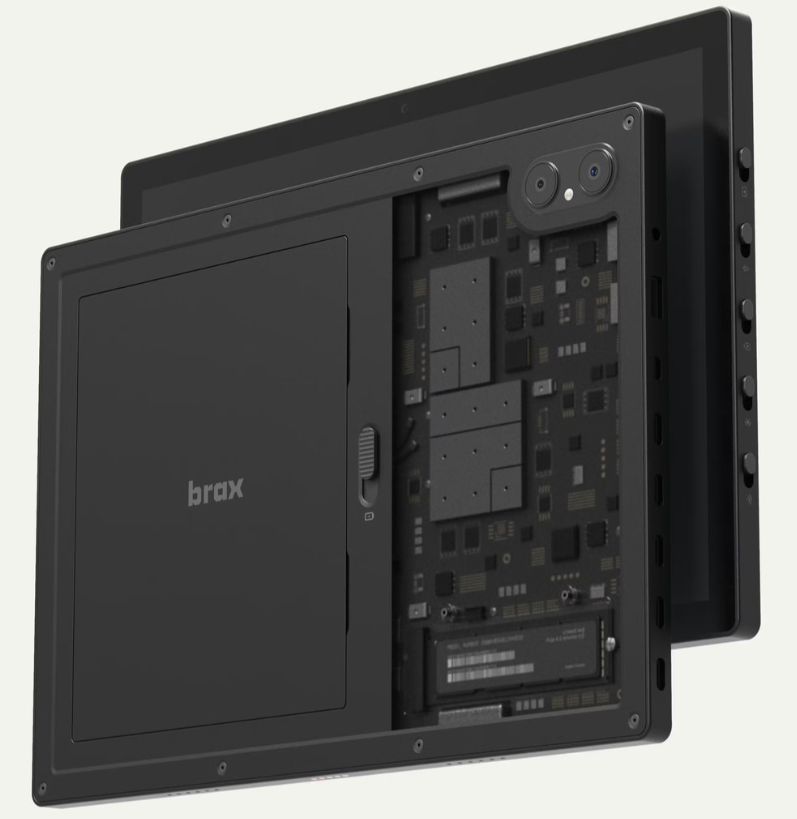
Brax is preparing to enter the open-source tablet space with the Open_Slate, a device aimed at users who want the flexibility of Ubuntu and Android in a more customizable, repair-friendly package.
One of the biggest draws is the tablet’s connectivity. The Open_Slate is expected to include two USB Type-C ports, and one of them will support DisplayPort 1.4. That’s a practical upgrade for anyone who wants to run an external monitor for productivity, development work, or a more desktop-like setup on the go.
Storage and upgrade potential also look promising. Alongside a microSD card slot, the Open_Slate is set to feature a PCIe Gen 2 M.2 socket. That addition could make a real difference for speed and usability, opening the door to faster SSD storage and making dual-boot setups far easier than on many competing tablets. For buyers who like to tinker, test Linux builds, or keep separate operating systems for work and personal use, that kind of internal expandability can be a major selling point.
Brax is also leaning into sustainability with a user-replaceable battery, signaling a clear focus on right-to-repair. In a market where sealed devices are still the norm, being able to swap a battery without replacing the entire tablet could extend the Open_Slate’s lifespan significantly—assuming replacement parts remain available over time.
While the Open_Slate hasn’t reached the crowdfunding stage yet, the current pre-order pricing is positioned to attract early adopters. The base model is listed at $399, which may appeal to anyone comparing open-source-friendly tablets against similarly priced mainstream options. As always, pre-ordering a product that hasn’t shipped comes with the usual risks, but Brax’s history of delivering previous products may offer some added reassurance for buyers who don’t mind being early.
The challenge, of course, is competition. The open-source tablet market already includes multiple Linux-focused alternatives, and there are also plenty of Intel-based tablets where Linux can be installed with varying levels of effort. That means Brax will need to stand out not just with specs, but with real-world software support, long-term updates, and a smooth user experience for both Ubuntu and Android.
If Brax can deliver on the Open_Slate’s mix of strong I/O, expandable storage, dual-boot potential, and repairability—while keeping performance and community support solid—it could become a compelling option for Linux fans, developers, and anyone who wants a more open tablet ecosystem. Only time will tell whether it can carve out space in an already crowded field.


