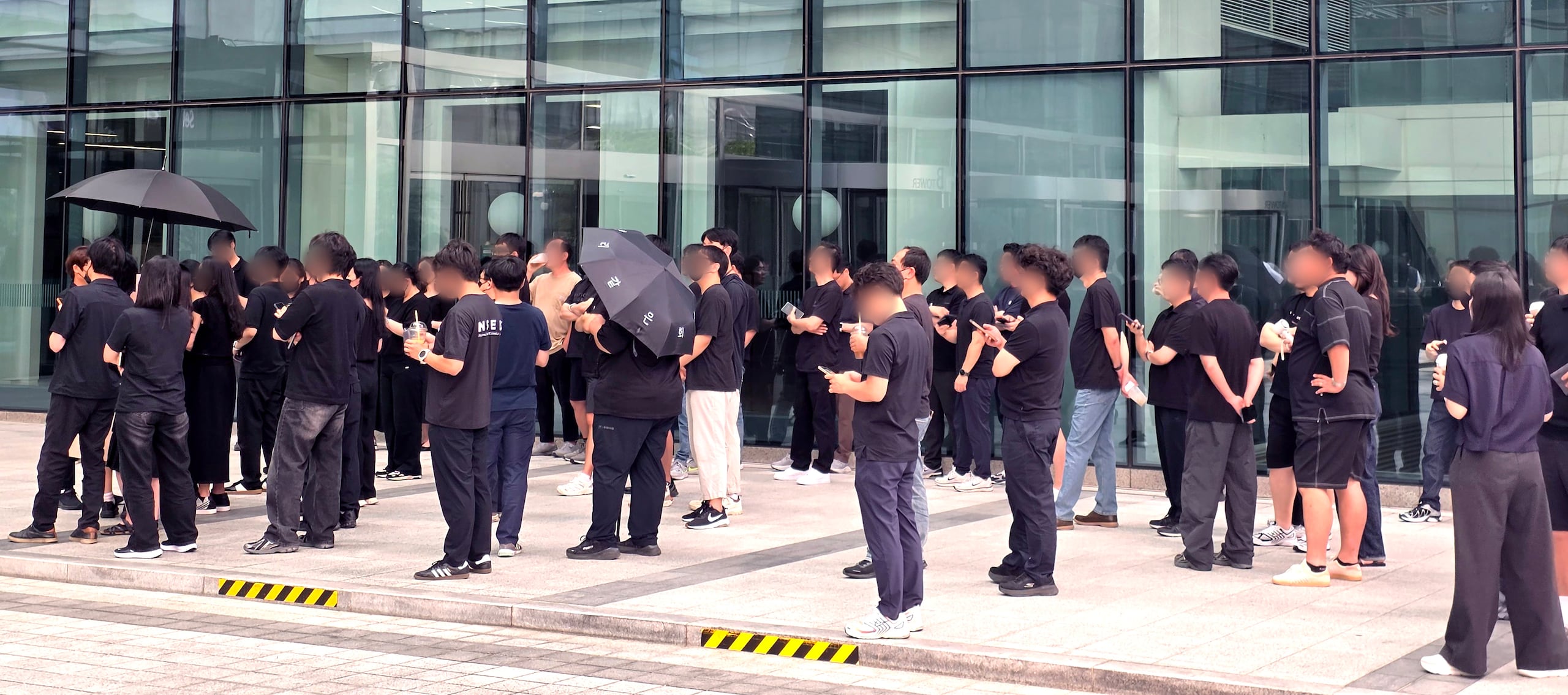
Samsung Bonus Gap Sparks Employee Protest as DX Workers Dress in Black
A widening pay gap inside Samsung is creating visible unrest, as employees outside the company’s semiconductor division voice frustration over a highly lucrative bonus arrangement for chip workers.
In South Korea, Samsung Device Experience employees reportedly arrived at work dressed in black clothing and masks, turning an ordinary workday into a symbolic protest. The DX division includes staff from key consumer-facing businesses such as Mobile, Display, and Digital Appliances.
The color black carries several meanings in Korean culture, but in this case, the message appeared unmistakable. By wearing black, workers seemed to signal grief, disappointment, and mourning over what they see as a deeply unfair compensation divide within one of the world’s largest technology companies.
The protest comes as dissatisfaction grows among Samsung employees who are not part of the semiconductor business. Reports from South Korea suggest that unions representing DX workers are gaining members quickly, a sign that frustration over pay and recognition may be spreading across the company.
At the center of the dispute is Samsung’s agreement with unionized semiconductor employees. Under the deal, chip division workers are set to receive a special performance bonus tied to the company’s operating profits. The bonus is expected to equal 10.5 percent of Samsung’s annual operating profit if certain profit thresholds are met between 2026 and 2035.
The numbers being discussed have drawn intense attention. Based on expectations that Samsung could generate around 300 trillion won in operating profit this year, memory division employees could potentially receive around 600 million won each, or roughly $400,000, in bonuses.
That figure stands in sharp contrast to the expected bonus for employees in Samsung’s mobile business. Mobile workers are reportedly set to receive about 6 million won, or around $4,000, this year. That means some semiconductor employees could earn nearly 100 times more in bonus pay than colleagues working in other major Samsung divisions.
For many DX employees, the gap is not just about money. It also raises questions about fairness, morale, and how Samsung values the different parts of its business. While the semiconductor division has become increasingly important due to booming demand for memory chips and AI-related hardware, Samsung’s consumer electronics, mobile devices, displays, and home appliances remain core parts of the company’s global identity.
The situation highlights a growing challenge for major technology companies: how to reward high-performing divisions without creating resentment elsewhere. When one group receives massive incentives while others receive far smaller payouts, internal unity can quickly come under pressure.
Samsung’s chip business has benefited from strong demand tied to artificial intelligence, data centers, and advanced memory products. That success has made semiconductor employees central to the company’s future growth plans. However, the backlash from DX workers shows that compensation decisions can carry consequences beyond balance sheets and quarterly earnings.
The black-clothing protest may be symbolic, but it sends a clear message. Employees in Samsung’s non-semiconductor divisions want their contributions recognized, and they appear increasingly willing to organize to make their concerns heard.
As Samsung continues to navigate a competitive global technology market, the company now faces an internal test as well: balancing rewards for its booming semiconductor business while maintaining trust and morale across the wider workforce.


