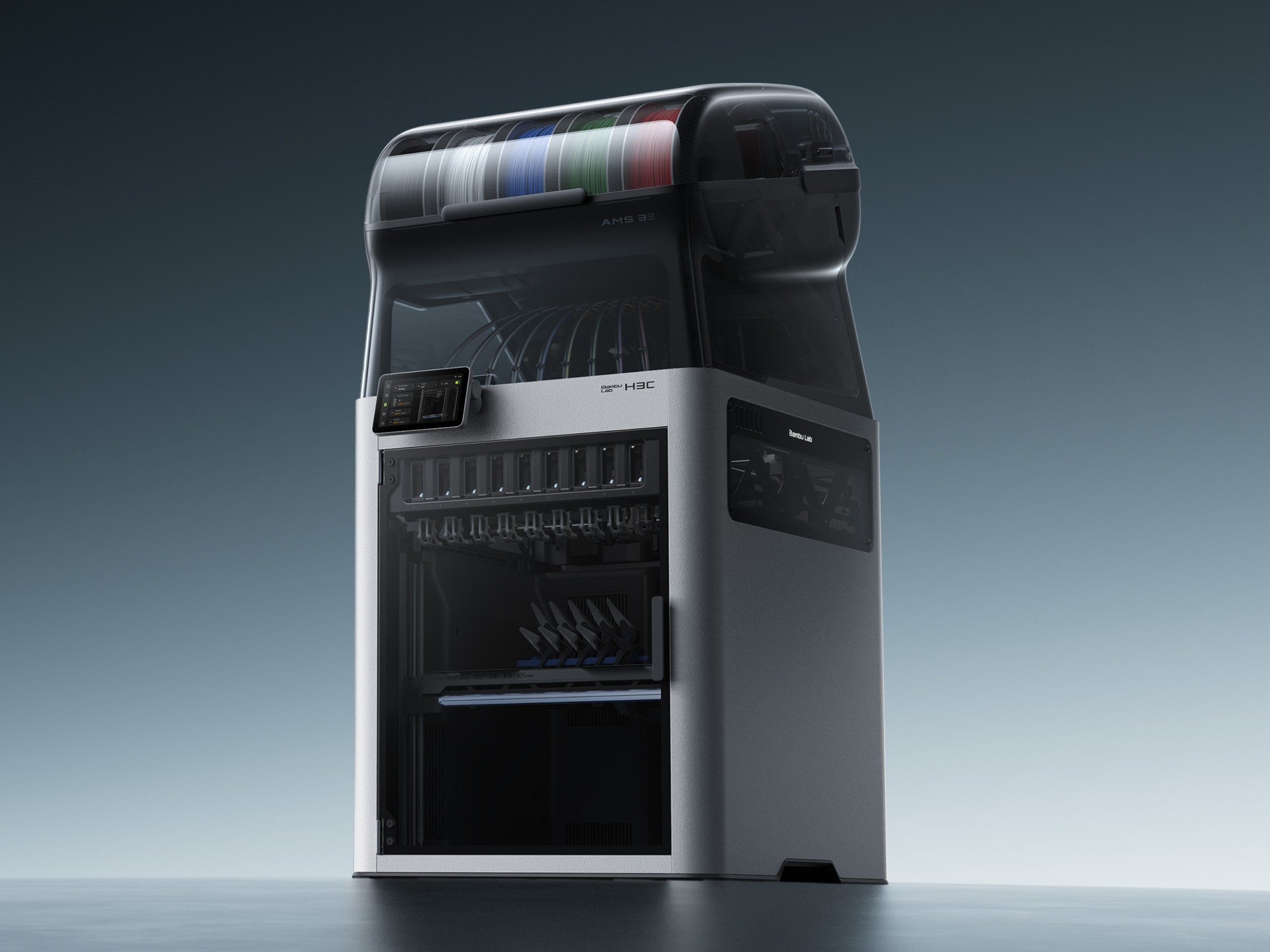
Bambu Lab H3C aims to make TPU 3D printing faster, cleaner, and more reliable
Bambu Lab is putting a major focus on flexible filament printing with the H3C, a 3D printer designed to address some of the biggest challenges users face when working with TPU. Flexible materials are popular for producing durable, elastic, and impact-resistant parts, but they can be difficult to print consistently because TPU bends and compresses easily inside standard extrusion systems.
The standout feature is the new FlexFeed extruder, which is built to handle both 2.85 mm and 1.75 mm filament. This gives users more flexibility in material choice while also helping improve volumetric flow rates. For TPU printing, that matters a lot. Since TPU stays soft and flexible at room temperature, it often causes feeding problems such as buckling, slipping, or inconsistent extrusion. Bambu Lab’s updated feeding design is meant to reduce those issues and deliver a smoother printing experience.
The H3C AMS Combo also includes the AMS 3H feeding system, giving the printer a more advanced material management setup. The system supports RFID-enabled spools, making filament recognition and handling more convenient. It also includes active drying for two of its nine filament bays, which is especially useful for moisture-sensitive materials. Keeping filament dry can improve print quality, reduce stringing, and help prevent failed prints.
Multi-material printing is another major part of the H3C’s appeal. The printer remains compatible with the AMS 2 Pro and AMS HT, allowing users to create a setup with up to 24 materials. That opens the door for complex projects involving multiple colors, support materials, engineering filaments, and flexible materials. However, expanding to such a large material setup may reduce some of the benefits offered by the printer’s dedicated tool-changing system, which is designed for speed and efficiency.
For makers, designers, engineers, and small production teams, the Bambu Lab H3C appears to be positioned as a powerful option for advanced 3D printing workflows. Its TPU-focused improvements could make it especially attractive to users who regularly print flexible parts such as seals, grips, protective covers, wearable components, vibration dampers, and custom functional prototypes.
Pricing for the Bambu Lab H3C AMS Combo, including the AMS 3H unit, is set at €2,499 including VAT in Europe and $2,499 excluding tax in the United States. Optional add-ons include a modular air filtration system and the Bambu Station, a dedicated base cabinet designed to support a more complete printer workstation.
With its FlexFeed extruder, AMS 3H material system, active drying support, and broad compatibility with existing AMS units, the Bambu Lab H3C is shaping up to be a serious contender for users who want more reliable TPU printing and expanded multi-material capabilities.