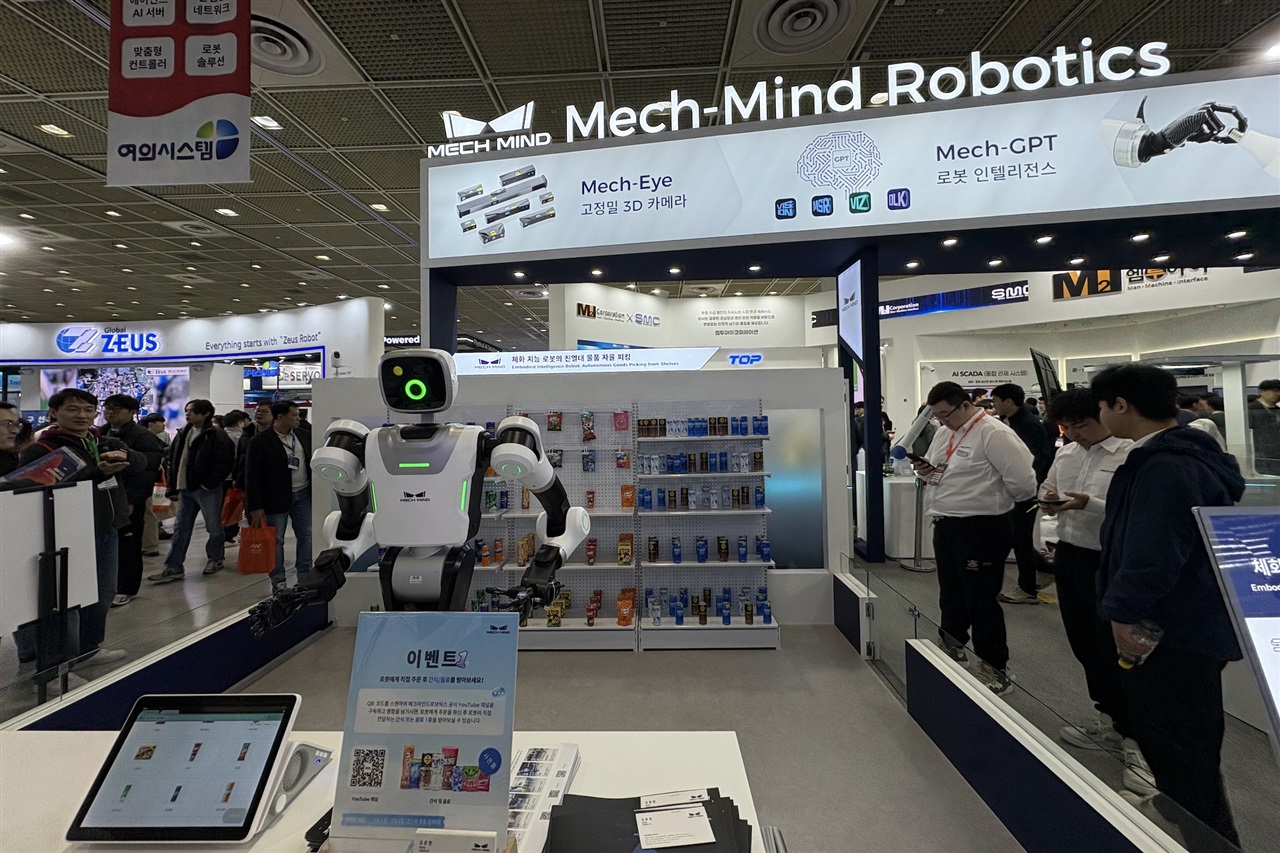
Automation World (AW) 2026 has officially wrapped up at COEX in Seoul, and the message from the show floor was hard to miss: industrial automation is moving beyond hardware-first thinking. This year’s event highlighted a major shift toward Physical AI and Software-Defined Automation (SDA), reflecting how manufacturers and industrial operators are rethinking the way factories, logistics networks, and production lines are designed and managed.
For years, automation progress was often measured in stronger machines, faster controllers, and more specialized equipment. AW 2026 showed that the next wave is less about adding more hardware and more about making existing systems smarter, more flexible, and easier to adapt as conditions change. That evolution matters now more than ever, because the industry is under real pressure from multiple directions.
One of the biggest forces driving change is demographics. Labor shortages and an aging workforce are pushing companies to automate not just repetitive tasks, but also complex processes that previously relied on experienced operators. At the same time, supply chain volatility continues to test manufacturing resilience, forcing operations to respond quickly to shifting suppliers, material availability, and delivery timelines. Add changing regulations into the mix, and the need for adaptable, software-driven systems becomes even clearer.
That is where Physical AI and Software-Defined Automation come in. The core idea is simple but powerful: instead of relying on rigid automation that requires expensive retooling when needs change, companies are increasingly looking to software-led control, intelligence, and orchestration. In practical terms, this approach can enable faster reconfiguration of production, more responsive decision-making on the factory floor, and better alignment with new compliance requirements without constant hardware overhauls.
By hosting these themes on a global stage in Seoul, AW 2026 underscored that the industry’s priorities are shifting. Automation is no longer just about mechanization—it is about intelligence, agility, and long-term scalability. As manufacturers prepare for an era defined by workforce constraints, unpredictable supply networks, and evolving rules, the transition toward AI-powered, software-defined automation is quickly becoming a cornerstone of modern industrial strategy.