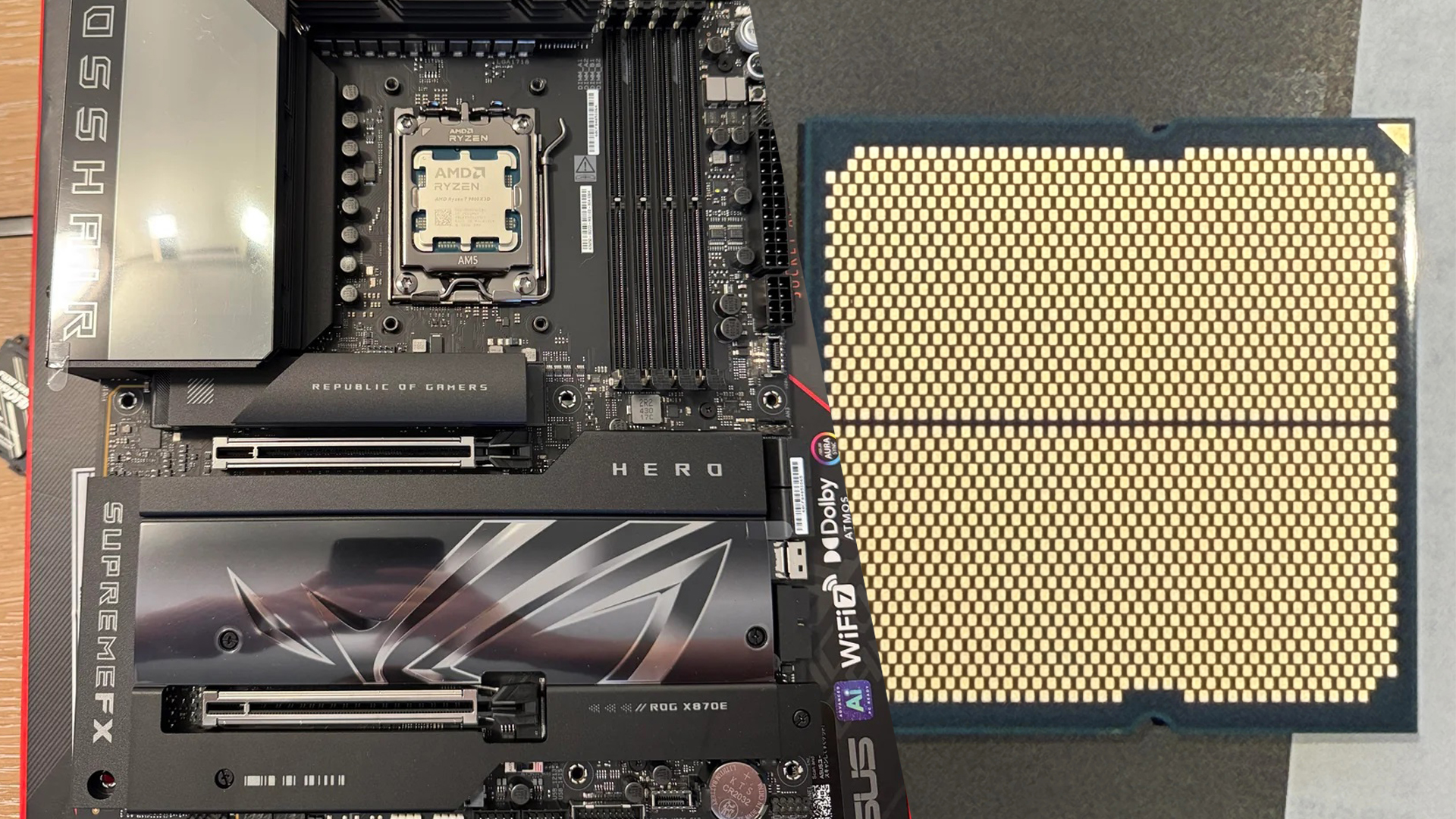
Reports of sudden CPU failures involving AMD’s Ryzen 7 9800X3D keep piling up, and the newest cases add more fuel to growing concerns—especially for people running ASUS X870E motherboards.
Two fresh user reports posted on Reddit describe Ryzen 9800X3D chips that stopped working within days of each other, and both incidents share striking similarities. While isolated failures can happen with any hardware, the frequency of these stories has made some PC builders wonder whether this has grown beyond typical “bad luck” and into a repeatable pattern that still hasn’t been clearly explained.
What makes the situation more alarming is that the Ryzen 7 9800X3D is often the CPU mentioned in these failures. That may partly be because it’s a very popular choice—more units in the wild can naturally lead to more reports—but the steady stream of similar complaints is hard to ignore.
In the first report, a user said their system had been running normally until it suddenly froze after a few hours of gaming. After restarting, the motherboard displayed the “00” Q-CODE error, a code commonly associated with a critical CPU-related failure during boot. The user inspected the processor and didn’t see obvious burn marks or physical swelling, which can make the problem feel confusing at first. However, they noted that a replacement CPU worked perfectly in the same system—an outcome that strongly suggests the original Ryzen 9800X3D had failed even without visible external damage.
That first setup reportedly used an ASUS Crosshair X870E Hero, a premium high-end motherboard that’s popular among enthusiasts who expect top-tier stability and power delivery.
The second report describes a similar ending: a Ryzen 9800X3D paired with an ASUS ROG Strix X870E-E Gaming motherboard died unexpectedly after being used for close to a year. The user took the chip to a repair shop, where they were told the CPU was dead. More notably, the shop allegedly claimed they had seen over 20 comparable cases. According to the user, their system had been running a BIOS version that was about five months old and had not shown any earlier warning signs. Just like the first report, the motherboard also displayed a “00” code when the failure happened.
These shared details—Ryzen 9800X3D processors, ASUS X870E motherboards, sudden lockups or boot failure, and the recurring “00” Q-CODE—are exactly the kind of pattern that makes enthusiasts ask whether there’s an underlying compatibility, voltage, firmware, or platform-level issue that still hasn’t been publicly pinned down.
A big frustration for affected users is that even when replacements are offered, the process can involve time-consuming support emails, troubleshooting steps, and waiting days or weeks for a working CPU. For gamers, creators, and anyone relying on a high-performance PC, that downtime can be as painful as the hardware failure itself.
For now, these remain user-reported incidents, but the growing number of similar stories is keeping Ryzen 9800X3D reliability in the spotlight—particularly for builders using ASUS X870E boards who want reassurance that the root cause has been identified and prevented.