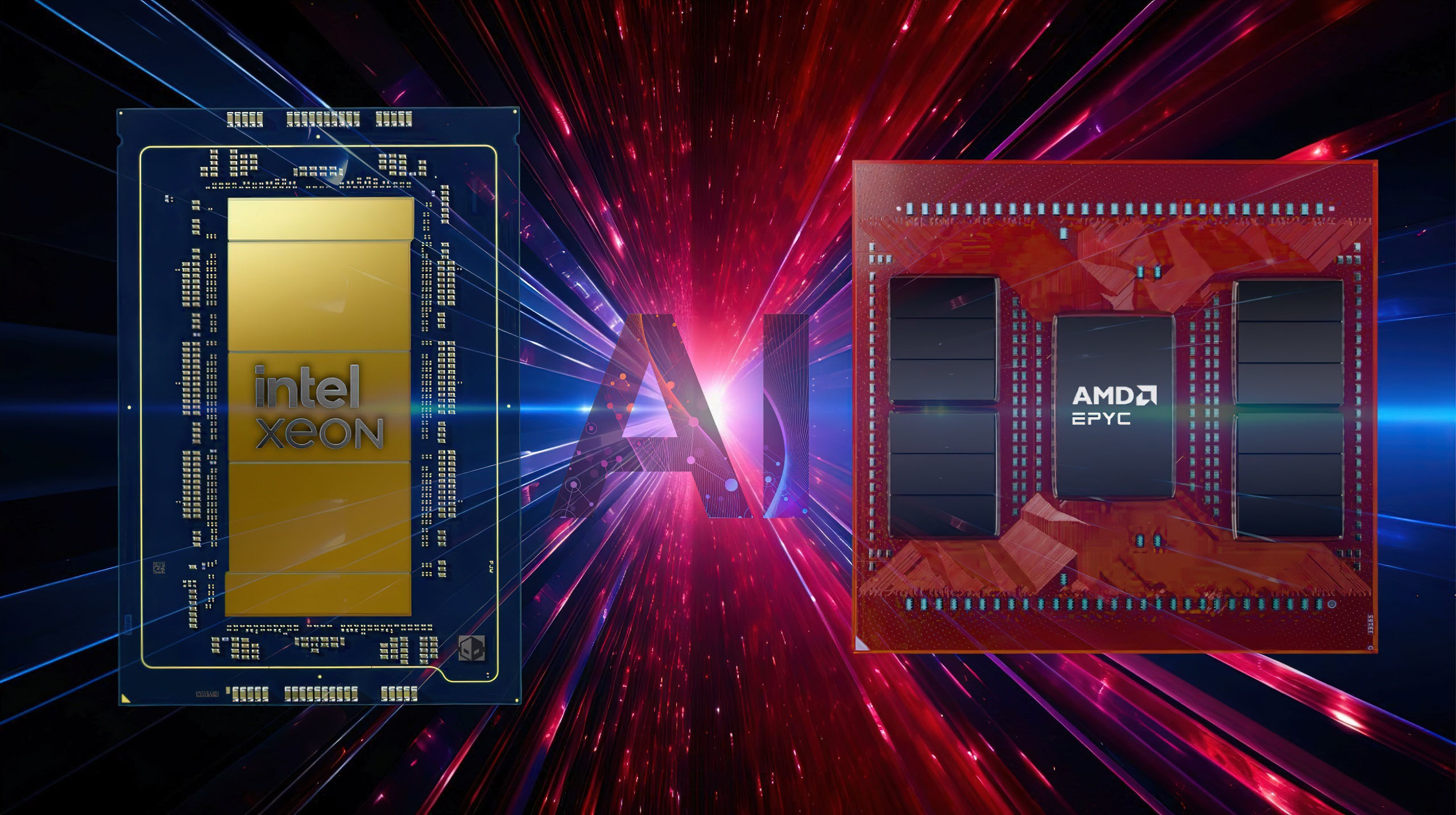
AMD and Intel may soon raise server CPU prices by as much as 15%, as red-hot data center demand—largely fueled by today’s AI-driven buildout—pushes both chipmakers’ inventory to the limit. Recent analyst estimates suggest that existing supplies of their current server processors are effectively spoken for through the rest of the year, giving both companies more leverage on pricing as hyperscale customers compete for available volume.
A big reason demand is accelerating is that hyperscalers are in the middle of a major server refresh. Instead of simply adding more of the same hardware, many are shifting rack deployments toward newer CPU generations built for higher core counts, better performance per watt, and stronger platform capabilities. That refresh cycle is creating a surge in orders for modern data center processors such as AMD’s 5th-gen EPYC “Turin” and Intel’s Xeon “Granite Rapids,” both of which are positioned as key platforms for next-wave cloud and AI infrastructure.
Analysts expect server CPU shipments to climb sharply this year, with growth estimates reaching around 25%. If that trajectory holds, it reinforces why AMD and Intel are considering higher pricing: when demand outpaces near-term supply, maintaining steady allocation to large customers becomes a balancing act—and price increases are one of the few tools available to manage that pressure while protecting margins.
AMD has already been gaining ground in the server market, helped by strong interest in its EPYC lineup. However, the broader takeaway is that the current demand environment is favorable across the board for server CPU vendors, particularly as hyperscalers commit to multi-quarter upgrade plans. With many buyers planning deployments well in advance, large chunks of future volume can get reserved early, tightening the market further.
Both companies are also preparing more aggressive next-generation roadmaps. AMD is expected to push further with EPYC “Venice,” a 2nm-class data center CPU planned for the second half of 2026, which is widely viewed as a potentially disruptive step forward. Moves like this matter because hyperscalers don’t just buy CPUs—they buy roadmaps. The promise of a strong next platform can influence what customers deploy today, how they plan capacity, and which ecosystem they standardize on over time.
For Intel in particular, server CPUs represent a crucial way to deepen hyperscaler relationships. With its AI accelerator momentum seen as lagging compared to competitors, strengthening its data center CPU business could help Intel capture more of the massive cloud expansion cycle and remain a primary supplier as customers modernize fleets.
If the reported price hikes materialize, the message is clear: the server CPU market is tightening, hyperscalers are upgrading at speed, and AMD and Intel are positioned to benefit—both from volume growth and from improved pricing power as next-generation data center platforms roll out.