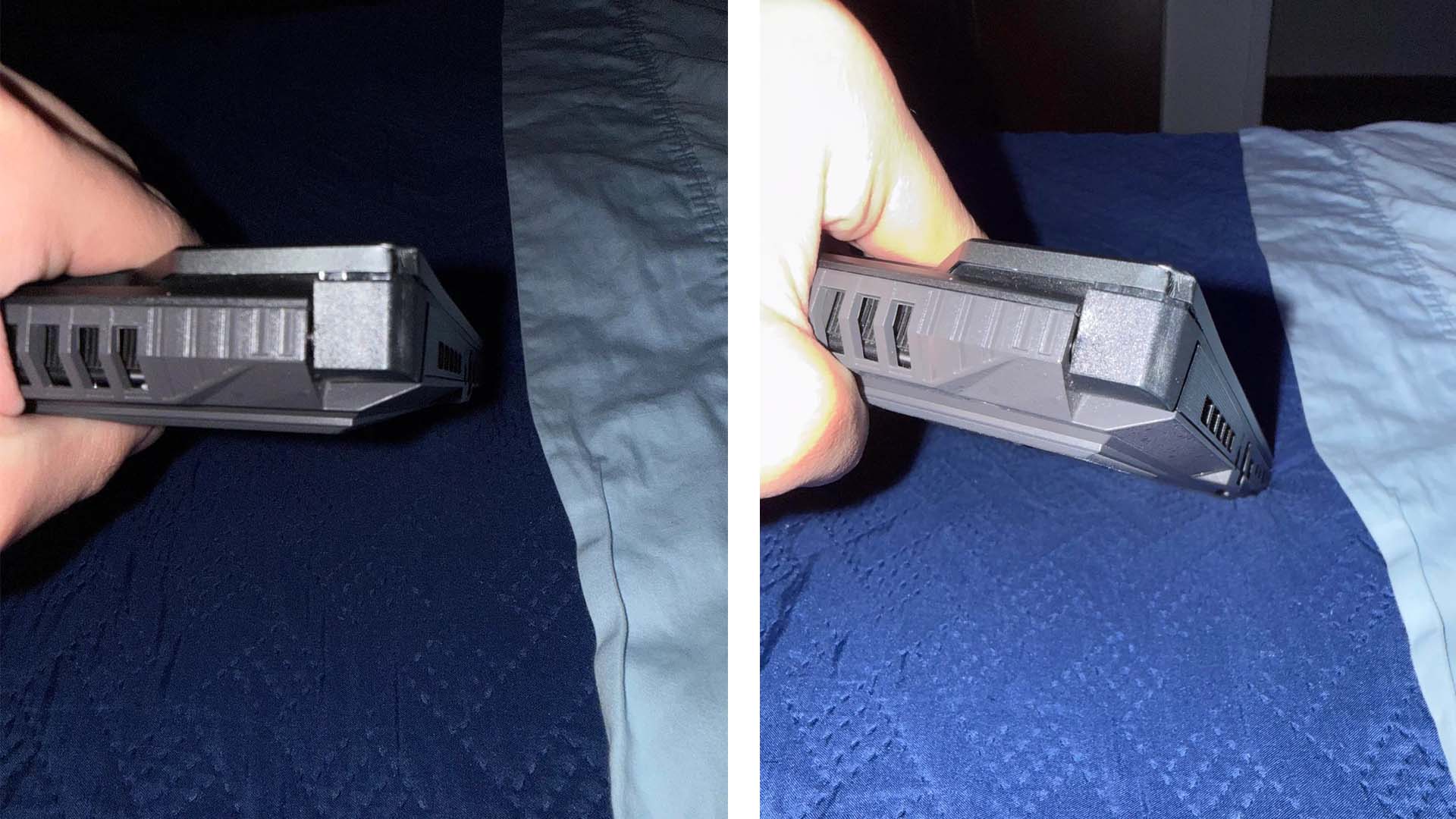
ASUS TUF Gaming Laptop Hinge Breaks After User Tries Viral Social Media Setup Trend
A viral laptop setup trend has turned into an expensive lesson for one ASUS TUF gaming laptop user. While trying to recreate a popular social media-style desk setup, the user placed the gaming laptop in an unusual upside-down position, only to end up with broken hinges and a damaged machine.
The incident was shared on Reddit by a user named “AArqjmct01,” who posted images of the damaged ASUS TUF laptop after the experiment went wrong. The trend appears to involve positioning laptops in ways that look visually striking for short videos and photos, especially on platforms where “cool” gaming setups often gain attention. However, what looks impressive online is not always safe for real hardware.
ASUS TUF gaming laptops are popular among budget-conscious gamers because they offer strong performance at competitive prices. However, many models use a plastic-heavy chassis, which means certain parts, including the hinge area, may not handle extreme stress as well as more premium metal-built laptops. Under normal use, the hinges can last for years, but forcing the display into awkward positions or placing the laptop upside down can put pressure on parts that were never designed for that kind of movement.
In this case, placing the laptop upside down appears to have strained the hinge mechanism enough to cause serious damage. According to the Reddit post, both hinges were affected. The user reportedly managed to pop one hinge back into place, but the other remained damaged and would likely require professional repair.
Several Reddit users had reportedly warned against attempting the setup before the damage occurred. Unfortunately, the advice was ignored, and the result was a broken gaming laptop. Making the situation worse, the laptop apparently did not belong to the person attempting the trend, which makes the accident even more frustrating.
The damage may also create warranty problems. Laptop warranties generally cover manufacturing defects, not user-caused physical damage. Since the hinge failure happened after the device was placed in an unsafe position, ASUS would likely classify it as accidental damage rather than a defect. That means repair costs could fall entirely on the owner.
This incident is a useful reminder for anyone tempted to copy viral tech trends. Gaming laptops are not built to be twisted, suspended, flipped, or positioned in ways that place stress on the hinges, lid, or display assembly. Even if a trend looks harmless in a short video, it can put expensive hardware at risk.
Laptop hinges are especially vulnerable because they carry the weight of the display and connect it to the main body. When extra pressure is applied at the wrong angle, the plastic around the hinge mount can crack, screws can loosen, and the internal frame can become misaligned. Once that happens, repairs may involve replacing the hinge, display housing, bottom chassis, or multiple internal mounting points.
For ASUS TUF owners and gaming laptop users in general, the lesson is simple: use the device the way it was designed to be used. Open and close the lid gently, avoid lifting the laptop by the screen, do not force the display beyond its normal range, and never place the machine in positions that put pressure on the hinges.
Social media trends come and go, but a damaged gaming laptop can be costly to fix. A few seconds of attention online is not worth risking a device that may have cost hundreds or even thousands of dollars.