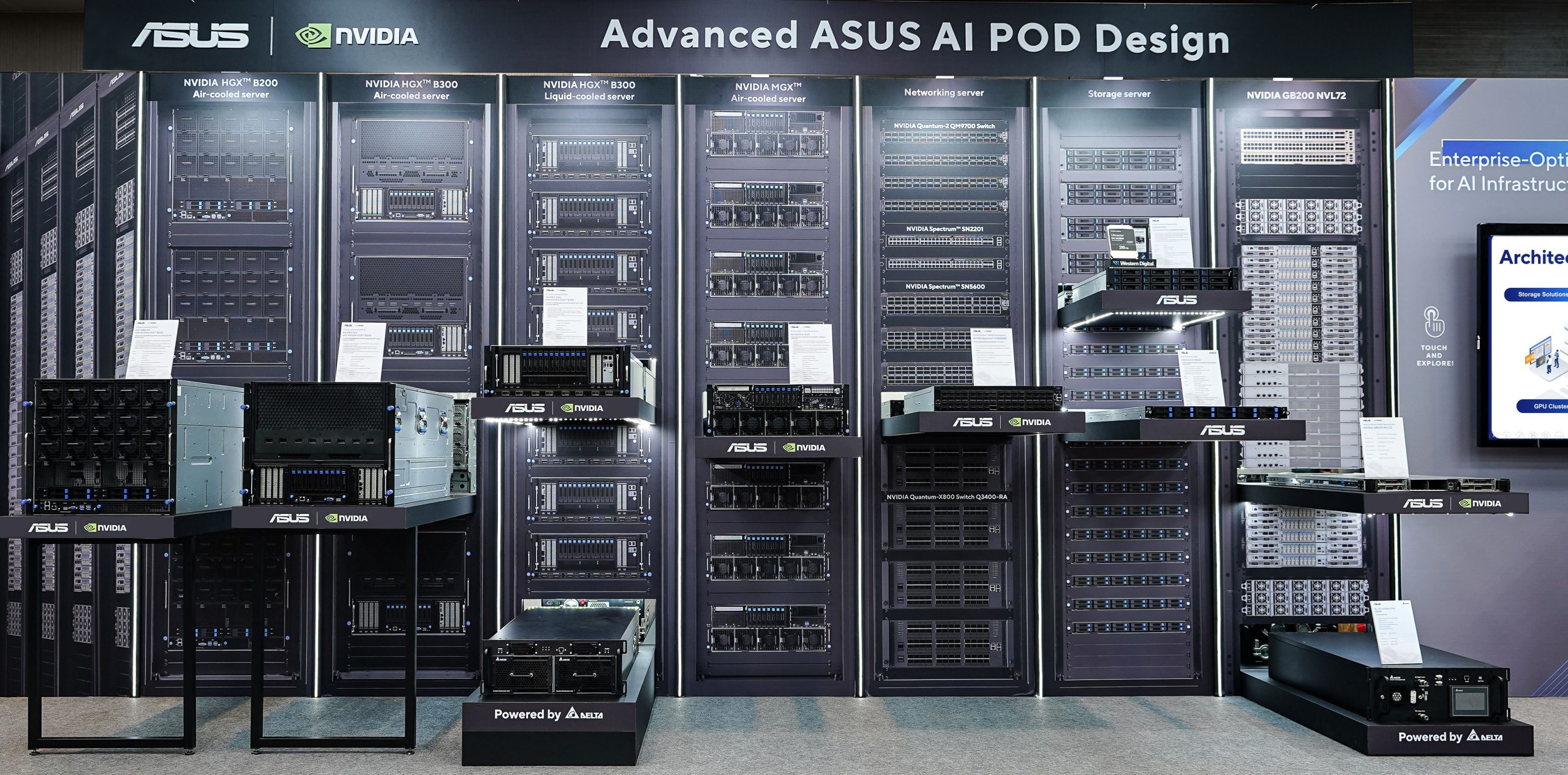
ASUS is signaling a major shift in where the real growth is happening across the PC and hardware world: AI servers. While the consumer PC market faces fresh uncertainty—driven in part by ongoing memory shortages that could curb shipments—ASUS says its AI server business is thriving, giving the company a powerful alternative engine for revenue if consumer demand cools.
For gamers and everyday PC buyers, memory constraints can translate into higher prices, fewer upgrade options, and delays across the broader ecosystem. For manufacturers, it creates a difficult balancing act: protect consumer product momentum while shortages and supply pressure cloud near-term forecasts. ASUS appears to be leaning hard into a solution that doesn’t rely solely on consumer upgrade cycles—AI infrastructure.
At a recent year-end event, ASUS Chairman Jonney Shih described the company’s server business as “booming,” underscoring how quickly demand for AI compute has become a centerpiece of the tech industry. ASUS is well-positioned in this race thanks to its role in the NVIDIA ecosystem and its ability to deliver large-scale, rack-level systems to customers building out AI data centers.
The company’s current AI portfolio includes rack-scale solutions and HGX-based systems, including offerings aligned with NVIDIA’s latest platform direction. ASUS has also been pushing AI POD-style deployments based on the newer Blackwell Ultra generation, aiming to meet the market’s appetite for ready-to-deploy infrastructure that can accelerate training and inference workloads.
A key driver behind this momentum is ASUS’s Infrastructure Solutions Group, which has helped the company expand beyond traditional PC hardware and into enterprise-grade AI systems. That pivot matters more than ever when consumer conditions turn unpredictable. ASUS’s message is clear: it intends to treat AI not as a side bet, but as a long-term pillar.
Financially, the numbers back up the confidence. ASUS says its server business has reached NT$100 billion in revenue—about $3.1 billion—representing roughly 20% of total company revenue and surpassing expectations. Shih’s stated direction to go “all in with AI” reflects how central AI infrastructure has become to ASUS’s growth strategy.
Bigger picture, ASUS’s surge is also a sign of what the AI supply chain needs right now: more capacity, diversified partners, and additional vendors capable of delivering complete, scalable systems. With AI demand still expanding and the industry hungry for more buildout across data centers, ASUS expects to grow its footprint further this year. And if memory shortages persist or worsen, the broader lesson for PC manufacturers is straightforward—AI servers and infrastructure could become the most important hedge against a slowing consumer segment.