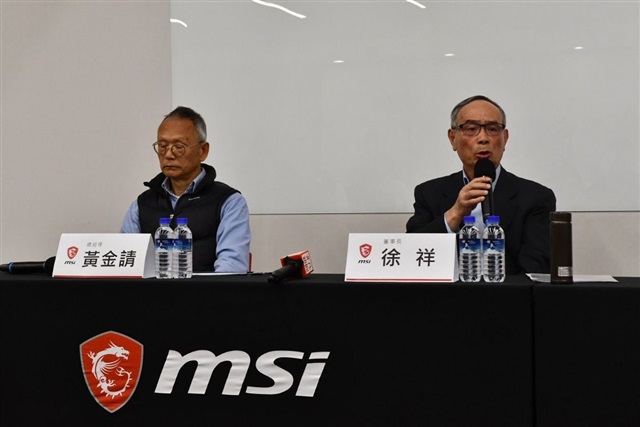
MSI is preparing customers for noticeably higher gaming PC and component prices in 2026, as the AI boom continues to soak up the same GPUs and high-end memory that power enthusiast computers. Company chairman Joseph Hsu and president Jeans Huang say MSI is expanding aggressively in AI servers, and that business is delivering explosive growth while the traditional PC market heads into a tougher, more supply-constrained era.
Gaming product prices expected to rise 15% to 30% in 2026
MSI expects its gaming-related products to become more expensive next year, with projected increases of around 15% to 30%. The main reason is memory. According to the company, key parts—especially DDR5—have been tightening in supply and rising sharply in price since late 2025, with certain DDR5 specifications jumping two to three times. Those increases ripple directly into the cost of motherboards, graphics-card-equipped systems, and complete gaming PCs.
MSI says it has already been adjusting end-product pricing to better reflect these higher component costs, signaling that shoppers could see elevated pricing across gaming laptops, desktops, and related hardware as 2026 progresses.
Why the PC “seasonal cycle” is fading
For years, the PC industry leaned on predictable peaks such as back-to-school promotions and year-end holiday demand. Hsu argues that pattern is breaking down. Instead of demand setting the pace, shipments are increasingly dictated by supply—particularly GPU availability.
The surge in AI computing has changed the priority order for critical parts. GPUs and premium memory are being pulled toward AI servers first, leaving the consumer PC market more exposed to shortages and irregular supply. That shift, MSI says, is structurally changing how PC makers plan launches, allocate inventory, and compete.
PC shipments could drop more than 10% in 2026
Huang warns that the broader PC market is likely to face multiple headwinds in 2026. Beyond macroeconomic uncertainty, AI investment is creating a “crowding-out” effect, diverting spending and resources away from traditional PCs. MSI also points to weaker momentum due to a lack of major new product launches.
Based on various estimates referenced by the company, global PC shipments in 2026 could fall by more than 10%, and in a more severe scenario, the decline could reach 20%. If component supply remains constrained, the market may see fewer units sold overall—even as pricing stays firm or rises.
A shift in strategy: lower volume, higher prices
MSI describes an environment where price wars matter less than supply access. With parts harder to secure, the competitive advantage goes to manufacturers that can lock in GPUs and memory, manage supply chains effectively, and sell higher-value configurations.
The company expects 2026 to follow a “lower volume, higher price” pattern. In other words, even if shipments decline, MSI believes revenue and profitability can improve through smarter pricing, a better product mix, and a focus on premium segments rather than chasing unit sales.
MSI also notes it is rebalancing priorities inside its portfolio. Mid- and low-tier products have historically made up more than 30% of its offerings, but with limited key component supply, MSI plans to prioritize higher-priced lines such as gaming and commercial products and concentrate research and development on higher value-added hardware.
AI servers are becoming MSI’s main growth engine
While MSI is widely known for consumer PCs, the company says AI servers have become its most important growth driver. Hsu explains that MSI has been investing in AI computing products since 2024, and the results have been dramatic: AI server growth reached roughly 50% to 100% in 2025, and MSI expects strong growth to continue into 2026.
AI servers still represent only a single-digit percentage of MSI’s total revenue today, but MSI is targeting at least 50% annual growth in AI server revenue over the next three years. The company’s approach is to focus less on hyperscale cloud providers and more on small and medium-sized businesses plus enterprise customers adopting AI applications—markets that often want flexible, cost-effective computing platforms.
MSI acknowledges that AI server gross margins are currently lower than PC margins, but it views the overall market size and long runway for enterprise AI adoption as a major “second growth curve.”
Manufacturing expansion to manage tariffs and geopolitical risk
MSI is also reshaping its production footprint to reduce exposure to geopolitical and tariff pressures. Manufacturing remains heavily centered in China, with operations split between facilities that handle notebooks and automotive assembly and those producing graphics cards and other non-notebook products.
At the same time, MSI has started expanding overseas capacity:
In the United States, a new facility began operating in early 2026, focused on data center and AI server assembly. MSI says it may eventually shift more than half of its server production capacity to the US, depending on customer demand, to support local data center needs and “Made in USA” procurement requirements.
In Europe, MSI’s Netherlands site is being renovated, with completion expected in late 2027. The goal is to establish a full European production line.
In Taiwan, a new plant in Taoyuan is being fast-tracked and is expected to be completed by the end of 2026. MSI says the site will support products including AI servers, industrial computers, and charging stations.
MSI expects that as these facilities come online, it will gain more supply chain flexibility over the next three to five years, helping it respond faster to changing tariff policies and shifting demand.
Financial snapshot: record revenue in 2025, but profits pressured
MSI reported consolidated revenue of NT$230.20 billion in 2025, about a 16% year-over-year increase and a record high. However, net profit after tax fell more than 15% to NT$5.75 billion. MSI attributed the profit pressure to currency fluctuations in the second quarter, tariff policies, and rising component costs.
Earnings per share declined to around NT$6.80 from NT$8.04 in 2024, while gross margin fell by 1.2 percentage points to 11%.
What it means for buyers in 2026
For anyone planning to build or buy a gaming PC in 2026, MSI’s outlook suggests higher pricing is likely, driven by DDR5 memory inflation and ongoing competition for GPUs and premium components from the AI server sector. At the same time, overall PC shipment declines could mean fewer discounts and less aggressive price competition—especially for high-performance gaming systems where supply remains tight.
MSI’s bet is clear: premium PC products plus rapid AI server expansion, backed by a more geographically diversified manufacturing base designed to handle supply shocks, tariffs, and shifting enterprise demand.