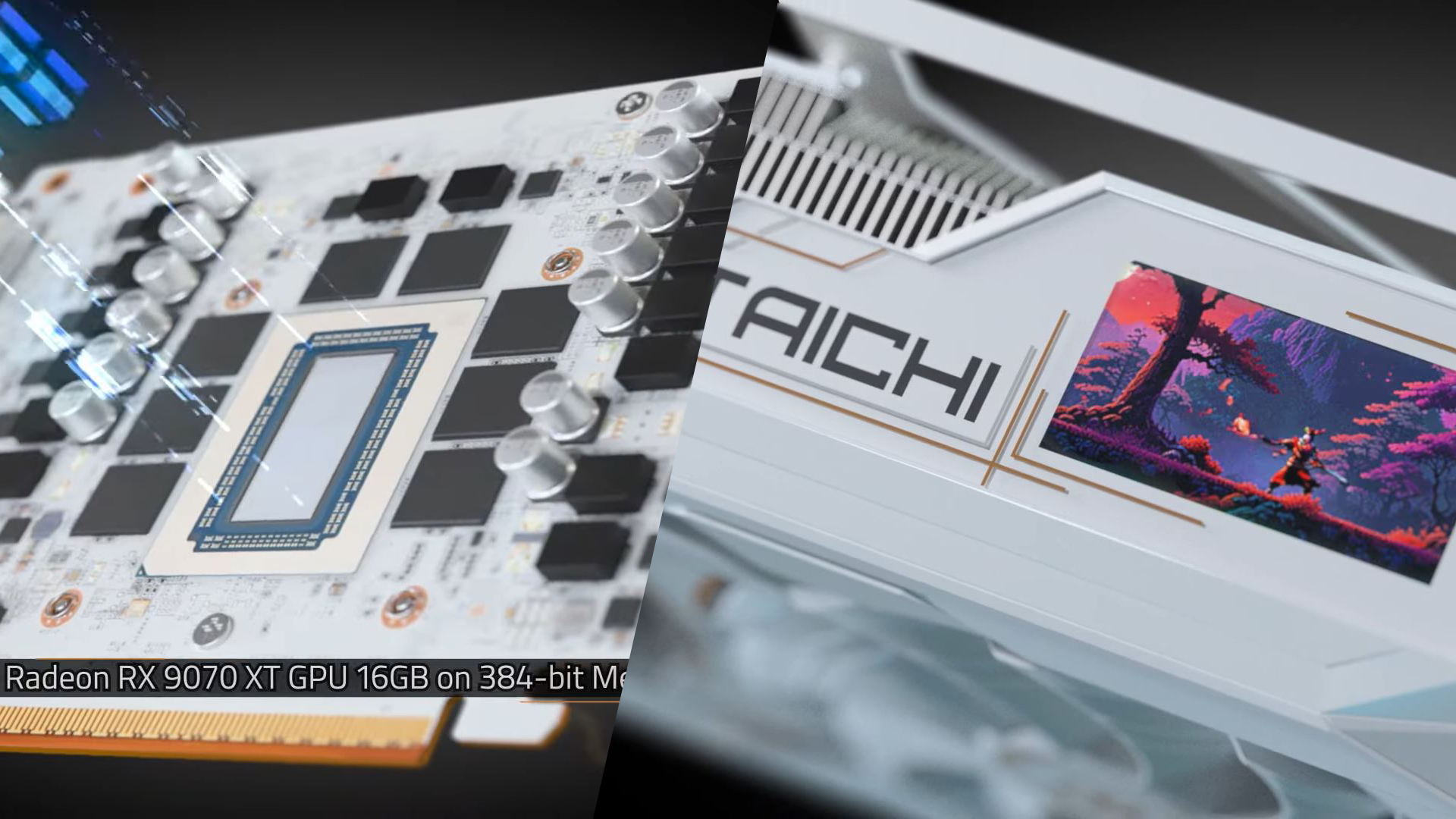
ASRock is expanding its RX 9000-series Taichi lineup with a new flagship-style graphics card aimed at builders who want high-end performance wrapped in a clean, all-white aesthetic. The new model is called the Radeon RX 9070 XT Taichi White 16GB OC, and it’s positioned as a more feature-packed alternative to the standard RX 9070 XT Taichi edition.
The most obvious change is the design. ASRock goes all-in on the white theme with a white PCB paired with a matching white shroud and cooler, making it a natural fit for white-themed gaming PCs and showcase builds. While the card keeps the flashy lighting people expect from the Taichi family—complete with RGB-loaded fans—the bigger upgrade is the addition of an onboard LCD screen located on the right side of the card.
That small display is designed to do more than just look cool. It can show practical system stats such as GPU temperature and screen resolution, and it also supports extra readouts like clock and date, weather forecasting, and even custom photo or animation playback. For builders who enjoy adding personality to their rig or monitoring performance at a glance, this is a standout feature that isn’t present on the existing Taichi version.
However, the early information shown for the card also raised eyebrows. Footage displaying the PCB details appears to list a 384-bit memory bus alongside a 16GB VRAM capacity. In a typical modern GDDR6 configuration, that combination doesn’t add up. A 384-bit bus usually pairs with memory arrangements that don’t align cleanly with 16GB using today’s commonly available VRAM chip capacities, and there aren’t standard 1.33GB GDDR6 modules that would make the math work.
What makes the 384-bit claim even more doubtful is the visible memory layout. The board appears to show eight VRAM chips, which strongly suggests a conventional 16GB setup using 8x2GB GDDR6 modules. That standard configuration corresponds to a 256-bit memory interface, not 384-bit. In other words, the most likely explanation is a simple labeling or editing mistake in the presented material rather than a surprise new memory-bus variant of the RX 9070 XT.
Setting that odd detail aside, the RX 9070 XT Taichi White 16GB OC still looks like a premium custom card designed to stand out, both visually and in features. While the product listing hasn’t gone live yet, expectations are that it will broadly match the performance profile of the existing Taichi OC model, including a boost clock that can reach up to 3100 MHz.
For gamers and PC builders searching for a white RX 9070 XT graphics card with premium extras—especially an integrated LCD display—this Taichi White edition is shaping up to be one of the more eye-catching RDNA 4 partner designs to watch.