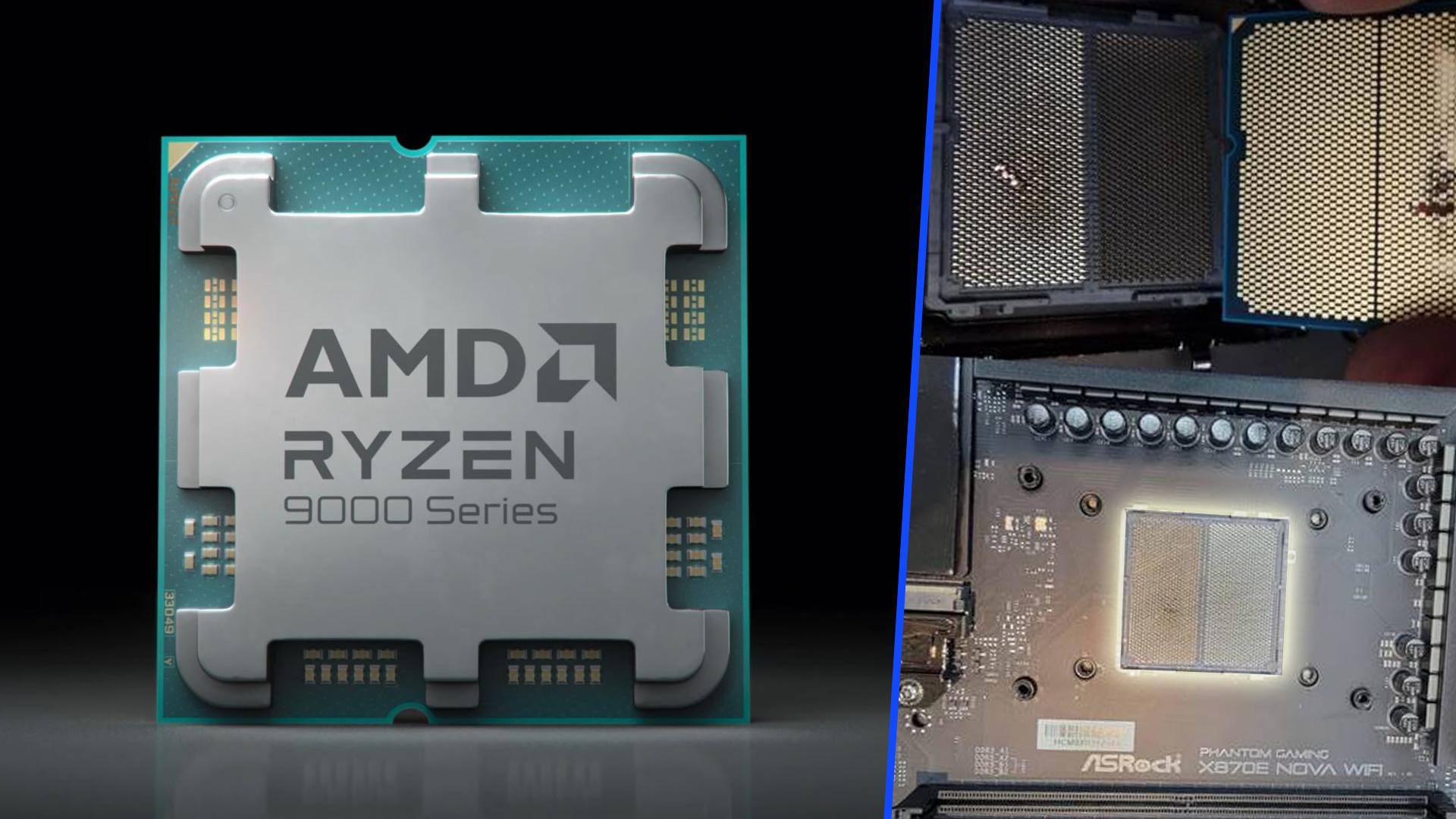
A PC builder has shared a nightmare scenario that no one wants to deal with: three AMD Ryzen 7 9800X3D processors failing in just a few months, all while using the same ASRock 800-series motherboard.
According to the user, the system was built in January 2025 using an ASRock B850M PRO RS WiFi motherboard. For months, everything seemed normal—until the first Ryzen 7 9800X3D suddenly died in November 2025. The motherboard reportedly showed CPU and DRAM warning lights, leaving the system unable to boot.
After going through the RMA process, the user received a replacement Ryzen 7 9800X3D. Unfortunately, that second chip only lasted around two months before failing in the same way, again with CPU and DRAM lights on the motherboard.
What happened next is what makes the story stand out. The user submitted another RMA, received a third Ryzen 7 9800X3D, and saw that one fail even faster—within about a month. This time, the failure symptoms changed: instead of the earlier CPU/DRAM lights, the board reportedly showed a solid green BOOT light with no display output.
With three dead CPUs linked to the same platform, the user believes the motherboard is the most likely cause. In their words, the board didn’t just appear to be killing processors—it seemed to be doing it faster each time.
BIOS updates didn’t prevent the failures either. The user says they kept up with firmware updates throughout the ordeal, with the first failure occurring on BIOS version 3.50, the second on 4.03, and the third on 4.07 beta. That last beta BIOS was expected to help address reported CPU failure concerns and included an updated AGESA microcode, but it still didn’t stop the third chip from dying.
After the third failure, the user decided they’d had enough and replaced the motherboard entirely. They also raised a question many owners in a similar situation would ask: what happens if they try to RMA a motherboard that still “functions,” even though it may be responsible for repeated CPU deaths? Would it simply be sent back, repaired, or could a refund be possible?
The broader takeaway for Ryzen 9000 X3D owners and AM5 builders is simple: if a CPU fails on a motherboard—especially if it’s an early 2025 purchase from this 800-series lineup—many enthusiasts recommend treating the board as a potential risk factor rather than assuming it was a one-off defective processor. For anyone still using an ASRock 800-series board, keeping the BIOS updated to the newest available version (such as version 4.10 mentioned in the discussion) may help reduce risk, even if it can’t guarantee protection in every case.