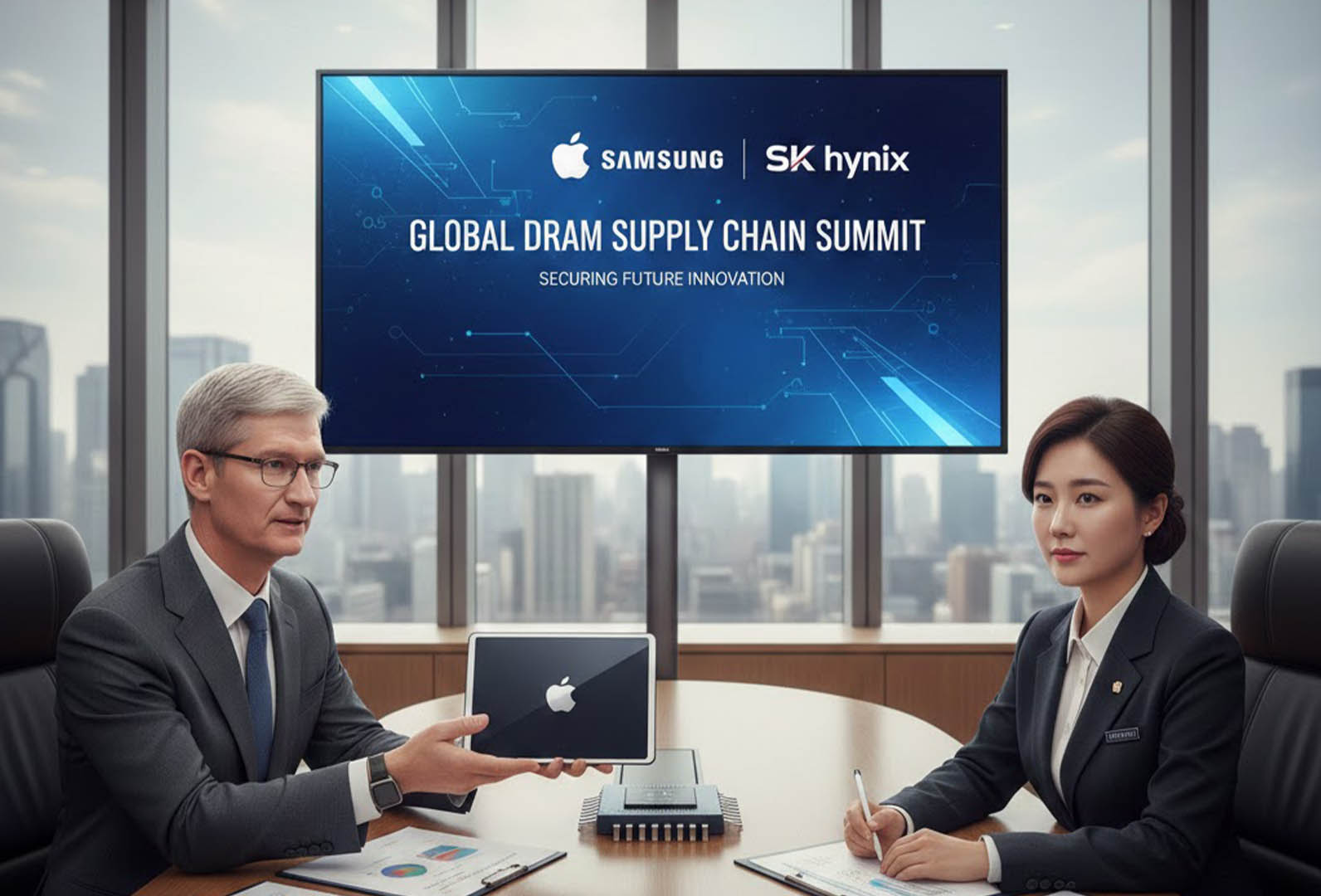
The global DRAM shortage is tightening its grip on the tech industry, and even the biggest companies in the world are feeling the pressure. A senior Samsung executive recently summed up the situation bluntly, saying that no one can escape the DRAM crunch. With memory becoming harder to secure and more expensive by the month, major device makers are now taking unusually aggressive steps to lock in supply for upcoming products.
A new report claims Apple has sent executives to South Korea for extended hotel stays near key memory manufacturing sites, aiming to negotiate fresh long-term supply deals with Samsung and SK hynix. The goal is said to be multi-year agreements lasting roughly two to three years, a critical move for a company that ships iPhones in massive volumes and needs predictable component availability for future launches like the iPhone 17 and iPhone 18.
The urgency is easy to understand when you look at pricing. A 12GB LPDDR5X memory package is rumored to cost Apple around $70 per unit, representing a reported 230 percent increase compared to what the company was paying at the beginning of 2025. That kind of jump doesn’t just squeeze profits—it can reshape product pricing strategies across entire smartphone lineups.
Apple isn’t alone in this scramble. The same report notes that other major players, including Google and Dell, have also been visiting memory makers to secure allocations. The rush has reportedly been so intense that it’s even boosted local hotel demand in the areas where negotiations are happening, highlighting just how competitive the DRAM buying environment has become.
With supply limited, memory manufacturers are reportedly prioritizing certain customers—effectively choosing who gets chips and who waits. But even favored buyers aren’t getting a bargain. DRAM contract prices are projected to rise another 50 percent this quarter, meaning companies may have no choice but to pay a premium just to keep production plans on track.
The stakes are high inside these organizations, too. Executives at firms like Microsoft and Google are reportedly facing internal pressure to secure supply, with mentions of job risk if they fail. While it’s unclear whether Apple is applying similar ultimatums, the company still faces the same core challenge: maintaining steady production without letting component inflation force major price increases on finished products.
Industry analysts warn the ripple effects could hit smartphone shipments. Counterpoint Research estimates that the DRAM shortage could raise a smartphone’s bill of materials by about 25 percent, which tends to reduce overall unit shipments as costs climb and pricing becomes harder to control.
Still, Apple may be better positioned than most to ride out the storm. The company’s supply chain discipline, massive purchasing power, and increasing focus on in-house silicon help it offset some of the component cost pressure. That gives Apple more flexibility to absorb rising memory prices and protect its margins—at least more comfortably than many competitors.
What happens next will likely depend on how quickly memory supply normalizes and how aggressive pricing becomes through the rest of the year. For now, the DRAM shortage is forcing the entire industry into deal-making mode, and it’s clear that securing multi-year memory supply has become one of the most important battles behind the next wave of smartphones and PCs.