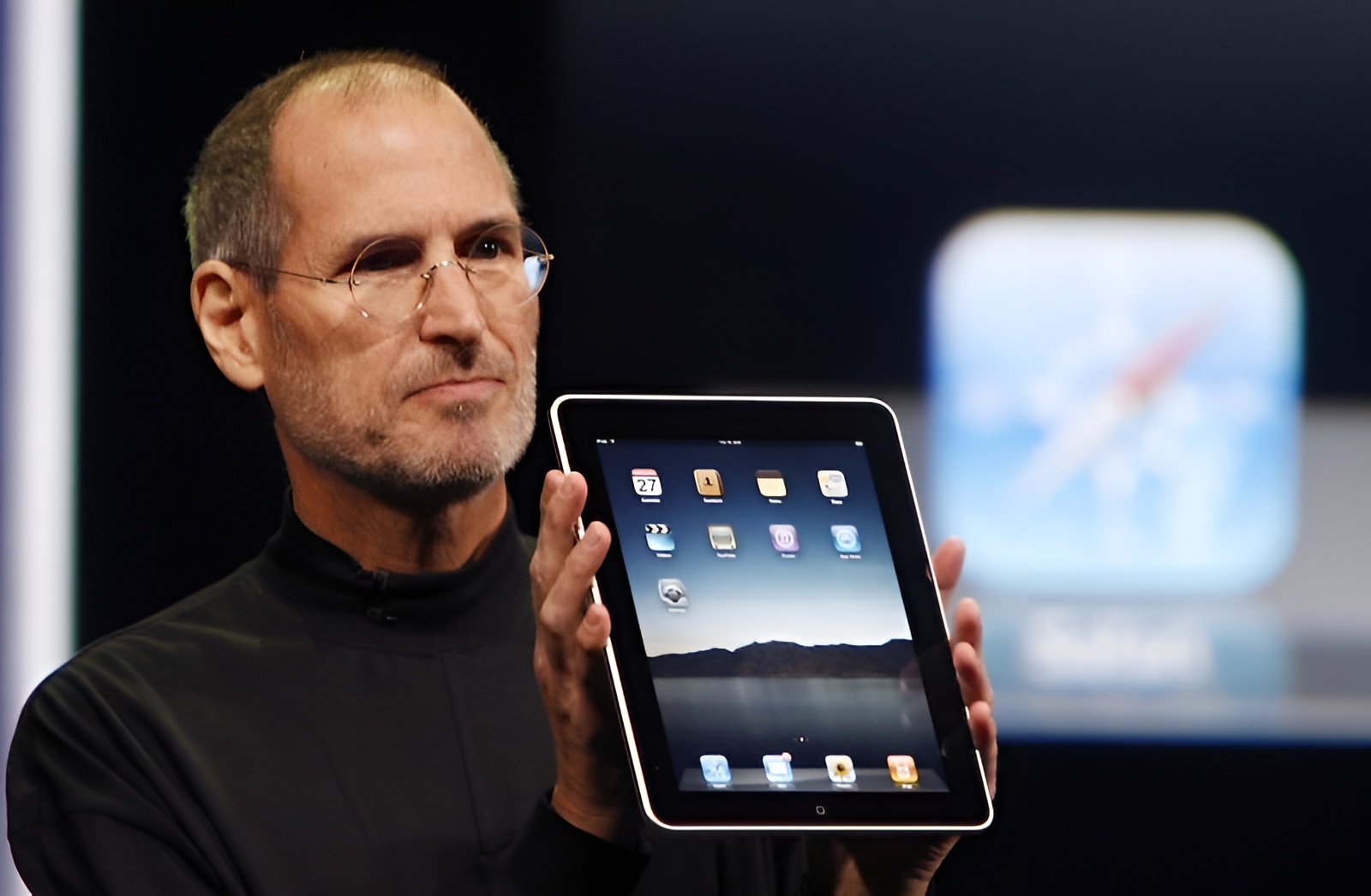
Apple’s first iPad officially turns 16 today, marking another year for the device that helped push modern tablets into the mainstream. While the original model now feels like a throwback in a world of ultra-thin slabs, high-refresh displays, and desktop-class chips, its influence on how people consume apps, books, video, and the web on a larger screen is still easy to spot across today’s tablet market.
The first-generation iPad was unveiled by Steve Jobs on January 27, 2010, at the Yerba Buena Center for the Arts in San Francisco. From the start, Apple positioned it as something different from both a smartphone and a laptop: a more comfortable, more intuitive way to interact with apps and content on a larger display. In Apple’s own messaging at the time, the iPad was meant to “create and define an entirely new category of devices” built around a more intimate and fun experience.
On the hardware side, the original iPad shipped with a 9.7-inch LED-backlit multi-touch display and ran on Apple’s A4 chip, one of the company’s early custom-designed processors. Storage options went up to 64GB, and connectivity relied on the classic 30-pin dock connector that also defined many Apple products of that era. Perhaps most memorable was the price: it launched at $499, a figure that played a major role in making the concept of a mainstream tablet feel attainable.
The software experience was also a key part of the pitch. The device ran a version of iOS tailored for the larger screen, which helped set expectations for what tablet-optimized apps should look and feel like. Apple also introduced iBooks and the iBookstore, signaling early that reading and media consumption would be central to the iPad’s identity and positioning it as a competitor in the growing e-reader space.
Physically, the first iPad looks unmistakably “early 2010s” today. It featured thick black bezels around the display, a physical home button, and a curved aluminum back. It weighed about 1.5 pounds and promised roughly 10 hours of battery life—an endurance benchmark that became one of the product’s most talked-about advantages at the time.
Sales quickly confirmed Apple had tapped into something big. The original iPad reportedly sold more than 300,000 units on launch day, hit one million units within the first month, and ended 2010 with over 15 million units sold. That added up to about $9.5 billion in revenue, an early indicator that tablets weren’t a niche experiment—they were a major new pillar in consumer electronics.
Sixteen years later, the first iPad stands as both a relic and a milestone: a device that didn’t just arrive at the right time, but helped shape what people expected from portable computing on a larger screen.