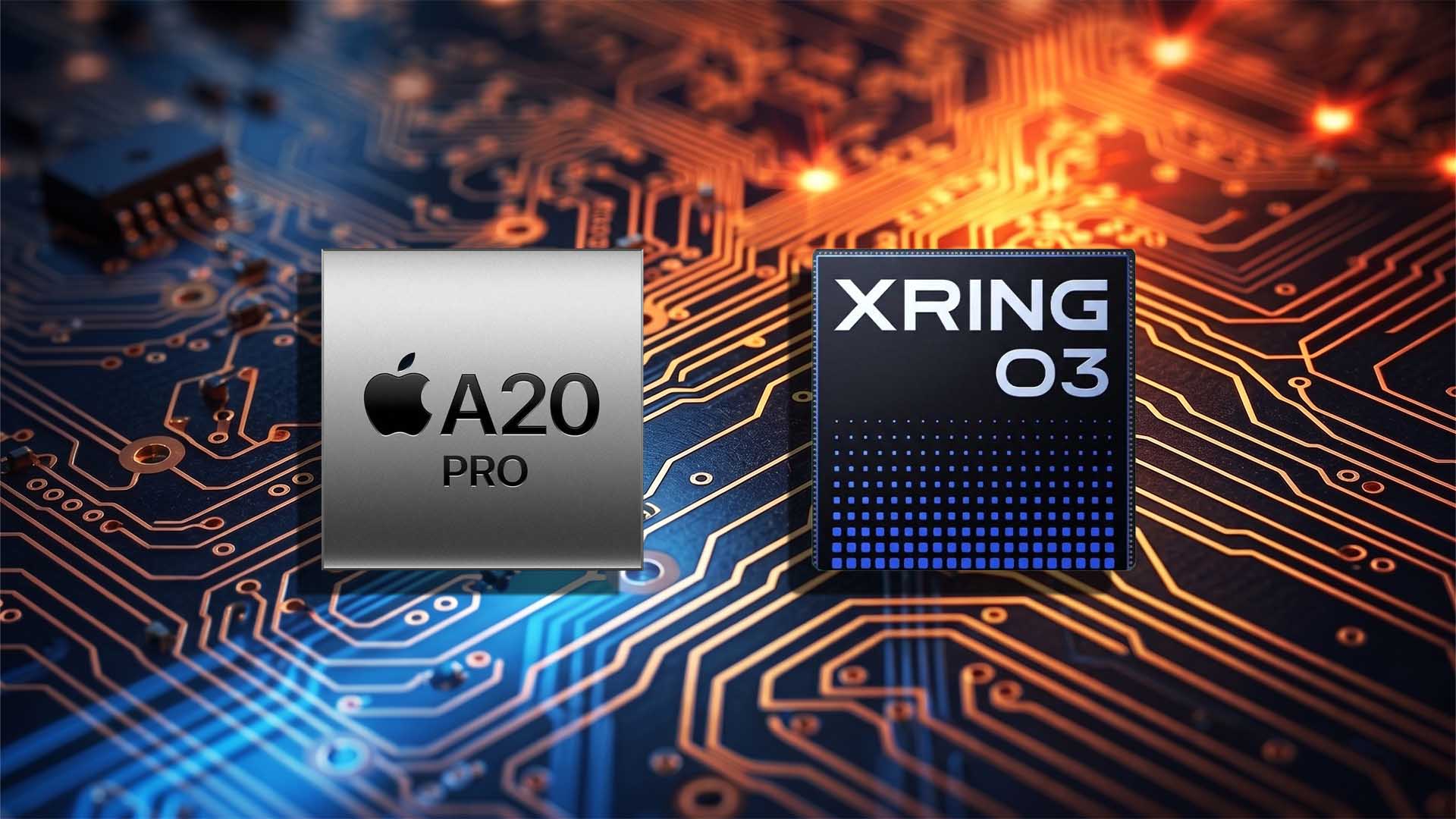
Apple A20 Pro Could Outpace Xiaomi XRING 03 in Memory Bandwidth While Still Using LPDDR5X RAM
Apple’s upcoming A20 Pro chip is shaping up to be more than just another yearly performance upgrade. Built on a new 2nm process, the chipset is expected to deliver major improvements in raw speed, power efficiency, and on-device AI performance. But one of the most interesting details may be how Apple reportedly achieves higher memory bandwidth without moving to the newer and more expensive LPDDR6 memory standard.
According to the available information, the A20 Pro may reach up to 115.2GB/s of memory bandwidth. That would place it slightly ahead of Xiaomi’s XRING 03, which reportedly tops out at 113.8GB/s despite supporting LPDDR6 RAM. On paper, that sounds surprising, especially because LPDDR6 is expected to offer higher transfer speeds than LPDDR5X. However, Apple’s advantage appears to come from deeper architectural choices rather than simply relying on a newer memory type.
Both the Apple A20 Pro and Xiaomi XRING 03 are said to use a 96-bit memory bus. The XRING 03 reportedly runs at 10,667MT/s, while Apple’s A20 Pro is expected to operate at 9,600MT/s. Normally, the higher transfer speed would suggest an advantage for Xiaomi’s chip, but memory performance depends on more than just speed. Channel configuration, latency, controller design, and how efficiently the chip can handle simultaneous read and write requests all play a major role.
The XRING 03 is believed to use a 4-channel by 24-bit memory setup. Apple has not officially confirmed the A20 Pro’s configuration, but earlier rumors suggested the company could adopt a six-channel memory design. If accurate, that would help explain how the A20 Pro can pull ahead in total bandwidth while continuing to use LPDDR5X RAM.
A six-channel memory configuration can improve how quickly data moves between the processor and memory. More channels allow the memory controller to handle more operations at the same time, which can reduce latency and prevent bottlenecks. This is especially important for artificial intelligence workloads, where the chip needs constant access to large amounts of data.
This possible memory upgrade also fits with reports that the A20 Pro may include a dual 16-core Neural Engine. Apple has been placing more emphasis on on-device AI, and a faster memory subsystem would be critical to keeping the Neural Engine properly supplied with data. Without enough bandwidth, even a powerful AI processor can be held back by what is often called NPU starvation, where the compute unit is ready to work but cannot access data quickly enough.
The A20 Pro’s design direction suggests Apple is not only chasing benchmark gains but also preparing for a new generation of AI-powered features running directly on the iPhone. On-device AI can improve privacy, reduce reliance on cloud processing, and make features respond faster. Tasks such as image generation, voice processing, real-time translation, advanced photo editing, and intelligent app functions all benefit from higher memory bandwidth and lower latency.
Another major change expected with the A20 Pro is a new packaging design. Apple may use a wafer-level multi-chip module approach, placing the DRAM beside the main silicon rather than stacking it directly on top. This type of packaging can help with thermal management, which becomes increasingly important during demanding AI workloads.
By positioning memory to the side, heat from the processor and memory may be spread more effectively. That could allow both components to maintain higher performance for longer periods without overheating. Sustained performance is especially important for smartphones, where limited internal space makes cooling far more difficult than on laptops or desktops.
Apple’s decision to stay with LPDDR5X instead of adopting LPDDR6 may also come down to cost. Moving to TSMC’s 2nm manufacturing process is already expected to be expensive, and adding LPDDR6 could further raise production costs. By refining the memory architecture instead, Apple may be able to deliver better real-world performance while keeping component costs under tighter control.
This approach is typical of Apple’s chip strategy. Rather than always being first to adopt every new standard, the company often focuses on tightly optimized hardware integration. If the A20 Pro can exceed LPDDR6-equipped rivals in memory bandwidth while using LPDDR5X, it would show how much performance can be gained through smart engineering and custom architecture.
The reported 115.2GB/s bandwidth figure is also notable because it would put the A20 Pro above Apple’s M3 in this specific metric. That does not mean the A20 Pro will outperform the M3 overall, as desktop-class and laptop-class chips still have advantages in power limits, cooling, and broader system resources. However, it does suggest that Apple is giving its next iPhone chip an unusually strong memory subsystem, likely with AI workloads in mind.
If these details prove accurate, the A20 Pro could become one of the most advanced smartphone processors available when it launches. Its combination of a 2nm process, improved memory bandwidth, possible six-channel memory design, enhanced Neural Engine, and redesigned packaging could make it a major step forward for mobile AI performance.
In short, Apple appears to be taking a clever route with the A20 Pro. Instead of simply switching to LPDDR6, the company may be extracting more from LPDDR5X through a wider and more efficient memory architecture. That could give the A20 Pro a meaningful edge in AI processing, sustained performance, and overall responsiveness, making it one of the most important mobile chips to watch.