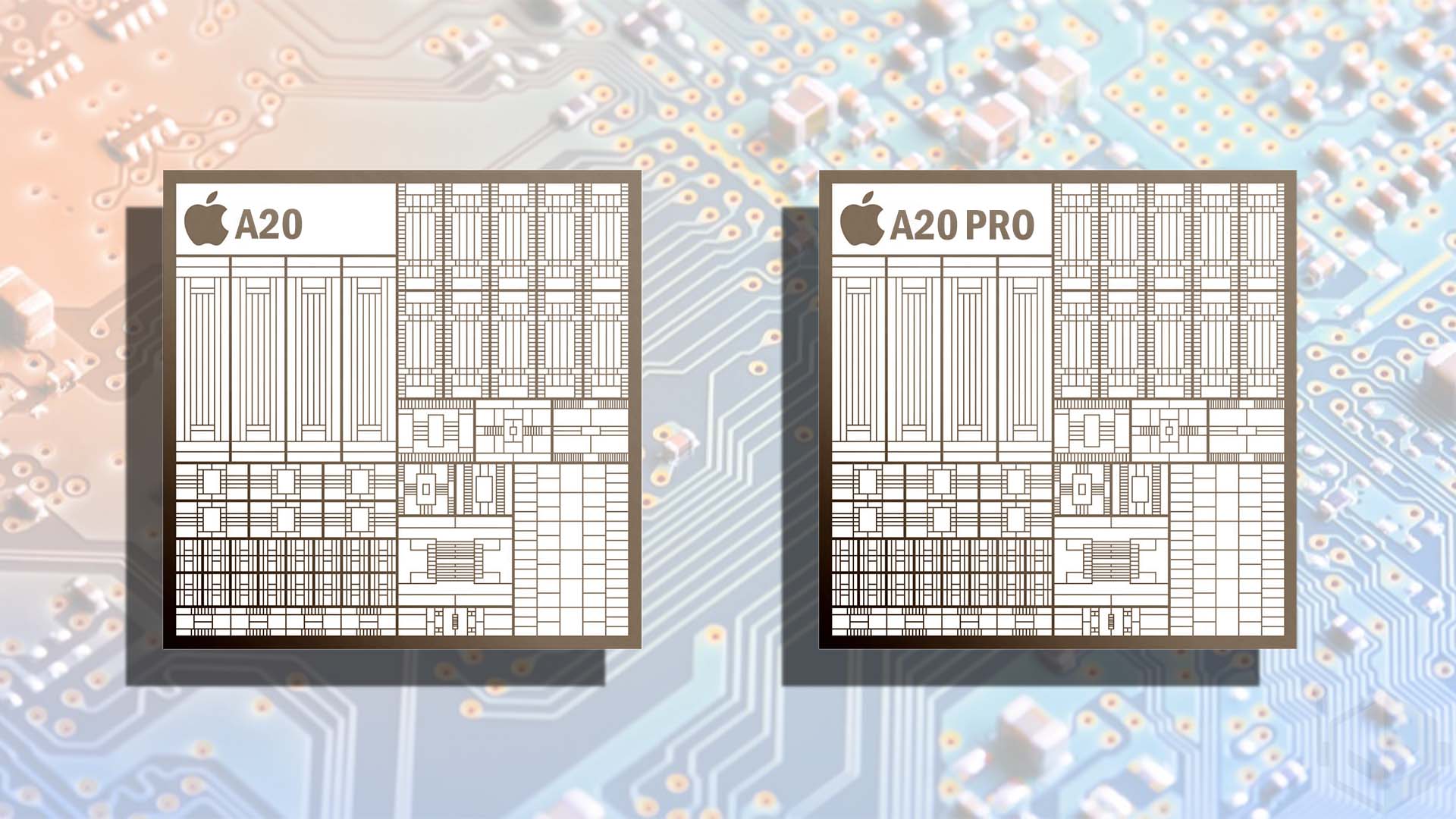
Apple’s next-generation A20 chip is shaping up to be a major leap forward for iPhone performance and efficiency, but it may also become Apple’s priciest silicon yet. The big reason: Apple is expected to move the A20 to TSMC’s cutting-edge 2nm manufacturing technology, a shift that typically brings sizeable gains in speed and power efficiency along with a steep increase in production costs.
A new report from Taiwan’s Economic Daily claims Apple could pay about $280 per A20 chip. If that figure holds, it would represent roughly an 80% jump compared with the A19 processor used in the current iPhone 17 lineup. For consumers, higher component costs can eventually translate into tighter margins for Apple or, depending on the overall bill of materials, potential price pressure on future iPhone models.
So why is the A20 reportedly so expensive? Part of the increase is tied to broader inflationary trends affecting components and manufacturing inputs. But the largest driver appears to be TSMC’s advanced 2nm node—specifically its N2P process—which is said to incorporate first-generation nanosheet transistors along with ultra-high-efficiency metal interlayer capacitors.
Nanosheet transistors, often referred to as Gate-All-Around (GAA), represent a significant evolution in transistor design. Instead of the gate controlling the channel from only a few sides, the gate “wraps” around the channel created by stacked nanosheets. This improves electrostatic control, helping reduce leakage and boost efficiency. It also enables higher chip density, with reports suggesting about a 1.2x increase in logic density—an important benefit as smartphone chips pack in more CPU, GPU, and AI horsepower each generation.
Adding even more fuel to the price spike is demand. TSMC’s 2nm capacity is reportedly heavily sought after, and Apple is said to have reserved around half of that capacity for its own chips. If true, that would put supply pressure on other major chip designers and could further elevate costs as competition for leading-edge wafers intensifies.
Beyond the manufacturing node, the A20 is also expected to adopt a notable packaging change: a move from InFO packaging to WMCM. InFO has historically supported integration of key components—such as DRAM—onto a single die. WMCM, on the other hand, is designed to combine multiple separate dies (for example, CPU, GPU, and the Neural Engine) into one package. This approach can unlock far more flexibility than a single-die design because Apple could, in theory, mix and match different die configurations to create multiple A20 variants with different CPU and GPU core setups.
WMCM packaging may also bring efficiency benefits. By allowing the CPU, GPU, and Neural Engine dies to behave more independently, each section can request power based on the specific task at hand rather than forcing a one-size-fits-all power profile. That can reduce overall power consumption in real-world use, which is exactly the kind of improvement iPhone buyers notice as better battery life and sustained performance.
The packaging process is also expected to use MUF (Molding Underfill), which can reduce material usage and simplify portions of the manufacturing workflow by cutting down the number of steps involved.
On the performance side, the A20’s efficiency cores are expected to become even more power-friendly on the N2P process, delivering better performance without increasing energy draw. The GPU is also rumored to add third-generation Dynamic Cache, a feature aimed at improving how on-chip memory is allocated on the fly based on workload demands. In practical terms, that could help everything from high-end games to graphics-heavy apps run smoother while keeping power use under control.
Taken together, the A20 is shaping up to be a classic next-gen iPhone upgrade: more advanced manufacturing, more flexible chip design, better efficiency, and smarter graphics memory management. The tradeoff is cost—if the reported per-chip pricing is accurate, Apple’s push to 2nm could be one of the most expensive processor transitions the iPhone has ever seen.