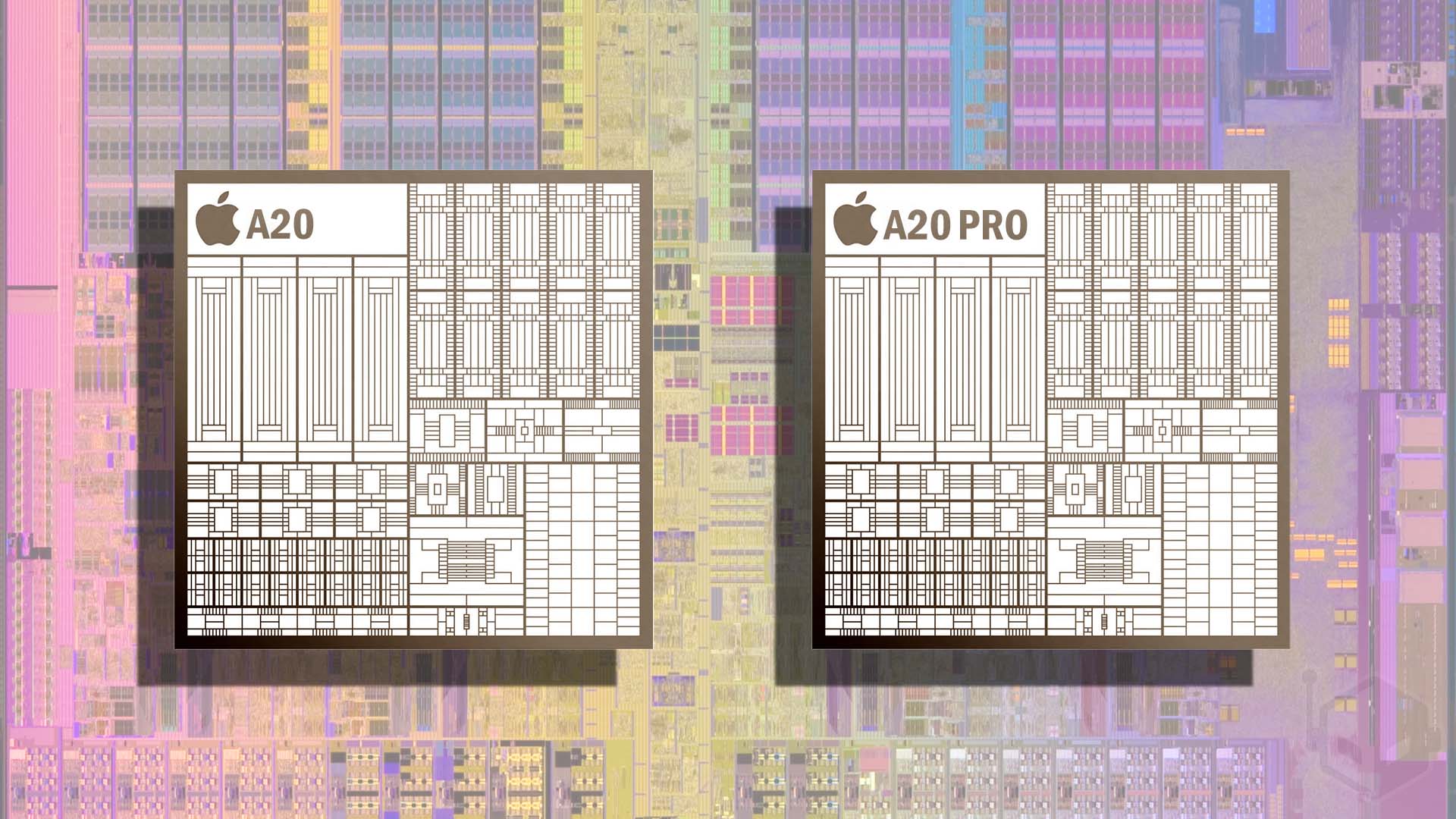
Apple’s A20 and A20 Pro are shaping up to be the first iPhone chipsets built on TSMC’s 2nm process, marking a major leap beyond the 3nm A19 series. Alongside a next-generation node, Apple is expected to adopt new packaging that improves efficiency, size, and cost—setting the stage for the iPhone 18 lineup, including Pro models and a long-rumored foldable.
What TSMC’s 2nm N2 node brings over 3nm
TSMC has begun 2nm wafer production, and industry chatter suggests two local fabs are already fully booked, with Apple securing a large share of initial capacity to ensure a smooth launch window. While formal comparisons to TSMC’s N3P are limited, the company’s 2nm N2 process is expected to deliver clear gains over N3E:
– 10–15% higher performance at the same power
– 25–30% lower power at the same performance
– 15%+ increase in transistor density at equal power and performance
Earlier speculation that Qualcomm might jump to the more advanced N2P variant for its next flagship has cooled; current guidance points to major 2026 SoCs using N2. For Apple, those performance-per-watt gains could enable both faster chips and sleeker, thinner devices—ideal for a second-generation iPhone Air.
A20 and A20 Pro: codenames, core layout, and where they’ll land
Internally, A20 is codenamed Borneo, while A20 Pro is Borneo Ultra. Expect Apple to keep its proven 6‑core CPU architecture, pairing two high-performance cores with four efficiency cores. With 2nm, Apple can push single-core and multi-core speeds while still dialing back power draw and heat, building on the notable efficiency-core improvements seen with the A19 Pro.
Apple’s chip-binning strategy is likely to continue, creating multiple configurations from the same silicon to differentiate devices. Based on the current trajectory, here’s how the A20 family could map across the 2026 iPhone range:
– iPhone 18: A20 with 2 performance cores, 4 efficiency cores, 5-core GPU
– iPhone Air 2 and iPhone 18 Pro: A20 Pro with 2 performance cores, 4 efficiency cores, 5-core GPU
– iPhone 18 Pro Max: A20 Pro with 2 performance cores, 4 efficiency cores, 6-core GPU
– Foldable iPhone: A20 Pro with 2 performance cores, 4 efficiency cores, 6-core GPU
GPU core counts may vary depending on binning and thermal targets. As always, final configurations can shift as Apple balances performance, battery life, and device design.
New packaging: moving from inFO to WMCM
Apple has long used inFO packaging for A‑series chips, but the A20 line is widely expected to move to Wafer‑Level Multi‑Chip Module Packaging (WMCM). In WMCM, multiple dies—CPU, GPU, memory, and other components—are integrated at the wafer level before being cut into individual chips. This approach can yield smaller, more power-efficient SoCs, simplify assembly, and help manage costs.
That last point matters. With 2nm wafers estimated around $30,000 each, packaging efficiency becomes critical to controlling overall chipset expenses while keeping performance headroom. WMCM could also open doors for tighter integration and better thermals in compact designs.
Beyond iPhone: 2nm in the Mac
Flagship iPhones won’t be the only products to benefit. Apple is also preparing 2nm-based M6 chips for future MacBook Pro models, across both OLED and non-OLED variants. That alignment suggests a broader 2nm transition across Apple’s product lines in 2026.
The bottom line
With TSMC’s N2 node, updated packaging, and a smart binning strategy, the A20 and A20 Pro are positioned to deliver meaningful performance-per-watt gains, higher density, and more flexible device designs. Expect Apple to reserve A20 Pro for its premium phones and foldable, while the standard iPhone 18 gets a capable A20. As always with next‑gen silicon, details can evolve, but 2026 is already looking like a standout year for Apple silicon.