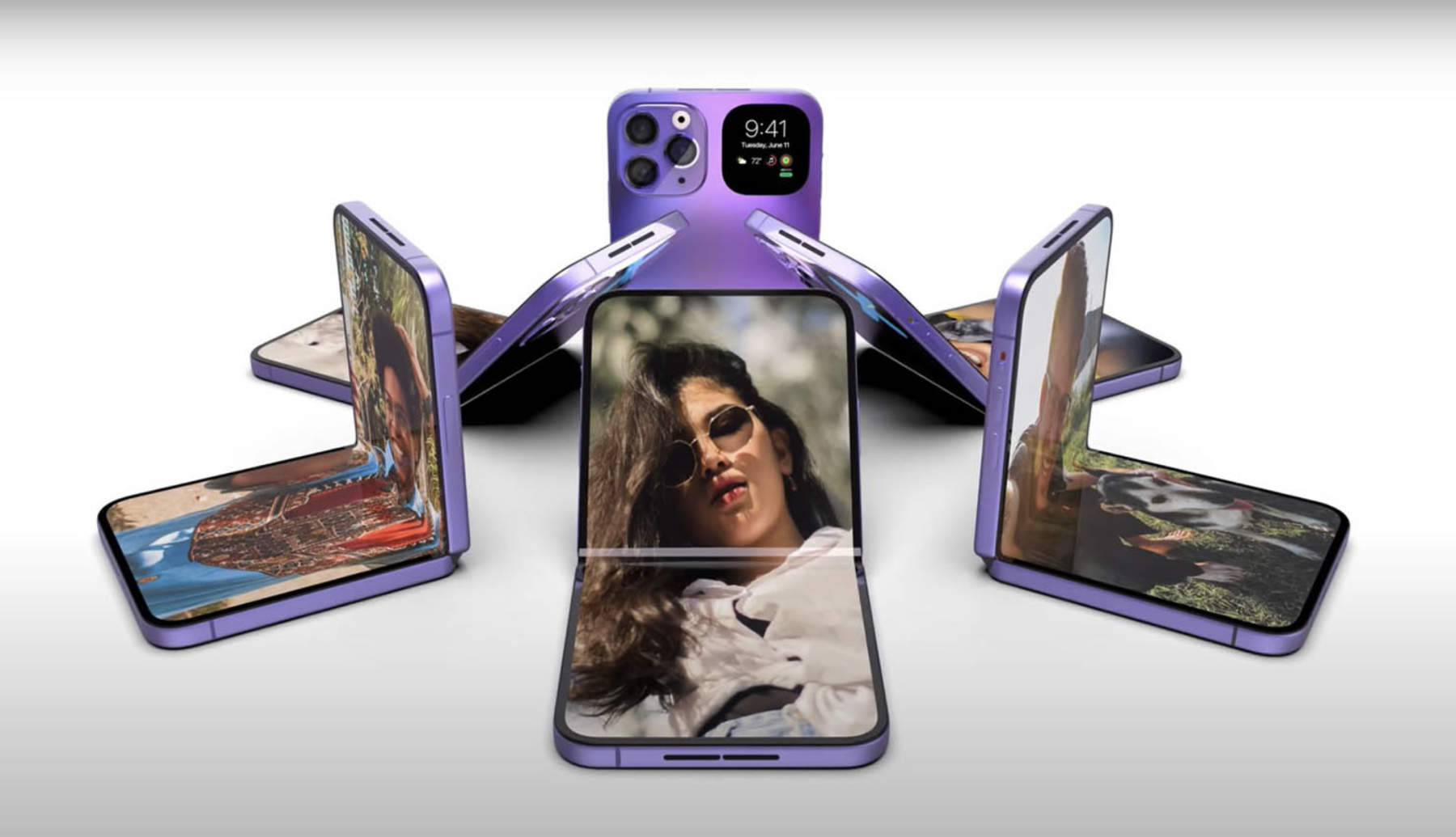
Apple’s first foldable iPhone is inching closer to reality, with two distinct models reportedly on the roadmap. A book-style foldable is said to target a 2026 debut, followed by a clamshell-style version slated for 2028. Together, they hint at a long-term strategy to make foldables a meaningful part of the iPhone lineup rather than a one-off showcase.
The 2026 model is expected to fold vertically like a book, delivering a larger canvas designed for multitasking, media, and productivity. Think of it as combining the utility of a small tablet with the portability of a phone. Industry chatter suggests the device could resemble two ultra-slim iPhones joined together, creating a seamless, expansive display when opened.
In contrast, the 2028 clamshell foldable appears to focus on style, compactness, and everyday convenience. It reportedly uses a single flexible OLED panel that folds top to bottom, providing a full-size screen when open and a significantly smaller footprint when closed. This flip-style design is aimed at users who want a pocket-friendly device that does not skimp on screen size, but it is not being positioned as a productivity workhorse.
A key reason Apple is taking its time is durability and display quality. Reports point to a sophisticated mix of display technologies designed to boost performance while minimizing trade-offs commonly seen in early foldables. The first model is said to incorporate LTPO for adaptive refresh rates, along with COE, CPM, and Clear OC within the display stack to enhance brightness, efficiency, and panel thinness. An under-display camera is also on the table to preserve a clean, uninterrupted viewing experience.
Perhaps most notable is Apple’s emphasis on the hinge and chassis. The hinge reportedly uses a hybrid material for added strength and longevity, while a Glass Mid-Frame structure is expected to increase rigidity and improve display durability. These elements are central to addressing two major pain points for foldables: the screen crease and hinge reliability. By prioritizing engineering over speed to market, Apple appears set on delivering a foldable that feels premium, robust, and distinctly iPhone.
What does this mean for buyers? If you want a foldable geared toward multitasking, content creation, and productivity, the 2026 book-style iPhone could be the model to watch. If portability, fashion-forward design, and one-handed ease are higher on your list, the 2028 clamshell is shaping up to be the everyday carry that fits almost anywhere while still opening into a full smartphone experience.
While timelines can shift, the broader message is clear: Apple’s foldable strategy isn’t about being first. It’s about getting the fundamentals right—refined displays, durable hinges, minimized creases, and a user experience that feels polished from day one. By learning from the early years of foldable hardware, the company may arrive later, but with a more mature take on the category.
If these plans hold, the foldable iPhone story starts in 2026 with a productivity-focused model and expands in 2028 with a stylish, compact clamshell. Two devices, two purposes—both designed to bring Apple’s signature polish to the next era of smartphone design.
Which would you choose: the larger book-style foldable for multitasking, or the smaller clamshell for everyday portability?