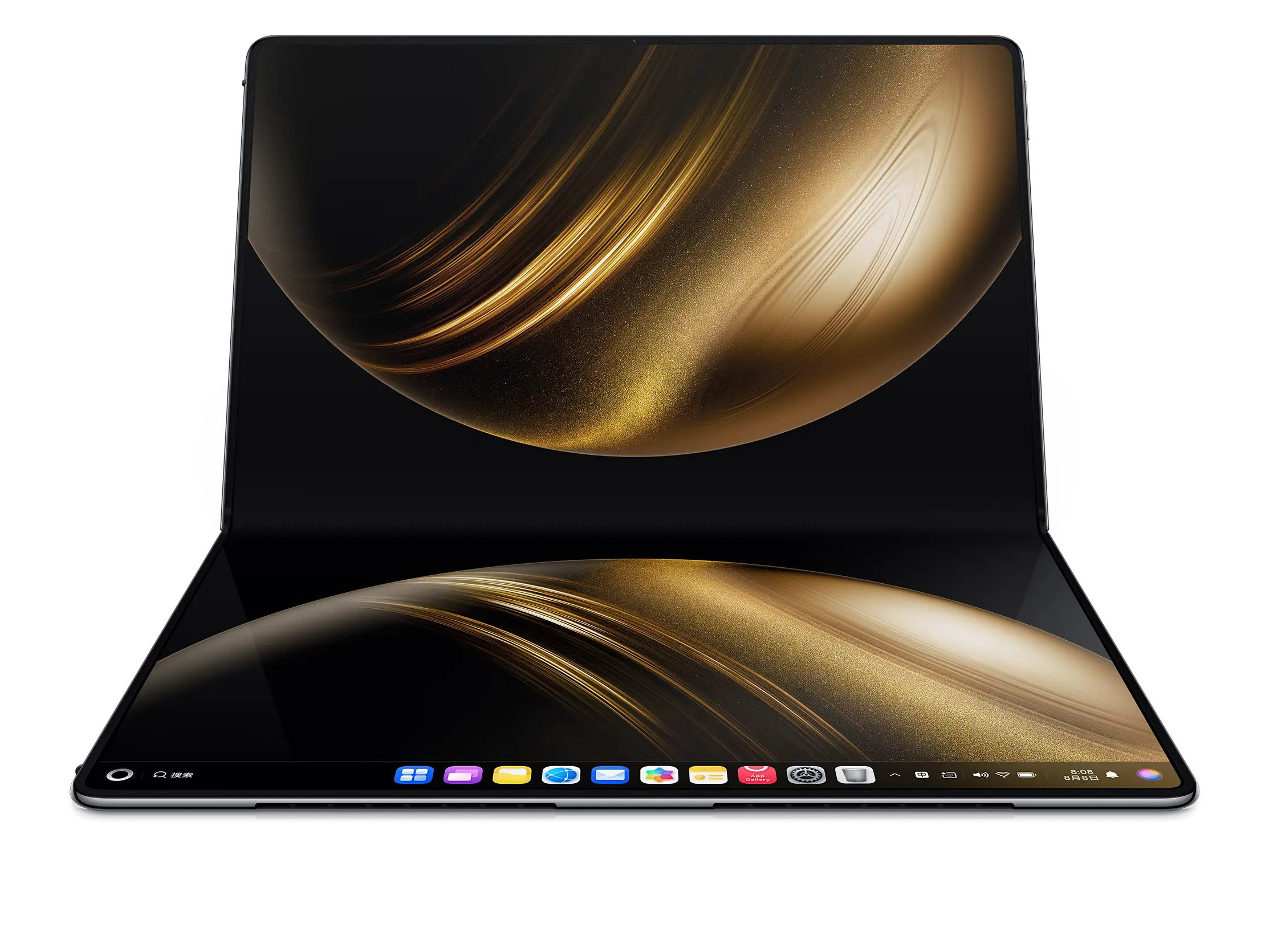
Apple’s Foldable iPad Rumor Points to a Giant 18-Inch Tablet for 2028
Apple’s foldable device roadmap may be starting to take shape, and the next big product could be far larger than a folding iPhone. According to recent rumors, Apple is testing a large foldable tablet that could eventually arrive as a premium iPad-style device, possibly with an 18-inch to 20-inch display when fully opened.
The device is being described as a “giant folding tablet,” and early chatter suggests Apple may be studying existing large foldable designs in the market as it develops its own approach. While nothing has been officially confirmed, the rumor lines up with earlier predictions from well-known Apple analyst Ming-Chi Kuo, who has said Apple could launch a foldable iPad around 2028.
If Apple does move forward, this would not be a standard iPad refresh. It would likely be one of the company’s most ambitious tablet designs yet, combining a large flexible OLED display, a premium hinge system, stylus support, and a form factor that could blur the line between iPad and MacBook.
What to expect from a foldable iPad
The rumored foldable iPad, sometimes informally referred to as an “iPad Duo,” is expected to feature a display measuring around 18 to 20 inches when unfolded. That would make it much larger than the current iPad Pro and potentially ideal for multitasking, creative work, video editing, drawing, and productivity.
When folded, the device could be easier to carry than a traditional large-screen tablet. Reports have compared the concept to having two iPad mini-sized screens joined together with a book-style hinge. This would allow users to open it like a notebook, use it as one large screen, or possibly set it up in a laptop-like mode with an on-screen keyboard.
A foldable iPad of this size would need an advanced display structure. Kuo has previously suggested that Apple may use ultra-thin glass for the cover layer, with Corning expected to play a major role in supplying the material. Other manufacturing partners could handle precision cutting, edge treatment, and inspection to meet Apple’s strict quality standards.
Apple’s experience with foldable screen protection on smaller devices could also influence the larger tablet. If the company uses a replaceable or specially treated protective layer, it may help reduce concerns around crease wear and long-term durability, two of the biggest challenges facing foldable devices.
A premium price is almost guaranteed
A large foldable iPad would likely be one of Apple’s most expensive mobile products. Current high-end foldable devices already command premium prices, and an 18-inch flexible OLED panel would be costly to manufacture.
For comparison, large foldable tablets from competitors have launched at prices well above typical laptop and tablet levels. If Apple releases a similar product with its usual premium materials, custom silicon, advanced display technology, and deep software integration, the price could easily exceed today’s top iPad Pro models.
The rumored foldable iPhone has already been discussed as a product that could sit near the $2,000 range. A much larger foldable iPad would almost certainly cost more, especially if Apple positions it as a professional-grade device for designers, business users, and power users.
Apple may not be chasing mass-market sales at first
Early shipment expectations suggest Apple may treat the foldable iPad as a limited, high-end product rather than a mainstream iPad replacement. Kuo has estimated that Apple could ship up to 1 million units in 2028 if the device launches as expected.
That would be a modest figure compared with regular iPad sales, but it makes sense for a first-generation foldable tablet. Apple may prefer to test demand, refine the hardware, and establish a new product category before scaling production.
This strategy would also mirror how companies often handle experimental form factors. Foldable displays are complex, expensive, and difficult to manufacture at scale. Apple is unlikely to rush a mass-market launch unless it feels the device meets its standards for durability, usability, and reliability.
Software could make or break the foldable iPad
The biggest question may not be the hardware, but the software. A foldable iPad with an 18-inch display would need more than a larger version of iPadOS to feel worthwhile.
To justify the price and form factor, Apple may need to offer a more desktop-like experience. That could mean improved multitasking, better window management, enhanced external display features, stronger file handling, and deeper support for professional apps.
A device like this could become a bridge between the iPad and the Mac. Apple has spent years keeping iPadOS and macOS separate, but a giant foldable tablet would raise new questions about what users should be able to do on a high-end iPad.
If Apple leans too heavily on the current iPadOS experience, the device could feel limited despite its impressive display. But if it introduces a more flexible interface built for large screens, the foldable iPad could become a powerful new productivity tool.
A possible 2028 launch window
Based on current rumors, Apple’s foldable iPad is not expected to arrive immediately. A 2028 launch window has been mentioned, giving Apple time to refine the hinge, display durability, software experience, and supply chain.
That timeline also suggests the company is still in the testing and development phase. Apple often experiments with multiple prototypes before deciding whether a product is ready for release. As a result, the final design, display size, name, and features could change before launch.
Still, the idea of a foldable iPad fits with Apple’s broader direction. The company has been pushing larger, more powerful tablets for years, especially with the iPad Pro. A foldable model would give Apple a way to offer an even bigger screen without sacrificing portability.
Why a foldable iPad could matter
A large foldable iPad could appeal to several types of users. Artists could benefit from a bigger canvas. Professionals could use it for multitasking, presentations, documents, and video calls. Students and travelers could carry one device that works as a tablet, notebook, and portable workstation.
It could also help Apple create a new premium category at a time when tablet upgrades have become less exciting for many users. Instead of simply making iPads thinner or faster, a foldable design would offer a more noticeable reason to upgrade.
However, success will depend on execution. The device must feel durable, the crease must be managed well, the software must take advantage of the larger screen, and the price must make sense for its target audience.
For now, the foldable iPad remains a rumor, but the reports suggest Apple is seriously exploring the idea. If the company delivers an 18-inch foldable tablet in 2028, it could become one of the most interesting Apple products of the decade.