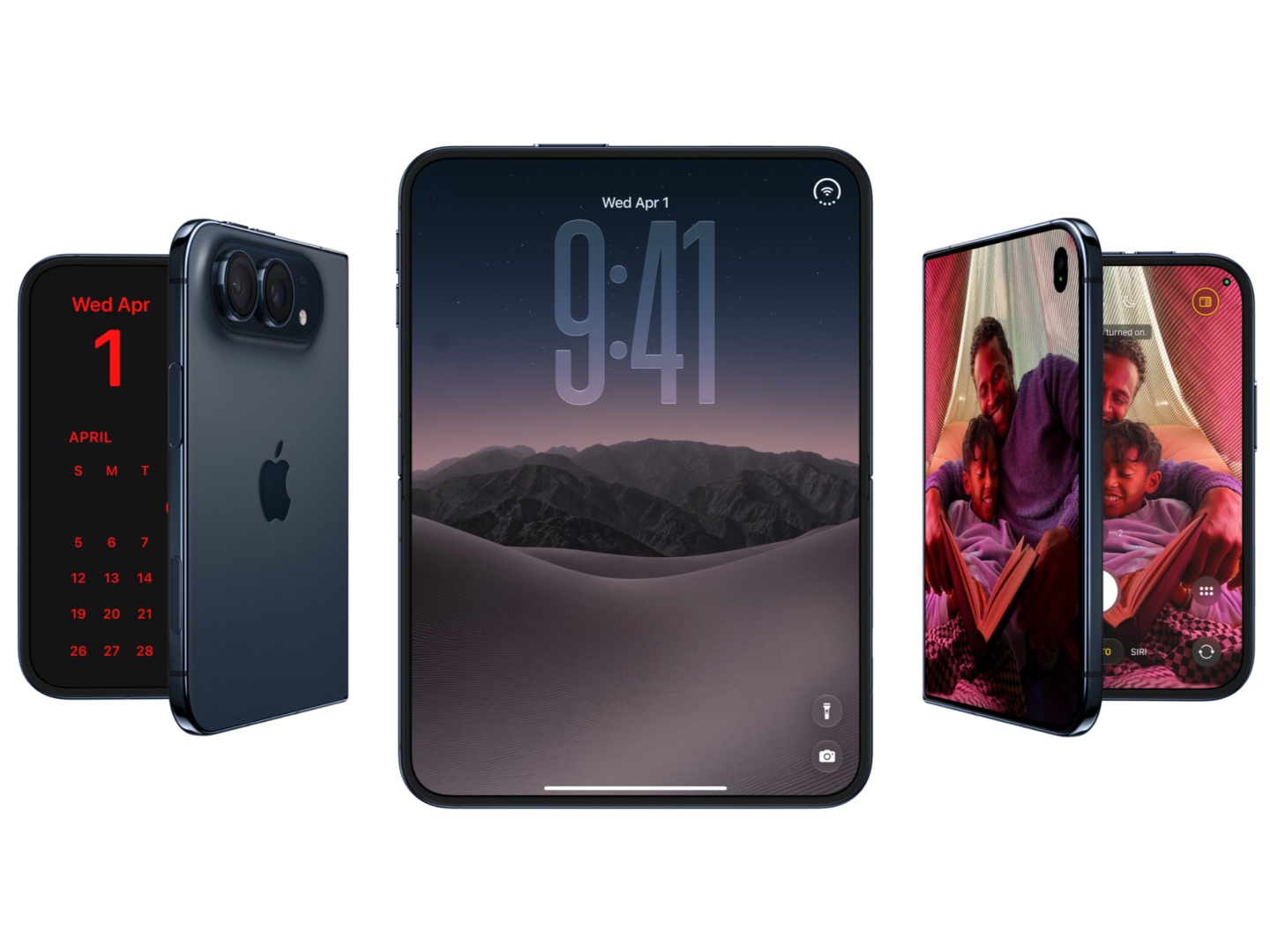
Apple’s premium iPhone Duo may be using cheaper QLC NAND storage in its higher-capacity models, according to a new component readout shared by Weibo tech blogger WHYLAB.
The post shows an iPhone Duo running a third-party iOS diagnostics app designed to identify internal component suppliers. In the screenshot, the 1TB iPhone Duo is listed as using SK Hynix QLC NAND, also known as quad-level cell storage. WHYLAB claims that only the 256GB and 512GB versions of the iPhone Duo use TLC NAND, while the 1TB model shown in the image uses QLC. If that information is accurate, the more expensive 2TB version may also rely on QLC storage.
That detail could matter for buyers paying premium prices for Apple’s newest device. QLC NAND is typically more affordable to produce than TLC NAND because it stores more data per cell. However, it can also be slower and less durable under sustained heavy writes, especially after its high-speed cache is depleted. For everyday use, most users may not notice a difference, but professionals who frequently record high-resolution video, transfer large files, or work with demanding apps could be more affected.
The claim follows earlier testing of the 1TB iPhone 18 Pro Max, which reportedly also used QLC storage. In those tests, the phone delivered impressive burst speeds above 3,000 MB/s while writing to its SLC cache. But once the cache and an additional TLC-like buffer were used up, sustained QLC write speeds dropped sharply, averaging 79.4 MB/s and falling as low as 25.6 MB/s.
Performance reportedly became even more limited when the storage was 60% full. At that point, the available SLC cache shrank from around 250GB to about 58GB. Raw QLC write speeds then averaged roughly 45 MB/s, with lows reaching just 1.1 MB/s. These results highlight the potential downside of QLC NAND in high-capacity smartphones, particularly when the device is nearly full or handling large continuous writes.
The iPhone Duo is powered by the same A20 Pro chip found in Apple’s iPhone 18 Pro models, but the Duo’s storage performance has not yet been tested in the same way. That means its real-world cache size, sustained write speed, and long-duration file transfer performance remain unknown for now.
It is also important to note that the current information comes from a third-party diagnostics app and has not been independently confirmed. Apple does not disclose NAND cell types in its official specifications, and the company often uses storage components from more than one supplier. As a result, storage hardware could vary depending on production batch, region, or individual unit.
The iPhone Duo launched on October 23 with a starting price of $1,999 for the 256GB model. The 512GB version costs $2,199, while the 1TB model is priced at $2,599. The top-end 2TB configuration reaches $3,199. The jump from 512GB to 1TB adds $400, matching the same upgrade cost seen on the iPhone 18 Pro Max.
For now, buyers considering the 1TB or 2TB iPhone Duo may want to keep an eye on independent storage benchmarks. If the QLC claim proves accurate, Apple’s most expensive storage options could offer massive capacity, but not necessarily the strongest sustained write performance under demanding workloads.