NVIDIA Vera Rubin Ramp-Up Is Putting New Pressure on TLC NAND Supply
NVIDIA’s upcoming Vera Rubin AI platform is already sending ripples through the semiconductor supply chain, and one of the more surprising areas feeling the impact is the TLC NAND flash market.
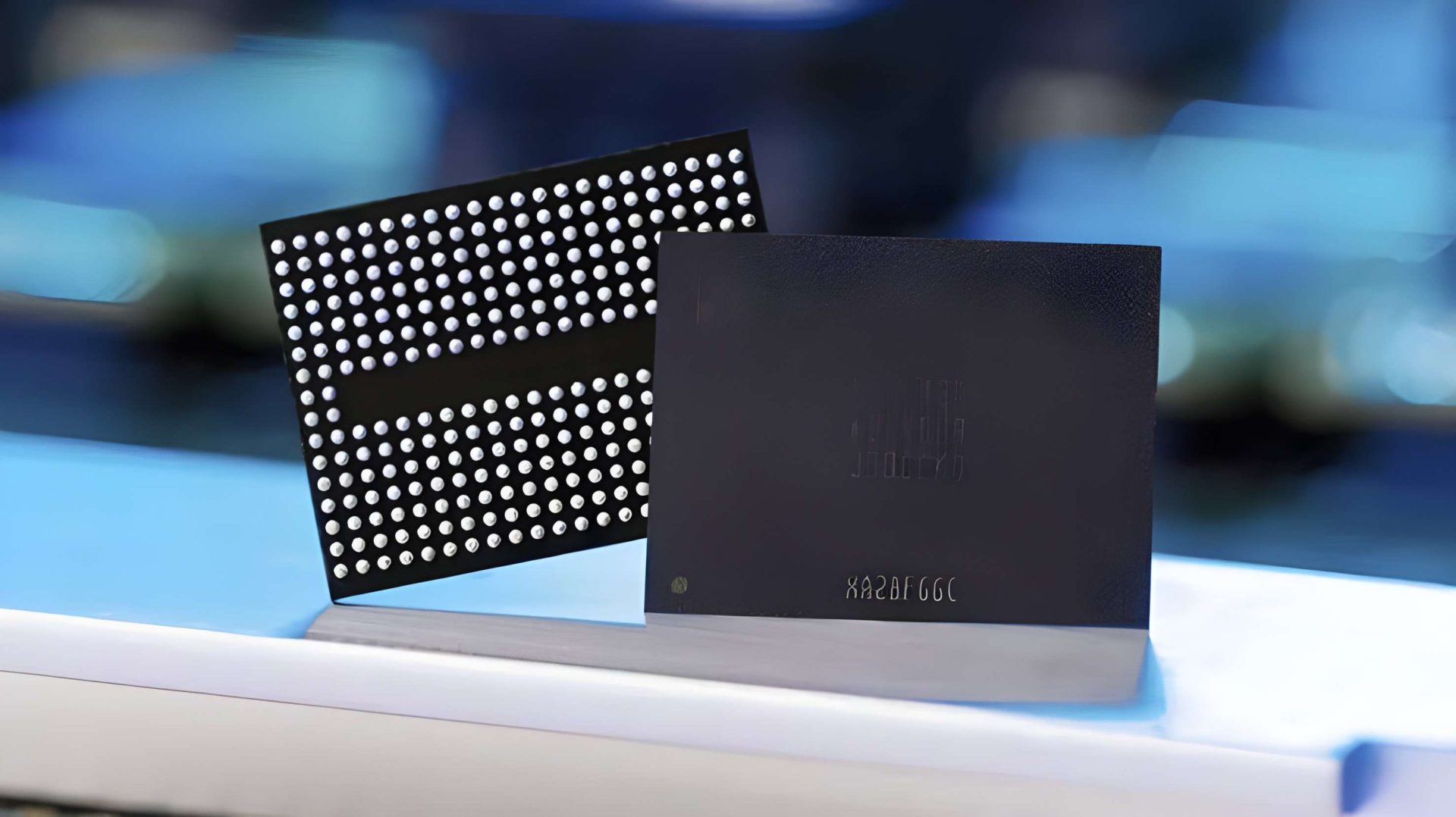
Spot prices for 512Gb TLC NAND have climbed back to around $21 after dipping below that level in June. While price movements in NAND are often tied to consumer electronics demand, inventory cycles, and enterprise storage trends, the latest rebound appears to be closely connected to the massive memory and storage requirements expected from next-generation AI infrastructure.
A major reason is NVIDIA’s Context Memory eXtension, or CMX, a new memory architecture designed for the Vera Rubin platform. CMX is intended to support the huge amount of context data generated by advanced AI models, especially the key-value cache used by attention layers when processing prompts and building relationships between tokens.
In simple terms, AI systems need fast access to enormous amounts of temporary working data. High-bandwidth memory, or HBM, remains essential for the most performance-sensitive tasks, but AI clusters also need a larger intermediate storage layer that can sit between HBM and traditional backend storage. That is where CMX comes in.
NVIDIA’s CMX design uses a large pool of TLC flash memory connected to Rubin GPU clusters through BlueField-4 DPUs and high-speed Spectrum-X Ethernet. These DPUs act as intelligent controllers for CMX servers, helping manage context memory in real time as AI workloads scale across large systems.
The storage capacity involved is enormous. A single 2U CMX server can reportedly hold 600TB of TLC flash storage. Each server uses four DPUs, with each DPU managing around 150TB of context memory. At the pod level, total CMX capacity can reach approximately 9,600TB, or 9.6PB.
That kind of architecture requires a tremendous amount of NAND flash. As NVIDIA increases production of Vera Rubin systems, more TLC NAND is expected to be absorbed into CMX deployments. Even if a large portion of this supply is secured through long-term agreements, the scale of demand is large enough to influence the broader market, including spot pricing.
Another factor adding pressure is the rising demand for enterprise SSDs. AI data centers require high-density, high-performance storage to feed large GPU clusters, manage massive datasets, and support fast model training and inference workloads. As Vera Rubin adoption grows, enterprise SSD demand is likely to rise alongside it, further tightening available NAND supply.
This creates a two-sided demand surge for TLC NAND. On one side, NVIDIA’s CMX architecture directly consumes large volumes of flash memory. On the other, data center operators need more enterprise SSDs to support increasingly complex AI workloads. Together, these trends are contributing to renewed strength in NAND pricing after a period of weakness.
The impact may become more visible as the Vera Rubin platform moves closer to volume deployment. AI infrastructure has already reshaped demand for HBM, advanced packaging, networking hardware, and power equipment. Now, TLC NAND appears to be joining the list of components being pulled into the AI growth cycle.
There has also been market discussion about whether NVIDIA could reduce the amount of HBM4E used in its future Vera Rubin Ultra GPUs to protect margins or manage supply constraints. However, Bank of America reportedly does not expect a meaningful permanent reduction in HBM content. Any adjustment, if it happens, is viewed more as a short-term response to supply limitations rather than a lasting downgrade to the product design.
Earlier expectations for NVIDIA’s roadmap pointed to Rubin Ultra using HBM4E with a high stack count and a target memory capacity of roughly 1TB. While final specifications may evolve as production plans mature, the broader direction remains clear: next-generation AI systems will continue to demand extreme amounts of memory and storage.
For the NAND market, this could mark an important shift. TLC flash has long been driven by smartphones, PCs, consumer SSDs, and enterprise storage demand. But AI infrastructure is now emerging as a powerful new force. If CMX becomes a central part of NVIDIA’s AI cluster architecture, TLC NAND suppliers could see stronger demand from data center customers over the coming quarters.
The key question is how far this supply tightening will go. If Vera Rubin ramps aggressively and enterprise SSD demand remains strong, NAND prices could continue to firm. On the other hand, memory markets are cyclical, and suppliers may respond by increasing output if they see sustained demand from AI data centers.
For now, the message from the supply chain is clear: NVIDIA’s Vera Rubin platform is not only shaping the future of AI computing, but also influencing the memory market in unexpected ways. TLC NAND, once viewed mainly through the lens of conventional storage demand, is becoming increasingly important to the next wave of AI infrastructure.