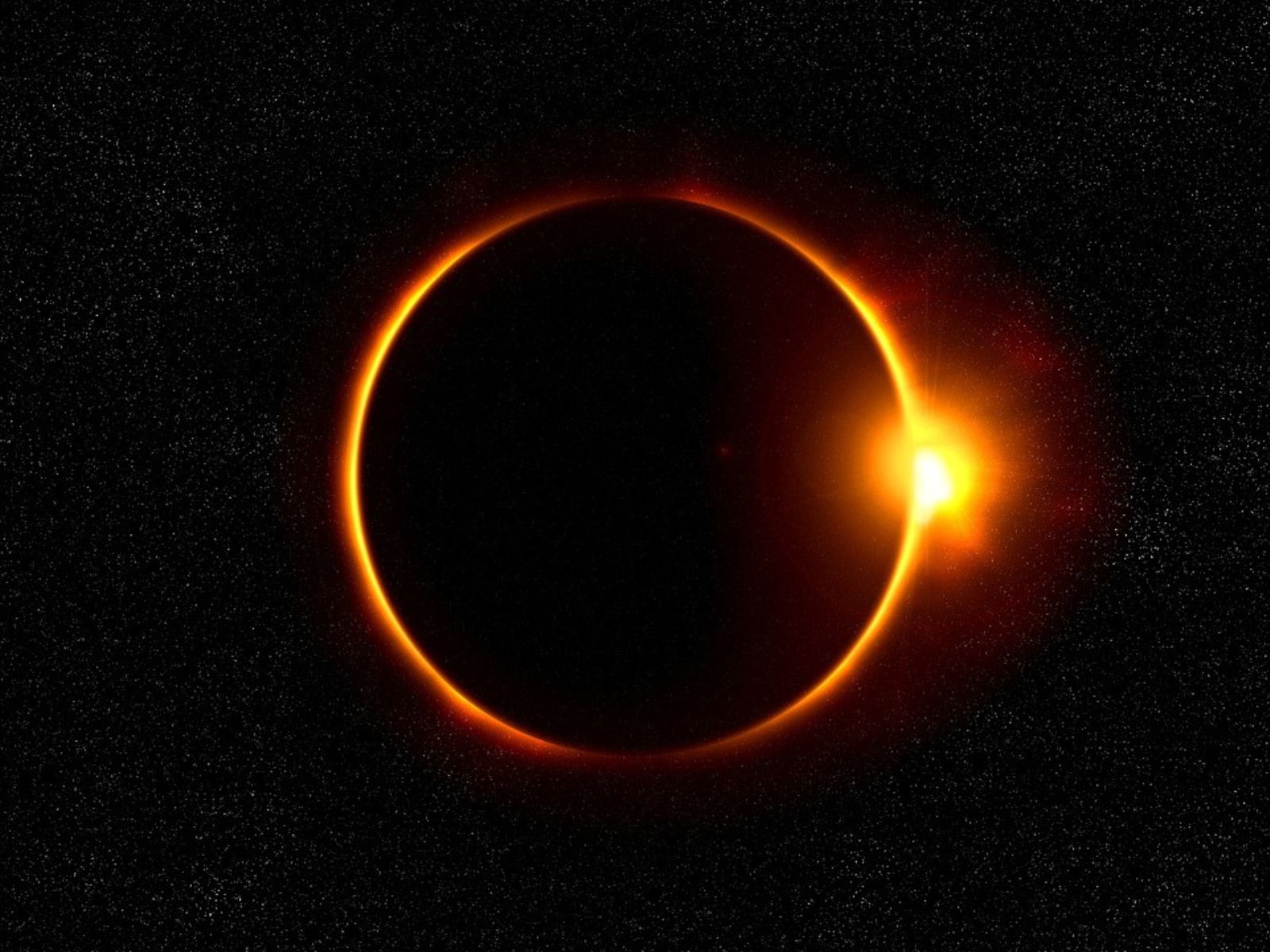
A rare solar eclipse swept across Antarctica on February 17, 2026, creating an unforgettable sight for the few who were actually there to witness it. Because the eclipse path crossed a remote part of the continent, viewing on the ground was extremely limited and largely reserved for scientists and research teams. Still, even when people can’t easily watch an eclipse in person, space-based instruments often deliver the most dramatic perspective of all: the Moon’s shadow racing across Earth.
That’s exactly what happened with this Antarctic eclipse. Satellites in orbit captured striking images of the Moon’s shadow projected onto the planet’s surface. Among the most notable were observations from the GEO-KOMPSAT-2A weather satellite and the GOES-19 satellite, both of which recorded the eclipse from above. GEO-KOMPSAT-2A, in particular, captured a sequence that shows the shadow moving steadily across the landscape from left to right, illustrating just how quickly eclipse conditions can sweep over a region.
While the imagery is spectacular, the broader takeaway is a helpful reminder for skywatchers: solar eclipses aren’t once-in-a-lifetime events on a global scale. They happen every year somewhere on Earth, and 2026 is shaping up to be an especially exciting year for eclipse and night-sky fans.
Another solar eclipse is expected later in 2026, and this one will be far more accessible. The Moon’s shadow is forecast to travel over Greenland and continue toward the Mediterranean region. That means a much larger population will have the chance to watch the event, with visibility expected across areas including the Russian North, Greenland, Iceland, parts of Western Europe, North Africa, and portions of North America. For millions of people, this upcoming eclipse could be the big celestial event of the year—one that doesn’t require traveling to the ends of the Earth.
Solar eclipses aren’t the only highlights on the 2026 astronomy calendar, either. Several lunar eclipses are also on the way. A lunar eclipse scheduled for March 3, 2026, is expected to be visible from North America, Russia, and Japan. Another lunar eclipse, planned for August 28, is also expected to be visible from North America and Western Europe, giving even more observers a chance to see the Moon take on its distinctive eclipsed appearance.
Between dramatic satellite views of a remote Antarctic eclipse and multiple widely visible eclipses still to come, 2026 is packed with opportunities to look up—and catch some of the most memorable skywatching moments nature has to offer.


