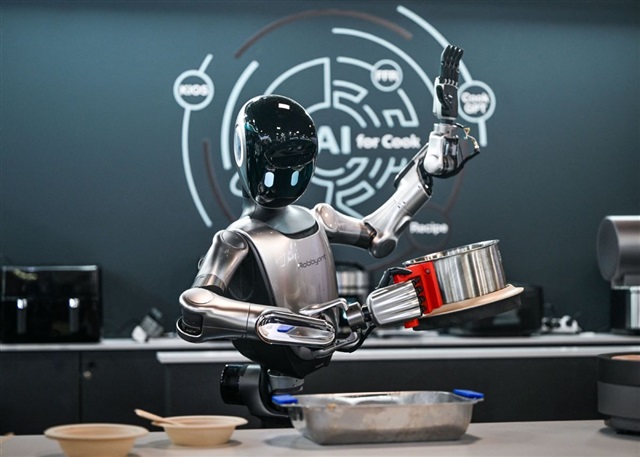
Ant Lingbo Technology, a subsidiary of Ant Group, has unveiled its first humanoid robot, the R1, at the Inclusion Conference in Shanghai. During live demonstrations, the R1 guided visitors around the venue, sorted medicines with precision, and even cooked meals, showcasing a versatile skill set aimed at real-world service scenarios.
The debut signals a notable move by Ant Group into intelligent robotics, extending its strengths in software and AI into the physical world. By blending computer vision, natural language interaction, and dexterous manipulation, the R1 is designed to handle tasks that require both coordination and context, from front-desk assistance to back-of-house operations.
At the event, the R1’s guided tours highlighted its ability to understand directions, manage crowds, and deliver clear, helpful information—capabilities that translate well to malls, airports, campuses, and corporate offices. Its medicine-sorting demo points to potential use in pharmacies, clinics, and hospital dispensaries, where accuracy, traceability, and speed are critical.
The cooking demonstration underscored the robot’s fine motor control and repeatability, hinting at future roles in canteens, quick-service restaurants, and industrial kitchens where standardized preparation and safety protocols are essential. Combining structured workflows with AI-driven recognition allows the R1 to follow recipes, handle ingredients, and maintain consistent quality.
While Ant Lingbo has not shared detailed specifications, the R1’s on-stage performance suggests a focus on reliability, safety, and human-robot interaction. These are foundational elements for deployment in public spaces and high-traffic environments, where robots must operate smoothly alongside staff and visitors.
The broader context is clear: service robotics is accelerating across China, with strong interest in automating routine tasks, supporting labor-constrained industries, and elevating customer experiences. As organizations evaluate pilots and phased rollouts, platforms like the R1 could help bridge digital services with hands-on operations.
For businesses, the potential benefits are compelling—improved efficiency, consistent service standards, and comprehensive data insights across day-to-day tasks. For end users, that could mean shorter wait times, clearer guidance, and safer handling of sensitive items such as medications.
Ant Lingbo’s R1 arrives at a timely moment for AI and automation. With its debut in Shanghai, the humanoid robot positions Ant Group as a serious player in service-oriented robotics, and sets the stage for real-world collaborations in healthcare, hospitality, retail, and beyond.