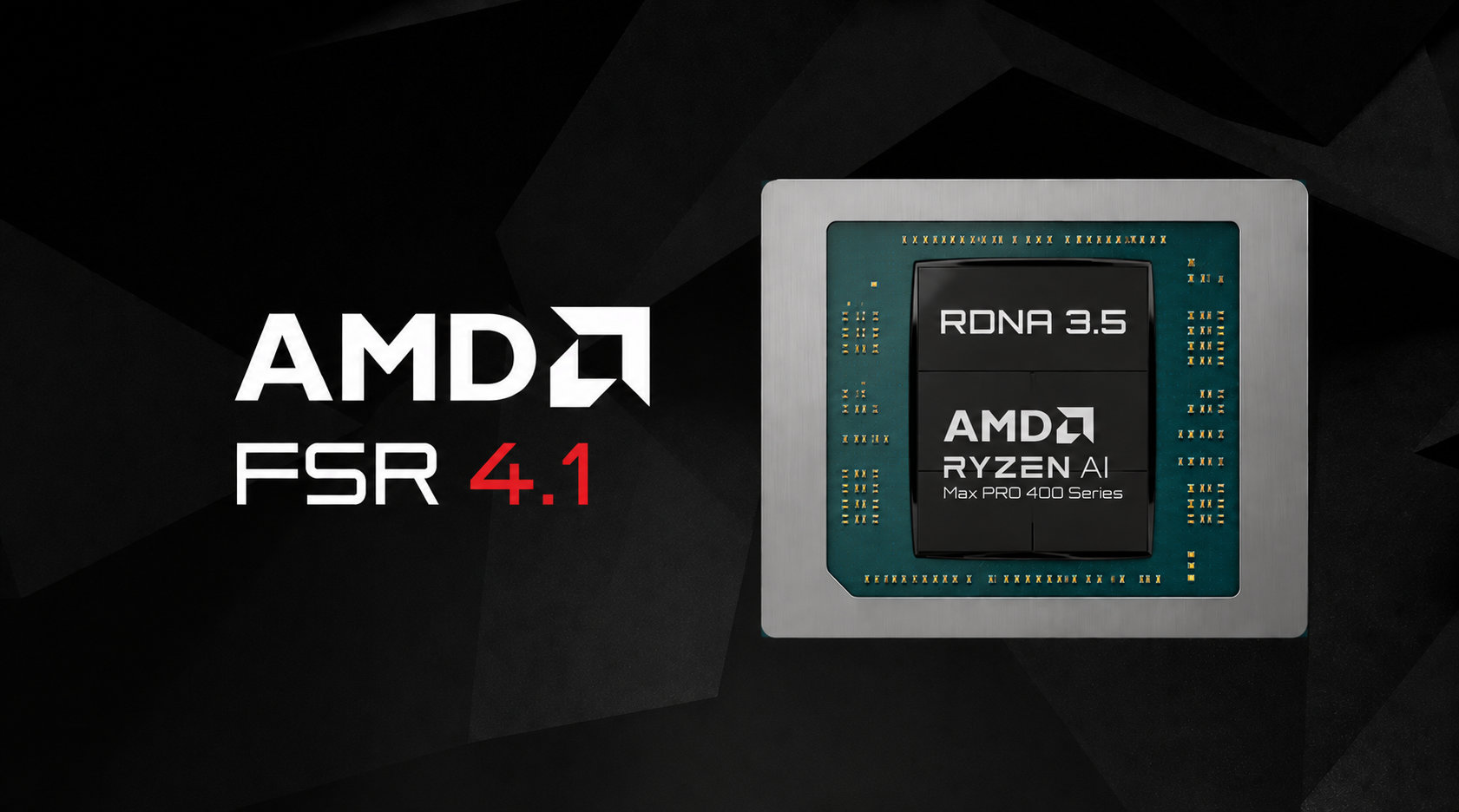
AMD has moved quickly to address growing speculation that FSR 4.1 may not be coming to RDNA 3.5 integrated graphics. Frank Azor, AMD’s Chief Architect of Gaming Solutions and Marketing, responded publicly on X, stating that the company has not made any internal decision to block or cancel FSR 4.1 support for RDNA 3.5 iGPUs.
The rumor began after comments from AMD executive David McAfee were reportedly interpreted as suggesting that FSR 4.1 was not currently planned for RDNA 3.5 graphics. That sparked concern among users interested in AMD’s newer APU platforms, especially chips based on Strix Halo and the upcoming Gorgon Halo family.
Azor’s response was direct. He explained that he was not present for the original conversation, but made it clear that AMD has not made the decision being reported or implied. He also added that AMD is not ready to discuss future product plans yet, while emphasizing that the company is listening to customer feedback.
That clarification matters because RDNA 3.5 iGPUs are a key part of AMD’s current and future mobile strategy. Strix Halo, in particular, has drawn attention for offering powerful integrated graphics performance, giving thin laptops and compact systems a much stronger gaming and creator-focused option than traditional iGPUs.
FSR, short for FidelityFX Super Resolution, is AMD’s upscaling technology designed to improve frame rates in supported games by rendering at a lower resolution and then reconstructing the image at a higher resolution. With FSR 4 and the expected FSR 4.1 update, AMD is aiming to compete more directly with modern AI-assisted upscaling solutions from rival platforms.
The concern among AMD users is easy to understand. If RDNA 3.5 integrated graphics were excluded from FSR 4.1, it could weaken the appeal of AMD’s latest APUs, particularly as competing platforms continue to promote full-featured upscaling and frame-enhancement technologies. NVIDIA’s RTX Spark platform, for example, has already been announced with support for the company’s broader graphics software stack, including DLSS-related features.
Azor’s quick response suggests AMD is aware of how sensitive this topic is for gamers, laptop buyers, and hardware enthusiasts. It is unusual to see such a fast public clarification from AMD on a rumor, but in this case, the company appears eager to prevent the idea from spreading that RDNA 3.5 support has been ruled out.
There is also an important technical point: current evidence does not suggest that RDNA 3.5 iGPUs are incapable of handling FSR 4-class features. Strix Halo has already shown strong enough graphics performance to run demanding modern features, and early testing has indicated that FSR 4 INT8 workloads can function without major issues in some scenarios.
That does not mean FSR 4.1 support for RDNA 3.5 is guaranteed. AMD has not officially announced a rollout plan, supported hardware list, or launch timeline for the update. However, Azor’s statement makes it clear that reports of a cancellation are premature.
For now, the situation remains open. AMD says it is listening, and that may be an encouraging sign for users hoping to see FSR 4.1 arrive on Strix Halo and other RDNA 3.5-based integrated graphics solutions.
If AMD wants its APUs to stay competitive in gaming laptops, handheld-style systems, and compact PCs, broad support for its latest upscaling technology will be important. With Intel and NVIDIA continuing to push advanced image reconstruction and performance-enhancing features, AMD will likely face increasing pressure to bring the strongest possible FSR support to its modern integrated graphics lineup.
The bottom line: AMD has not confirmed FSR 4.1 for RDNA 3.5 iGPUs, but it has also not cancelled it. For now, users waiting for FSR 4.1 on Strix Halo and future AMD APUs still have reason to stay hopeful.