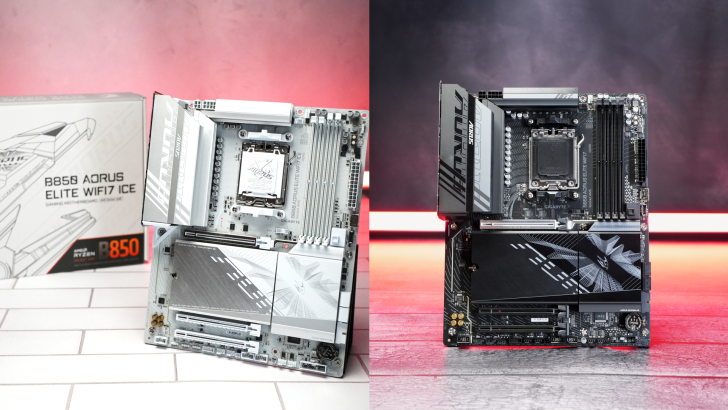
AMD’s B850 motherboards are quickly turning into the new go-to choice for budget and mid-range AM5 builds, and the reason is simple: they’re getting cheaper while offering a fresher feature set than the older B650 platform. In South Korea’s DIY PC market, B850 adoption has climbed fast enough that it’s now threatening B650’s long-held lead.
Recent market tracking from Danawa shows AMD B850 motherboards reaching 28.8% market share, while B650 still sits in first place at 37.64%. The gap is shrinking, though. Over the past 10 months, B650 has been steadily losing ground, and in the most recent month alone it dropped by nearly 4%. Meanwhile, B850 keeps gaining month after month, and if the current trend continues, it’s positioned to become the top AM5 chipset choice in South Korea within the next three to six months.
So why is the B850 surge happening now? Features matter, but pricing is doing most of the heavy lifting. B850 is often seen as a slightly upgraded step from B650, and that “sweet spot” positioning is resonating with builders who want modern connectivity and longer platform relevance without paying premium-tier prices.
The biggest shift is happening in average selling price. B650 boards remain the cheaper option overall, with an average selling price (ASP) of 155,929 WON. However, B850 boards have gotten far more competitive this year, with their ASP dropping by 21% to 263,285 WON. That still puts B850 at about 1.7 times the average price of B650, but builders appear increasingly willing to pay the difference—especially as more of them move toward full-sized ATX B850 boards rather than sticking to smaller designs.
Form factor trends help explain part of the story. Micro-ATX is still the most popular motherboard size, but its share has dipped to under 75%. ATX boards now hold a solid 21.46% share, suggesting more builders are choosing roomier cases and full-featured motherboards—an area where many B850 models are being positioned strongly.
Meanwhile, AMD’s entry-level A520 chipset has remained remarkably stable, holding around 15% market share throughout the year, with its pricing staying largely unchanged. That’s a sign that the lowest-cost segment continues to have steady demand, even as the mid-range shifts from B650 toward B850.
Brand competition is also getting interesting. ASUS currently leads the pack with 37.64% total market share, followed by MSI at 28.8%. GIGABYTE, however, has taken a sharp hit over the last two months, falling from above 20% to 14.33%. The surprise mover is ASRock, which jumped dramatically from under 5% to nearly 20% market share. The exact reason isn’t confirmed, but the timing lines up with ASRock’s Challenger series B850 motherboard releases in the second half of the year, and the spike may also be tied to more aggressive pricing or discounts.
For PC builders planning an AM5 system in 2025, this trend matters. As B850 boards become more affordable and more widely available—especially in full ATX options—they’re increasingly seen as the best balance of price, features, and upgrade potential. If the current momentum continues, B850 may soon replace B650 as the default recommendation for value-focused AM5 builds in South Korea’s DIY market.