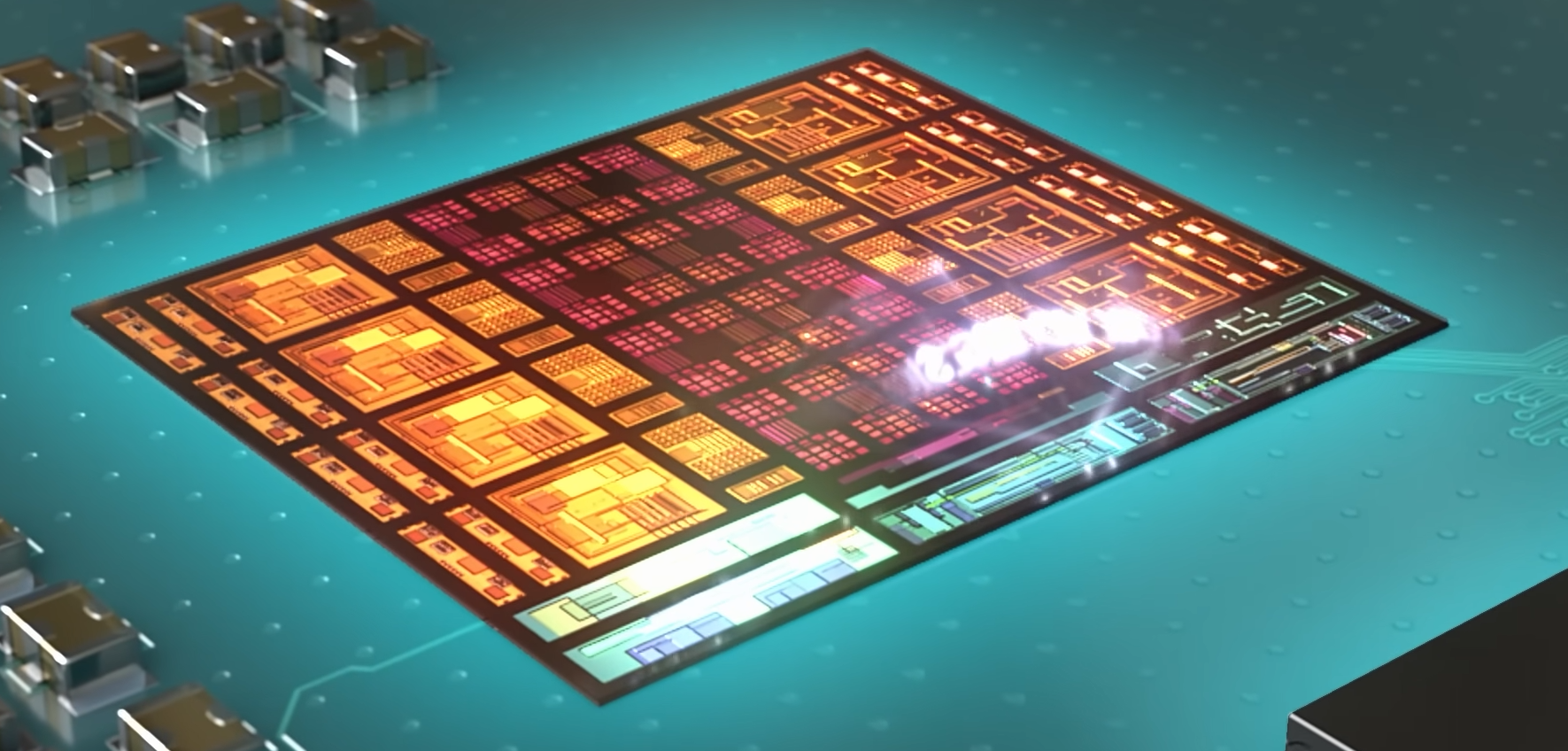
AMD’s 3D V-Cache desktop CPUs are showing why extra cache matters for modern AI workloads, especially retrieval-augmented generation (RAG). Fresh benchmark results point to a major performance jump versus comparable non-X3D chips, highlighting how CPU choice can directly affect real-world AI responsiveness in local and on-prem RAG pipelines.
LLMs (large language models) are the best-known way people interact with AI today. They’re trained on massive datasets and can generate human-like answers quickly, but they can struggle when questions require up-to-date or highly specific information that wasn’t in their training data. That’s where RAG (Retrieval-Augmented Generation) fits in. Instead of “guessing” purely from training, a RAG pipeline retrieves relevant information from an external dataset (often a vector database) and uses that retrieved context to produce more accurate, detailed responses. The trade-off is that retrieval adds work—and that extra work can introduce latency.
A key detail many people miss: even though GPUs are the star of AI compute, RAG pipelines often lean heavily on the CPU for vector database search operations. As request volume rises, those CPU-side searches can become the bottleneck that drags down the entire system. With agentic AI and more search-driven workflows gaining momentum, CPU performance is becoming just as critical as GPU horsepower for end-to-end AI throughput and responsiveness.
This is where larger CPU cache can pay off. Graph-based vector search methods, including the commonly referenced HNSW (Hierarchical Navigable Small World) approach, can benefit when more of the working dataset and search structures stay closer to the cores. Bigger cache reduces the time spent waiting on memory, which can translate into faster retrieval steps and smoother RAG performance overall—especially in single-node setups.
To test that idea, the open-source X3D RAG Benchmark was run across multiple CPUs, including AMD’s Ryzen 9000X3D lineup. The benchmark is designed specifically to measure how CPU cache and architecture influence graph-based vector search and related stages of local/on-prem RAG pipelines. It focuses on personal PC and small-team scenarios (roughly 100,000 to 200,000 vectors) rather than large distributed vector database services.
The results strongly favored AMD’s 3D V-Cache chips:
In 100K batch search testing, Ryzen 3D V-Cache CPUs were up to 88% faster than similar non-3D V-Cache parts. In the 200K batch search test, the Ryzen 7 9850X3D delivered a 50%+ gain over the Ryzen 7 9700X, despite both being 8-core processors. Notably, the 8-core 3D V-Cache model also outpaced the 16-core Ryzen 9 9950X in this type of workload—an eye-opening outcome that underscores how cache can matter more than core count for certain RAG retrieval tasks.
Index building also improved significantly. The 100K index build time was cut by about 50%, and the 200K index build improved by roughly 39% on 3D V-Cache chips. Throughput results followed the same pattern, with the higher-cache processors coming out ahead. In concurrent RAG throughput testing, the 8-core Ryzen X3D parts continued to perform strongly. Meanwhile, in TTFT throughput (time to first token), the gaps between CPUs narrowed, which makes sense because that measure is more dependent on the GPU’s role in inference than the CPU’s role in retrieval.
Taken together, these benchmarks paint a clear picture: AMD’s Ryzen 3D V-Cache CPUs aren’t just strong gaming processors—they can also be a compelling choice for AI-focused desktops and workstations running RAG pipelines. If your workload includes lots of vector search, frequent index building, or multiple concurrent retrieval requests, the additional cache can translate into noticeably better performance and fewer CPU-side slowdowns.
There’s also more on the way. AMD is expected to launch a Ryzen 9 9950X3D2 soon, featuring two 3D V-Cache dies and the highest cache capacity ever on a Ryzen desktop processor. If these trends hold, it could push CPU-side RAG performance even further for users building robust local AI and retrieval-augmented generation setups.