AMD Radeon GPUs Get Playable NVIDIA PhysX Performance Through ZLUDA v6
AMD Radeon graphics cards can now run NVIDIA PhysX in certain older PC games at much more playable frame rates thanks to the latest ZLUDA v6 release. The update adds early support for 32-bit PhysX through CUDA translation, giving non-NVIDIA GPUs a new way to handle effects that were once heavily tied to NVIDIA hardware.
ZLUDA is an open-source compatibility layer designed to bring CUDA workloads to GPUs that do not officially support NVIDIA CUDA. While the project has faced legal and commercial challenges, development is still continuing as a personal effort from its developer. The latest work focuses on improving Windows support, machine learning compatibility, texture handling, and now, PhysX performance in classic games.
The biggest highlight of ZLUDA v6 is support for 32-bit PhysX on GPUs without native PhysX acceleration. This is especially important for older games that used NVIDIA PhysX to power advanced visual effects such as debris, smoke, particles, cloth movement, and flames. In the past, AMD Radeon users often had to disable these effects or accept very poor performance.
With ZLUDA v6, that situation is starting to change.
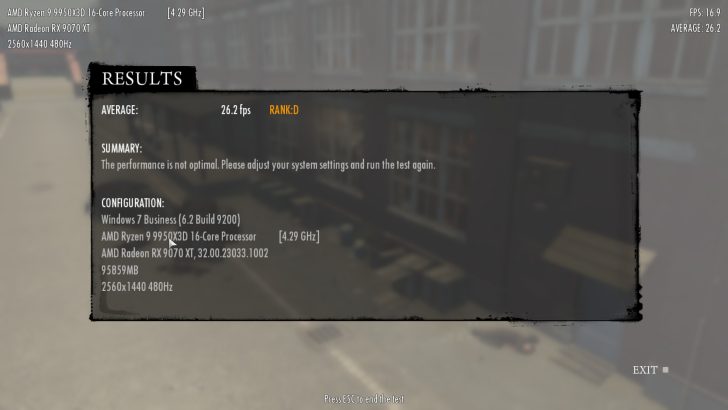
In Mafia II, one of the most well-known PhysX-supported games, performance reportedly jumped from 26.2 FPS to 80.2 FPS on the same AMD Radeon-based system when using ZLUDA PhysX. That is more than a threefold increase, turning what was previously a rough experience into something much smoother and far more playable.
This improvement does more than raise frame rates. It also allows AMD Radeon GPU owners to enjoy extra PhysX visual effects that were previously difficult or impractical to run on their hardware. Effects like environmental debris and fire-based particles can now be displayed while maintaining acceptable performance in supported titles.
For PC gamers revisiting older games, this could be a major quality-of-life upgrade. Many classic PhysX titles were designed during a time when NVIDIA-specific acceleration was a key selling point. Without the right hardware, these games often ran poorly with PhysX enabled. ZLUDA v6 offers a software-based workaround that could make these games feel more complete on modern AMD systems.
Previously, one common solution for running PhysX smoothly on a non-PhysX graphics card was to install a second compatible GPU purely for PhysX processing. While that method could improve performance, it required extra hardware, more power, more space inside the PC, and additional setup. ZLUDA’s approach removes the need for a secondary graphics card, making PhysX support more accessible for AMD Radeon users.
However, the feature is still not perfect. The current implementation is early, and the developer has noted that the PhysX work is not yet complete. Some users may run into fluid simulation issues, visual glitches, or problems loading ZLUDA with certain Steam games. Because the project is open source, users and developers can experiment with the code, test it across more PhysX-supported games, and potentially help improve compatibility over time.
Another interesting point is that newer NVIDIA GPUs have also moved away from broad 32-bit CUDA support, though limited support has returned for selected titles. This makes ZLUDA’s work even more notable, as it may become useful not only for AMD Radeon users but also for gamers trying to preserve compatibility with older PC titles that depend on legacy CUDA-based PhysX features.
Beyond PhysX, ZLUDA v6 also brings improvements in other areas. Windows support is becoming a bigger focus, with the goal of making setup easier and helping users understand which libraries are missing when installing ROCm. This could make the tool more approachable for people who are not deeply familiar with developer environments or GPU compute software.
Machine learning support has also improved through compiler fixes and performance library updates. Texture support has been added as well, which should help with workloads beyond gaming, including applications such as Blender and other GPU-accelerated tools.
Development on ZLUDA is expected to continue, although at a slower pace than before. Future releases may arrive less frequently, but the project still has strong potential for users who want to run CUDA-based workloads, legacy PhysX effects, and other NVIDIA-focused features on non-NVIDIA hardware.
For AMD Radeon GPU owners, ZLUDA v6 is an exciting step forward. It will not make every PhysX game run flawlessly overnight, but it shows that classic PC games with NVIDIA PhysX effects can become far more playable without requiring an NVIDIA graphics card or a dedicated secondary GPU. For anyone interested in older PC games, GPU compatibility, and open-source graphics development, this update is worth watching closely.